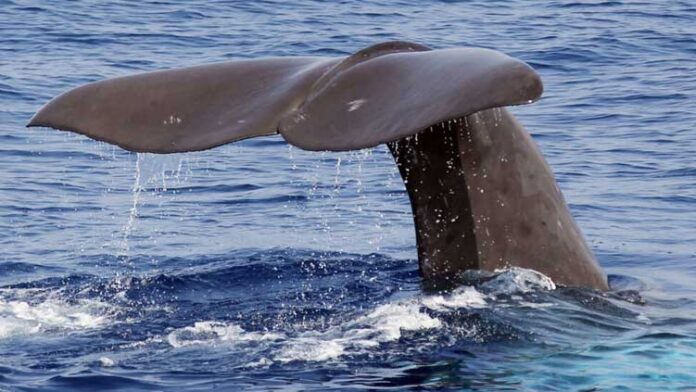
The Dominica government has postponed the passage of legislation to formally establish a sperm whale reserve off the country’s west coast, citing the need for further consultation with local stakeholders. The decision was announced by Prime Minister Roosevelt Skerrit during the first reading of the Sperm Whale Reserve Act of 2025 in Parliament on Tuesday.
While emphasizing the importance of the bill, Skerrit explained that the move to delay a full vote came in response to concerns raised by some interest groups. “We don’t quite believe that there will be any injury… caused with us going through all three readings, because we believe that the Bill captures a very salient point,” he told legislators. Nonetheless, the government opted to defer further readings to allow more stakeholder engagement.
The bill marks a major step in Dominica’s efforts to designate a protected marine area for its population of resident sperm whales. First announced in 2023, the proposed reserve is intended to safeguard these endangered mammals from threats such as noise pollution, ship strikes, climate change, and unsustainable fishing practices.

“These magnificent creatures, who are among the largest animals on earth, are a critical part of our marine ecosystem,” Skerrit said at a press briefing prior to the parliamentary session. He described the reserve as both an environmental imperative and an opportunity to strengthen Dominica’s standing as a leader in eco-tourism and marine conservation.
The legislation includes a comprehensive management framework that outlines navigation protocols, oversight mechanisms, and protections for traditional fishing practices. It also aims to include local fishers in the reserve’s governance structure to ensure their livelihoods are not compromised.
In addition to its conservation goals, the reserve is expected to boost Dominica’s eco-tourism economy through sustainable activities like whale watching, scientific research, and educational tourism.
Skerrit thanked National Geographic-Pristine Seas for their support and stressed the importance of consensus, noting that the Ministry of the Green and Blue Economy would engage stakeholders again before moving forward.
“It is crucial that the country gives due consideration to this Bill,” he said, urging Dominicans to reflect not only on economic benefits, but also on the responsibility to preserve the natural heritage for future generations. “It is a choice that we have to make… as it is being done now, it is not in the interest of the whales and therefore not in the interest of the stakeholders and therefore not in the interest of the country.”
A new date for the second and third readings of the bill has not yet been announced.