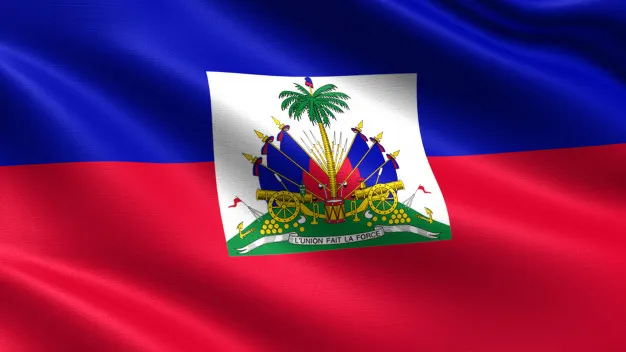
Haiti has launched the process to appoint a new Prime Minister, marking a critical step forward under the April agreement for the establishment of the Presidential Transitional Council (CPT).

This development is part of Haiti’s broader efforts to navigate through its enduring political and socio-economic challenges.
The nation’s quest for stability is guided by the CPT’s mandate to facilitate a democratic transition within the French-speaking member of the Caribbean Community (CARICOM).

Political tensions simmer
The political landscape in Haiti remains tense as the Fanmi Lavalas party, associated with former president Jean Bertrand Aristide, expressed strong reservations earlier this month.
They threatened to exit the nine-member CPT unless Fritz Bélizaire, the then Prime Minister, was replaced.
Previously, the CPT had appointed Bélizaire, a former sports minister, succeeding Michel Patrick Boisvert who served as the interim prime minister.
The appointment of Bélizaire also faced scrutiny from the Conference of Haitian Pastors (COPAH), which criticized the process as undemocratic and a breach of the earlier agreement.
Call for candidates
In response to the political agreement dated April 3, 2024, the CPT is now officially inviting applications for the prime ministerial post.
Prospective candidates have until May 17 to submit their applications at the designated location in Musseau or via email.

Eligibility and oversight
According to the CPT’s guidelines, nominees for the prime ministerial role must be endorsed by sectors represented in or adherents to the April agreement.
Applicants are required to submit various legal and financial documents to demonstrate their eligibility and adherence to governance standards.
This includes a police clearance, a final income tax declaration, and a declaration of assets, with strict penalties outlined for non-compliance.
Broad representation in the CPT
The CPT is structured to represent a broad spectrum of Haitian political life, with both voting and non-voting members.
The voting bloc includes significant parties and coalitions such as the ‘Pitit Desalin’, EDE, and Fanmi Lavalas, alongside private sector representatives and groups like the Montana Accord.
The non-voting members comprise individuals from civil society and the interfaith community, ensuring a diverse representation of Haitian society in the transitional governance.
Provisional leadership
The CPT has appointed Edgar Leblanc Fils, a seasoned politician and former president of Haiti’s national assembly, as the provisional president.
His leadership is anticipated to steer Haiti through these transitional times until a new governance framework is firmly established.
International support
In a related development, Haiti has garnered international support, notably through a security mission led by Kenya under the auspices of the United Nations.
This initiative aims to reinforce Haiti’s police force, which has been struggling against intense gang violence and instability.
Renewed focus on security
The United Nations Security Council has renewed its commitment by authorizing the deployment of the Multinational Security Mission to assist Haiti.
This move, coupled with a sanctions regime targeting gang leaders and their financial networks, underscores the international community’s role in Haiti’s path to recovery and stability.