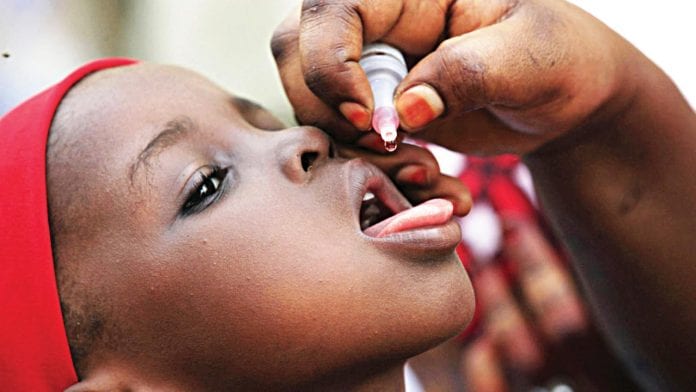
The Pan American Health Organization (PAHO) is celebrating a significant milestone: the 30th anniversary of the certification of wild polio eradication in the Americas, including the Caribbean.
Back in 1975, the region experienced nearly 6,000 polio cases. However, through effective vaccination campaigns and diligent surveillance efforts supported by PAHO and various partners, the last wild poliovirus case was reported in September 1991 in Peru. By 1994, the Americas was officially declared free of wild poliovirus, marking a major public health achievement. This milestone highlights the importance of vaccination and global cooperation in disease eradication efforts.
“Achieving a milestone like this is not easy. It involves a lot of work, commitment, and tenacity from thousands of health workers, researchers, partners, and all the people responsible for vaccinating their children,” PAHO Director Jarbas Barbosa said.

However, Barbosa warned about the persistence of poliovirus in other parts of the world.
“Until we eradicate the poliovirus globally, we must maintain high vaccination coverage and adequate surveillance to detect any imported cases,” he emphasized.
Polio is a highly contagious disease that affects the central nervous system, causing acute flaccid paralysis.

Although most infections are asymptomatic, in one in 200 cases, the virus can cause permanent paralysis in the legs or arms.
Globally, polio cases have declined by more than 99 percent since 1988, when an estimated 350,000 cases were reported in more than 125 endemic countries.
There are now just two endemic countries: Pakistan and Afghanistan.

However, PAHO warned that the poliovirus does not respect borders and can find groups of unvaccinated or under-immunized children, which could lead to outbreaks.
Barbosa highlighted the impact of immunization programs in controlling and eliminating vaccine-preventable diseases and emphasized the continued support of governments and partners, such as Rotary International and the US Centers for Disease Control and Prevention (CDC).
Despite progress, the PAHO director said that misinformation and distrust, along with the effects of the COVID-19 pandemic, “continue to affect vaccination coverage in some areas and populations” in the region.
In 2023, PAHO said 87 percent of children in the Americas had received the third dose of the polio vaccine necessary for full immunization, a recovery from 83 percent in 2022, but still below the recommended coverage rate.
To prevent the reintroduction of the virus, “it is essential to continue working to achieve sustained coverage of more than 95 percent uniformly in each country,” Barbosa said.
As the world moves towards the total eradication of “wild polio”, PAHO said efforts are also increasingly focused on mitigating the risk of vaccine-derived cases.
On rare occasions, in under-immunized populations, PAHO said the live attenuated virus originally contained in the oral polio vaccine can mutate and become a circulating vaccine-derived poliovirus.
This virus, as it replicates in the gastrointestinal tract, can spread through faeces and sewage, circulating in the environment, and exposing unvaccinated individuals who are susceptible to contracting polio.
The PAHO director called on all community leaders, health workers, and educators, among others, to join in the effort to eradicate polio and other preventable diseases.
“Let us unite today to celebrate 30 more years free of wild polio in the Americas and reaffirm our commitment to a polio-free world,” he urged.
World Polio Day is an annual celebration that recognizes global efforts to move towards a polio-free world.
To mark the day and celebrate the milestone of 30 years of the Americas certified as “wild polio-free”, PAHO said it will hold a webinar on Thursday in Washington.