Barbados health authorities say there is no case of the Mpox virus on the island advising that a statement currently circulating about a case of Mpox, is not current.
In a statement, the Ministry of Health and Wellness said the information in question comes from a statement made by former minister of health and wellness, Ian Gooding-Edghill on July 22, 2022.
“The Ministry would like to take this opportunity to provide an update on Mpox, verifying that, currently, there are no known active cases on island. Since the initial case in 2022, there have been two additional imported cases.

“One was recorded in January 2024, and the second one, six weeks ago. Contact tracing indicates that there was no in country spread,” the ministry said.
It said that the World Health Organization (WHO) and the Pan American Health Organization (PAHO) have advised that vaccines are not currently required in low-risk settings such as Barbados.
“However, Barbados is part of a global community of nations and is, therefore, not exempt from the possibility of Mpox and other public health threats. The Ministry of Health and Wellness will continue to take all reasonable measures to protect the public from the importation and spread of Mpox,” the statement said.
In a statement, CARPHA, which said it has established a testing capacity for the virus with a turnaround time of 72 hours, said the current outbreak of mpox is caused by clade I, which is more transmissible and causes more severe illness.
It said Clade II was responsible for an outbreak that WHO declared to be a global health emergency from July 2022 to May 2023.
“Presently, no cases of clade 1b Mpox have been reported in the Caribbean and its neighboring countries, including the US, UK, Canada and Latin America. There is also a limited number of travelers and no direct commercial flights from the DRC or its neighboring countries to the Caribbean.”

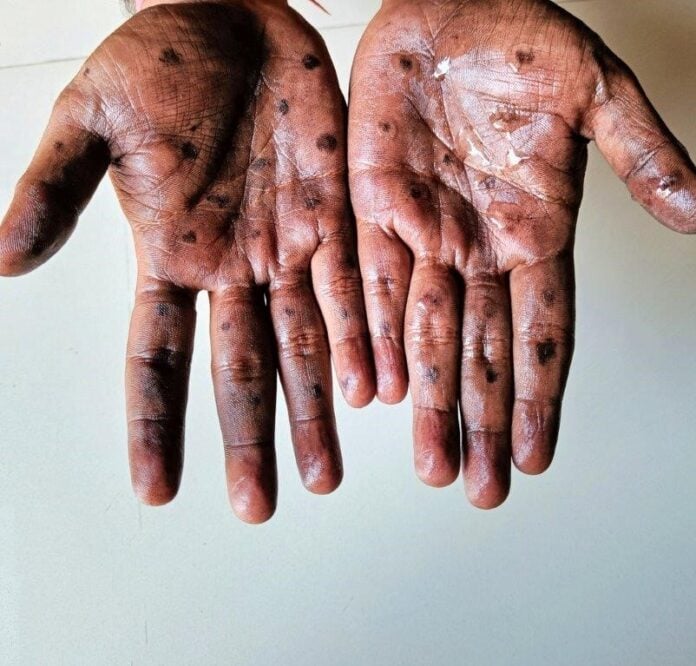
Mpox, formerly known as monkey pox, is a viral disease that can spread easily between people and from infected animals. It can spread through direct contact with bodily fluids, such as during sex, and through contaminated materials like sheets and clothing used by an infected person.
Common symptoms are skin rash or mucosal lesions, which can last two-four weeks, accompanied by fever, headache, muscle aches, back pain, low energy, and swollen lymph nodes.