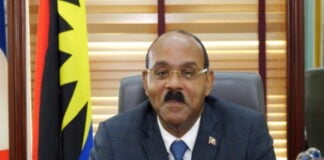
It has been interesting to read the responses in editorials and opinions in some regional media, concerning the decision by the two main political parties in Antigua and Barbuda to abolish work permits for nationals of Caribbean Community (CARICOM) countries and the Dominican Republic.

The significant thing in the editorials and opinions, is that while they have freely expressed opinions on the decision made by the two main political parties in Antigua and Barbuda to deal with this long contentious issue in CARICOM, they have been silent on the attitude of governments and opposition political parties in other CARICOM countries. The exception to this has been the editorials in the Jamaica Gleaner.
There is no question that the two political parties in Antigua and Barbuda have now put the cat among the pigeons in CARICOM. The decision of the Antigua and Barbuda Labour Party (ABLP) and the United Progressive Party (UPP) to liberalize the system by which CARICOM nationals migrate to, and work in, Antigua and Barbuda, raises questions about how far other members of the Caribbean Community are prepared to go to realize the purposes of the CARCOM Treaty.

The Constitution of Antigua and Barbuda allows its nationals to bestow citizenship on their grandchildren wherever they are born. Many of those grandchildren from the Dominican Republic took advantage of this Constitutional right to migrate to Antigua and Barbuda. This situation – unique to Antigua and Barbuda – is not relevant to CARICOM. Therefore, it is not discussed here.
When the Revised CARICOM Treaty was signed in 2001, it committed all the governments who were its ultimate signatories “to the goal of free movement of their nationals within the Community”. The governments raised the expectation that their people would be able to travel to each country freely; that they would have a single currency; and that there would be no duties and tariffs on goods moving from one country to the other. That was why the notion of a CARICOM Single Market and Economy (CSME) was born – the nations of CARICOM would become one community and one market. The exception was The Bahamas, which does not participate in the group’s single market and economy arrangements.
Throughout the existence of CARICOM, preceding the signing of the Revised Treaty in 2001, its member states have had a checkered history regarding the acceptance of the movement of people between them. The exemplary country, during its previous economic heyday up to 1973, was Guyana, which welcomed Caribbean migrants from the region – a welcome that was taken up by many from Dominica, St. Lucia and St. Vincent who, among other things, became farmers in Guyana’s productive agricultural hinterland.
Now with its wealth in oil and gas, Guyana has once again become a magnet for Caribbean migrants and businessmen. This time it is nationals of Jamaica, Barbados and Trinidad and Tobago who are flocking to Guyana – not only ordinary people, looking for work, but businessmen seeking to profit from selling goods and services.
But in the lean economic times of Guyana, when imports had to be restricted to preserve scarce foreign exchange, and the value of its currency slumped dramatically, Guyanese had a forbidding experience when they migrated to other CARICOM countries to find work. There were special benches for Guyanese immigrants at the airports in Barbados and Trinidad and Tobago on which they endured confined circumstances before being deported.
Let it be said that the prime minister of St. Vincent and the Grenadines, Ralph Gonsalves, the late Barbados Prime Minister, Owen Arthur and the present Prime Minister, Mia Mottley were the three leaders who constantly stood up for the principles of movement of nationals within the Caribbean community.

However, Antigua and Barbuda was one of the few countries in CARICOM where Caribbean migration, while not without its restrictions, was far more tolerant. The reason was consistent commitment to Caribbean integration by its leadership, particularly Sir Vere Cornwall Bird, Sir Lester Bird and now Prime Minister Gaston Browne.
Sir Vere was one of the founders of the West Indian labor movement for independence from Britain, dating back to 1947. He conceived of West Indian independence from Britain in the context of a West Indian Federation with all the freedoms and rights for the people that such a federation offered. He saw the West Indian people as one, and was deeply disappointed at its collapse, triggered by a referendum in Jamaica. In the referendum campaign, ironically, one of the arguments used against the Federation was that “Jamaica would be overrun by the small islanders”. Today, it is Jamaicans who are heading to the small islands.
For his part, Sir Lester, while upholding the objectives of CARICOM, was a founder of the Organisation of Eastern Caribbean States (OECS) and was a strong and influential voice for the maintenance by its six independent member states of one currency, one central bank, one judiciary, one civil aviation authority and one economic space. The complete freedom of movement of nationals within the OECS today is due, in large part, to the leadership given by Antigua and Barbuda. Sir Lester saw the OECS as a successful model of regional integration that CARICOM should emulate.
For all these reasons, Antigua and Barbuda, opened its doors to migration from CARICOM countries. Today it hosts people in relatively large numbers from Dominica, Guyana, Jamaica, Montserrat, and St. Vincent and the Grenadines. Many of those people have become nationals of Antigua and Barbuda and their children are born Antiguan and Barbudan.
One of the lessons for the rest of CARICOM, is that migrants have brought value to development. Caribbean migrants in Antigua and Barbuda have contributed toward the transfer of skills and knowledge, and they endeavored alongside native Antiguans and Barbudans to achieve development from which all benefitted. This is reflected in Antigua and Barbuda’s steady economic growth which reached 8.3 per cent in 2022, second only to Guyana with its new wealth in oil and gas.
The decision by the political parties in Antigua and Barbuda gives testimony to the part that freedom of movement of CARICOM nationals can and does play in attaining regional and national development objectives. It is a big leap forward, and an example to the region.
*Sir Ronald Sanders is Antigua and Barbuda’s Ambassador to the United States and the Organization of American States.
CMC/