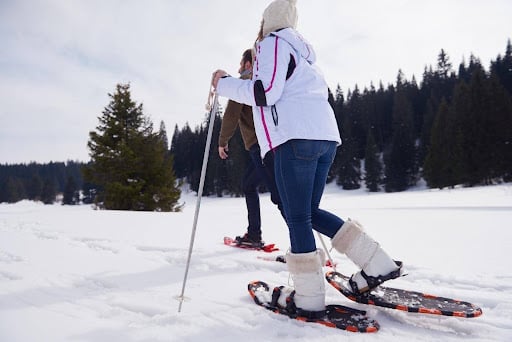
Being comfortable during the snowshoe tour is a matter of dressing properly, keeping yourself dry, drinking plenty of fluids, and moving at a good pace. Small mistakes, such as wearing cotton socks or having too much clothing, can soon make winter trails unpleasant.

Located on the north shore of Lake Tahoe, Incline Village is a popular winter destination known for its alpine scenery, reliable snowfall, and access to scenic trails in the Sierra Nevada mountains.
Numerous travelers opt for a snowshoe tour near Incline Village for its beginner-led terrain and serene winter surroundings. The area offers peaceful snow-covered forests, panoramic lake views, and easy access to outdoor activities like snowshoeing, winter hiking, making it a favorite getaway for nature lovers.

The CDC mentions that cold stress and lack of water could impact physical performance during winter activities, particularly at higher altitudes. Their winter weather safety guide even advises outdoor activities with respect to wearing “layers of clothing” and drinking an adequate amount of water.
Here are 6 comfort tips during a snowshoe tour:
Tip 1: Wear Layers Instead of Heavy Clothing
A three-layer system is more effective at regulating body temperature than a heavy jacket. Wear a lightweight, moisture-wicking layer at the base, an insulating middle layer, and a waterproof outer layer.

Stay away from cotton, as it absorbs your sweat and then cools down fast when the air is cold. Breathable layers make it easier to walk on longer snowshoe trails.
Tip 2: Keep Your Feet Dry During the Tour
Wet feet can quickly turn a beautiful winter hike into an uncomfortable experience, especially on Tahoe snowshoe trails where packed snow often turns slushy during warmer afternoons. Wearing waterproof boots with wool socks instead of cotton helps keep your feet warm and dry, as wool retains heat even when exposed to moisture, making it a much better choice for cold-weather hiking.
Tip 3: Adjust Clothing Before You Overheat
Too many beginners put on thick jackets straight away and start sweating when climbing sloped sections. When the sweat cools down, the heat is lost quickly during rests or windy sections.

Remove one layer before the steep climbs and put it back on while resting. An extremely simple way of maintaining your body temperature throughout the tour.
Tip 4: Eat and Drink Regularly in Cold Weather
Cold weather can reduce your sense of thirst, even though your body still loses fluids during physical activity. Dehydration can lead to fatigue and make your body feel colder more quickly, which is why staying hydrated during winter hikes is important.
Carry insulated water bottles to prevent your drinks from freezing, and pack high-energy snacks like trail mix, nuts, and granola bars to help maintain body heat and energy levels throughout the hike.
Tip 5: Protect Your Hands and Face from Wind
The wind can make mountain temperatures feel significantly colder than actual. As per NOAA climate data, there is currently an increased risk of frostbite during long winter exposure due to wind chill.
Carry a waterproof mitten pack over light gloves for better insulation. Sunglasses and an SPF lip balm help protect from the sun’s glare and windburn.
Tip 6: Choose a Comfortable Walking Pace
Walking fast early in the tour can cause sweating and fatigue later. Guided routes have a steady pace to keep participants warm and comfortable. A Squaw Valley snowshoe tour has varied elevations and includes windy ridgeline sections. Continuous moving keeps the body warmer than frequent long stops.
Key Takeaways
- Wear thin layers in winter to make sure you can be comfortable.
- Avoid cotton-based clothes on the snowshoe tours.
- Keep your feet dry using a pair of wool socks and waterproof boots.
- Remove layers before overheating uphill.
- Drink plenty of fluids when participating in activities in cold climates.
- Protect the exposed skin from the wind and the glare from the snow.