Trinidad and Tobago divided over CCJ Membership
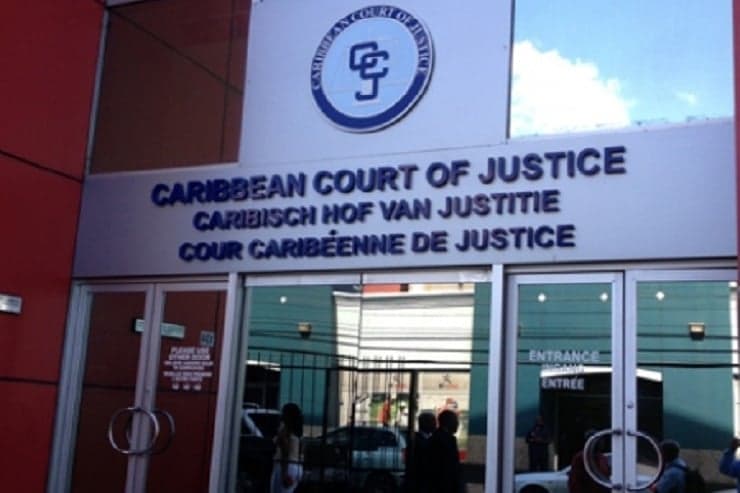
Trinidad and Tobago finds itself at a crossroads regarding its membership in the Caribbean Court of Justice (CCJ), with divergent views among legal experts and politicians.
Despite being the seat of the CCJ, the country remains hesitant about fully embracing the court.
CCJ’s role and current membership status
The CCJ, established in 2001, was envisioned to replace the London-based Privy Council as the apex court for Caribbean nations.
However, only Barbados, Belize, Dominica, and Guyana have fully adopted it, while others, including Trinidad and Tobago, maintain a limited engagement, confining themselves to the Original Jurisdiction.
Tribute to Michael de la Bastide
In the wake of the passing of Michael de la Bastide, the inaugural president of the CCJ, tributes poured in, underscoring his significant role in the region’s legal landscape.
Attorney General Reginald Armour lauded de la Bastide’s contributions and urged Trinidad and Tobago to fulfill his vision by embracing the CCJ.
Calls for referendum
However, not all voices support immediate integration into the CCJ.
Saira Lakhan, President of the Assembly of Southern Lawyers, advocates for a referendum on the matter. Lakhan emphasizes the importance of public opinion, suggesting that rushing the transition from the Privy Council to the CCJ might overlook the benefits of the former.
Lakhan highlights the need to address shortcomings in the local judicial system before prioritizing CCJ membership.
She argues that focusing on improving accessibility and efficiency in local courts is paramount, particularly for marginalized communities.
Political stances and legislative efforts
Political leaders have offered mixed signals regarding CCJ membership. Former Prime Minister Kamla Persad Bissessar expressed intent to transition all criminal appeals to the CCJ but faced obstacles during her tenure.
Her successor, Dr. Keith Rowley, criticized the delay in embracing the CCJ, citing Trinidad and Tobago’s unique position as the host nation.
Challenges ahead
Trinidad and Tobago’s path to full CCJ membership is laden with political and procedural hurdles.
With the ruling People’s National Movement (PNM) holding a slight majority in Parliament, securing the necessary votes for constitutional amendments remains uncertain.