Five Caribbean women you should know for Women’s History Month
Key Points(5)
- Within the last year alone, we have seen countless women in the Caribbean and its diaspora break records set trends and accomplish enormous feats in their respective fields.
- Caribbean women make history every day and, in many ways, their accomplishments are a testament to the legacies of the female trailblazers who came before them.
- As a Jamaican-American and lover of history, I, Alexandria Miller, have always believed knowing our history is a great way to venerate our ancestors, establish connections across the region, and ensure that our communities are empowered with the knowledge of who we are and where we come from.
- It is for all these reasons and more that I founded my podcast, <a href="https://episodes.strictlyfactspod.com/">Strictly Facts: A Guide to Caribbean History and Culture</a> in 2020.
- This March, join Strictly Facts in celebrating Women’s History Month by learning about five Caribbean women who are crucial change agents and have transformed the world.
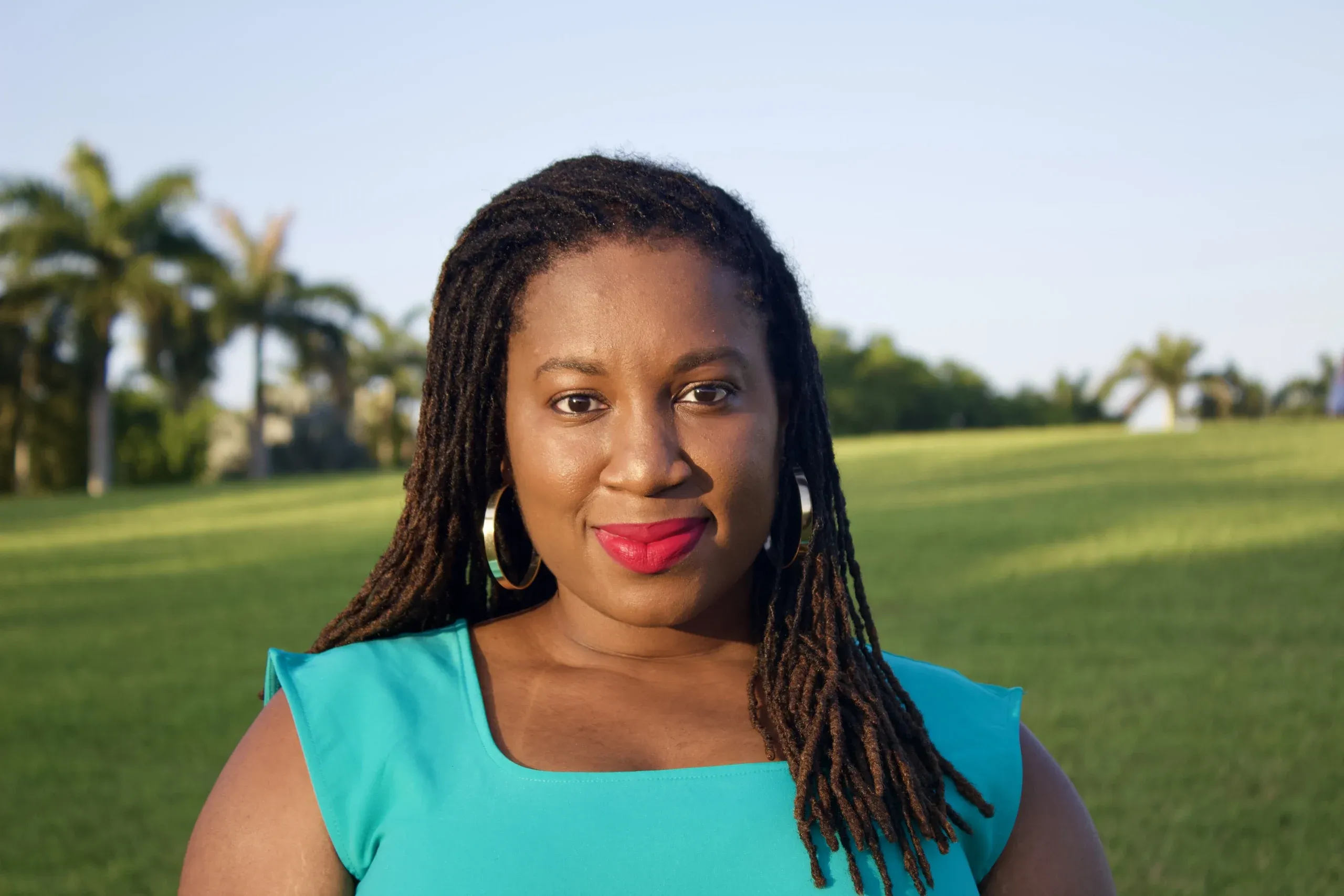
Contributed by Alexandria Miller of Strictly Facts Podcast
Coming off the heels of Black History Month, March is recognized as Women’s History Month in the U.S., in addition to International Women’s Day on March 8th which celebrates women’s achievements, embraces equity, and calls for a more inclusive world.
Within the last year alone, we have seen countless women in the Caribbean and its diaspora break records set trends and accomplish enormous feats in their respective fields. Caribbean women make history every day and, in many ways, their accomplishments are a testament to the legacies of the female trailblazers who came before them.
As a Jamaican-American and lover of history, I, Alexandria Miller, have always believed knowing our history is a great way to venerate our ancestors, establish connections across the region, and ensure that our communities are empowered with the knowledge of who we are and where we come from. It is for all these reasons and more that I founded my podcast, Strictly Facts: A Guide to Caribbean History and Culture in 2020.
This March, join Strictly Facts in celebrating Women’s History Month by learning about five Caribbean women who are crucial change agents and have transformed the world.
Catherine Flon | Haiti (1772 - 1831)
The Haitian Revolution is one of the most significant Black uprisings in history. After twelve years of insurrection, the self-emancipated revolutionaries of what was then Saint-Domingue successfully founded the world’s first Black republic and officially declared their independence from France in 1804. Toussaint Louverture and Jean-Jacques Dessalines are perhaps the most renowned leaders of the Haitian Revolution; however, the rebellion was not without crucial women who supported the movement.
Said to be Dessalines’ goddaughter, Catherine Flon was one such female supporter who has been relatively obscured in history. A seamstress who also served as her godfather’s assistant, Flon was a nurse to her fellow patriots and tended them back to health during the Revolution. On May 18, 1803, Dessalines led the Haitian army in the fight for independence and ripped the white stripe out of France’s tricolor flag as a symbol of Haiti’s freedom from colonialism. He trampled on the white stripe in the streets of Arcahaie, leaving Flon to later sew together the remaining red and blue stripes to create Haiti’s first flag, representing the Black and mixed-race Haitians joining forces under the motto “Liberté ou la Mort!” Today, May 18th is commemorated annually as Haitian Flag Day and Flon is celebrated as one of three heroines of the Haitian Revolution, with her picture featured on the island’s ten gourdes banknote in 2000.
Claudia Jones | Trinidad (1915 - 1964)
Born in Port of Spain, Trinidad, and Tobago, Claudia Jones was a political activist, organizer, journalist, and cultural leader who spearheaded movements for social change in both the United States and Britain. Not long after immigrating to New York with her family in 1924, Jones joined political and social justice organizations like the Junior NAACP and the National Urban League. She was later catapulted into leadership through her support of the falsely accused Scottsboro Boys on trial for rape in Alabama in 1931.
Jones later joined the Communist Party, beginning with the Young Communist League, and continued to grow as a popular advocate for workers’ rights, especially for women and people of color. Her growing recognition made her a target of US surveillance and she was arrested several times and eventually deported in December 1955. In Britain, Jones continued her organizing efforts for racial equity with a focus on the UK’s expanding West Indian population. She co-founded the West Indian Workers and Students Association, the West Indian Gazette and Afro-Asian Caribbean News, and Britain’s first Caribbean carnival, now known as the Notting Hill Carnival, all while giving speeches across the world on women’s rights and racial equality. Sadly, the “Mother of Caribbean Carnival” passed away in 1964 due to a series of health problems. To learn more about Claudia Jones, check out the Strictly Facts episode on her life’s work.
Shirley Chisholm | Guyana & Barbados (1924 – 2005)
Born in the United States to Guyanese and Bajan parents, Shirley Chisholm was a revered American politician who worked as an educator in New York during the early part of her career. She was drawn to politics through organizations for civil rights and women’s representation that she joined in Brooklyn in 1953. Four years after joining the Unity Democratic Club in 1960, Chisholm ran for then New York State Assemblyman Thomas R. Jones’ seat in 1964 after he declined reelection. Chisholm sat on New York State Legislatures until 1968, from which she made it her duty to support legislative protections for voting rights, unemployment benefits, women’s advocacy, and education for the working class.
In 1968, Chisholm ran and was eventually elected to the U.S. House of Representatives. With the slogan “Unbought and Unbossed,” she became the first Black woman elected to Congress and would go on to be a founding member of both the Congressional Black Caucus and the National Women's Political Caucus in 1971. The following year, Chisholm also became the first woman to run for the Democratic Party's presidential nomination and the first African American to run for a president under a major party for the 1972 presidential election. Though her campaign later failed, she went on to spend the next fifteen years in Congress and was later inducted into the National Women's Hall of Fame in 1993.
Ivy Ralph, O.D. | Jamaica (1928 – 2018)
The Ralph name has been quite popular in the last year with daughter Sherly Lee-Ralph being the first Black woman to win an Emmy award for Outstanding Supporting Actress in a Comedy Series in thirty-five years. Jamaican fashion designer and Lee-Ralph’s mother, Ivy Ralph, set trends in her own right and propelled the island’s fashion industry to international acclaim. Quoted as saying, “It was an idea I had as a child, a more comfortable style of dress for men. I wanted to help them get away from the jacket-and-tie routine to something far more comfortably suited to the island's climate,” Ralph designed the popular kareeba suit which was originally popularized by Prime Minister Michael Manley and the People’s National Party, and also later donned by other political leaders across the Caribbean as well as in Africa.
Beyond being a more appropriate outfit for the warm climate, Ralph’s suit was a modernized version of the safari jacket as a nod to Africa. Worn without a tie, the kareeba suit remains a political symbol of decolonization in style and dress, the opposite of the suit and tie to which Manley describes in his memoir as “the first act of psychological surrender to colonial trauma.” Ralph’s tremendous contribution earned her Jamaica’s Order of Distinction in 1999 for outstanding contribution to the promotion of fashion.
Jamaica Kincaid | Antigua and Barbuda (1949 - )
Born Elaine Potter Richardson in St. John's, Antigua and Barbuda, Jamaica Kincaid is a prolific writer, novelist, and professor. Her mother sent her to New York City to work as an au pair as a teen, of which she eventually resigned to attend college. Kincaid later dropped out of college but continued to pursue a career in writing. She changed her name to Jamaica Kincaid as a self-actualized form of liberation and began publishing articles and stories in magazines and journals like Ms. Magazine, The Paris Review, and The New Yorker.
Kincaid published several non-fiction pieces and novels throughout the 1990s, oftentimes focusing on themes of gender, power, colonialism, and power. One of her most widely read works is A Small Place, a book-length essay first published in 1998 that is equal parts historical and autobiographical as it explores Kincaid’s upbringing in Antigua and critiques British imperialism and neocolonialism for espousing legacies of racism, classism, and corruption on the island and the Caribbean as a whole. As discussed briefly in a recent episode of Strictly Facts, for Women’s History Month, Kincaid’s writing has been seen by some as “angry” in subject matter or as a poor reflection of her island home, however, her writing stands as a significant social commentary to Black life in the United States and the Caribbean, as well as gender issues and mother-daughter relationships. She is currently a Professor of African and African American Studies in Residence at Harvard University.
Alexandria Miller is a Caribbean historian, writer, and Ph.D. candidate who is passionate about capturing Black women’s stories. In 2021, she launched Strictly Facts: A Guide to Caribbean History and Culture, a podcast and digital platform that aims to educate and celebrate Caribbean history by connecting history, politics, and activism to our rich, contemporary music and popular culture.