What happened to Spice? The dangers of cosmetic surgery in the Dominican Republic
Key Points(5)
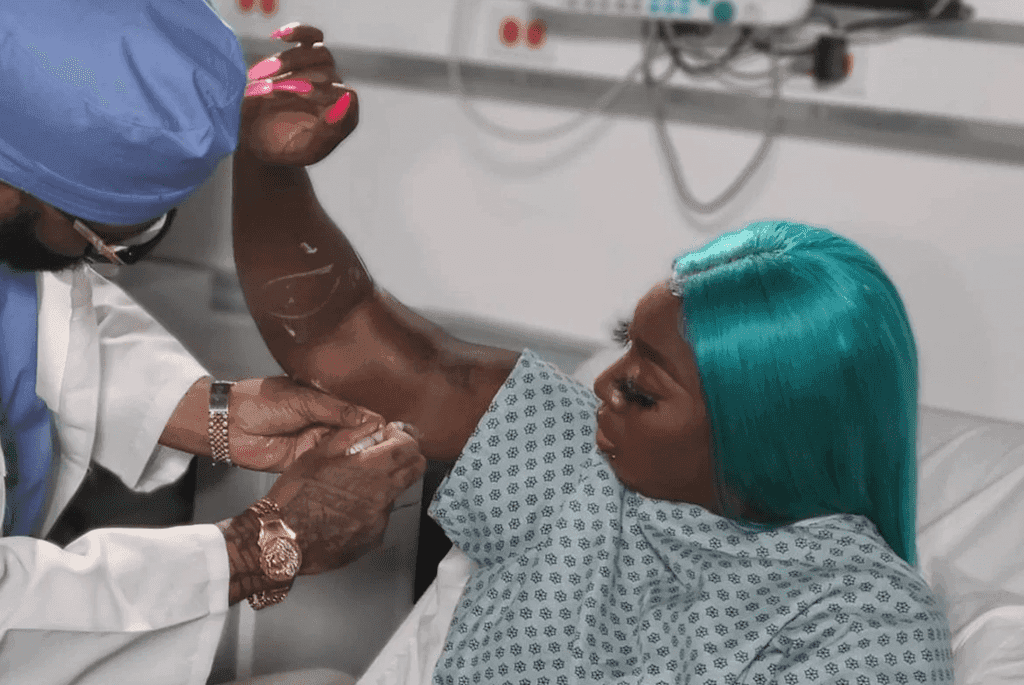
- <span style="font-weight: 400;">Recently, dancehall sensation, Spice, has been all over the media due to <a href="https://www.caribbeannationalweekly.com/caribbean-breaking-news-featured/spice-clears-the-air/">speculation of plastic surgery complications</a>.
- According to reports, Spice was in the Dominican Republic (DR) for a procedure that went awry.
- Though Spice has denied the rumors, the Caribbean nation is a place many celebrities and ordinary women alike, flock to for such procedures.
- </span> <h3><strong>A popular place for plastic surgery</strong></h3> <span style="font-weight: 400;">The DR is one of the most popular destinations for those seeking cheap cosmetic plastic surgery.
- Liposuction, Brazilian Butt Lifts (BBL), abdominoplasty (tummy tuck), and breast augmentation are only some of the operations that attract disproportionately Black and Latina clientele to the island.
Recently, dancehall sensation, Spice, has been all over the media due to speculation of plastic surgery complications. According to reports, Spice was in the Dominican Republic (DR) for a procedure that went awry. Though Spice has denied the rumors, the Caribbean nation is a place many celebrities and ordinary women alike, flock to for such procedures.
A popular place for plastic surgery
The DR is one of the most popular destinations for those seeking cheap cosmetic plastic surgery. Liposuction, Brazilian Butt Lifts (BBL), abdominoplasty (tummy tuck), and breast augmentation are only some of the operations that attract disproportionately Black and Latina clientele to the island. While the promise of a perfect figure at a bargain price is alluring, it is not without incredible risk. Botched operations and lax medical standards have resulted in illness, permanent scarring, and in some cases death.
According to an article in the The Guardian, in 2018 alone, over 23,000 plastic surgeries were performed on the island, with 80% performed on foreigners. Affordability is the main draw to cosmetic medical tourism. Prices for the equivalent operation in the United States can be up to 80% cheaper in the Dominican Republic. For example, breast augmentation in the States might run you USD$8,000 but in the DR, you can find surgeons willing to do the same operation for USD$2,000.
The Risks
Before diving into the health risks, the prices are the first red flag. These too-good-to-be-true figures are very much that… Frequently visitors are given a quote that solely covers the operation, and then have to pay out of pocket for hidden hospital fees and overnight charges.
Furthermore, many surgeons in the DR are incentivized to perform riskier operations. For example, they may take out more fat than is medically advisable in liposuction. They may also promise more exaggerated “coca-cola bottle” or “barbie-doll” figures. The combination of discount prices and a “customer is always right” mantra creates a dangerous mix where arteries are nicked and patients bleed out on the table. At least 12 Americans have died from cosmetic operations performed within the DR within the last six years.
Then there’s the potential for medical complications stemming from a host of possible factors. Your cosmetic plastic surgeon might not even be one by trade, to begin with. Telemundo details a case from the summer of 2019 where Manuel Núñez, from New York, visited the DR for a routine liposculpture but ended up dead on the table. Upon further investigation the doctor who operated on him was actually a gynecologist whose patient record was already spotty, having been charged for the deaths of two women in 2015 due to gross negligence.
Deadly Bacteria
Even if your practitioner is legitimate, you’re not necessarily out of the woods. The enforced medical standards in the DR are lax compared to their American and European counterparts, albeit they are steadily improving. Multiple women who have had operations done in the DR have suffered from chronic pains, swelling of the site, and scarring. This is most likely due to a mycobacterial infection. Infamously, the CIPLA clinic in the DR, was shut down and a CDC warning was issued after 32 Americans were infected with the mycobacteria.
This particular strain of bacteria is incredibly common, but is unfortunately incredibly resistant to antibiotic treatment. According to Dr. Charles L. Daley, a pulmonologist at National Jewish Health in Denver, Colorado, victims of this scarring need to undergo reconstructive surgery.
As to how they were infected, Daley theorizes that the bacteria entered through the surgical incisions, due to improper care and sterilization of the operating instruments. These infections are not unheard of within the United States but there are protections for patients including insurance coverage, and if push comes to shove, legal action.
Above all, the pressure to be informed falls upon the patient. It’s seeking out a life-risking operation without a safety net. Would-be patients need to investigate the legitimacy of the operator and if the clinic is up to code. Experts recommend that medical tourists research their surgeons, both their educational backgrounds and patient records, if they are public.