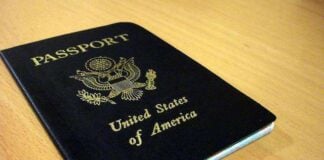
Under US immigration regulations, spouses of US Citizens are eligible to apply for Naturalization early, as long as they meet certain requirements. For background, generally, Residents are eligible to apply for Naturalization after holding that status for four years and nine months, whereas eligible spouses of U.S. Citizens can apply in only two years and nine months.
The 3/3/3 rule
Early Naturalization is governed by the so called 3/3/3 rule, to qualify: 1) The U.S. Citizen spouse must have been a citizen for at least three years, 2) The foreign spouse must have been married to (and living together with) the U.S. Citizen spouse for at least three years and 3) the foreign spouse must have been a Resident (conditional or otherwise) for at least three years. In such cases, the foreign spouse is eligible to apply for Naturalization in three years (really 90 days before, so that mean in two years and nine months).

There has often been a lot of confusion among immigrants about the marriage requirement, specifically about whether a Resident remaining married with a U.S. Citizen is enough to qualify, even though the couple no longer lives together.
Must live with spouse
Early Naturalization applicants often believe that simply remaining married (as opposed to being divorced) allows them to qualify, even though they do not live with their U.S. Citizen spouse. Thousands of dollars in USCIS filing fees are lost each year as Residents separated from their U.S. spouses apply for Early Naturalization, only to find out later at their Naturalization interview that in addition to meeting the regular citizenship requirements and passing the test, they must also prove through documentary evidence that they were living with their U.S. spouse at the time they filed their case. Those unable to prove that they were living with their U.S. spouse are not only denied Naturalization but may also put themselves at risk for further inquiry into the validity of their claim to Residency through marriage to a U.S. Citizen.
To clear the issue up, the USCIS recently updated it Policy Manuel to provide guidance to clarify the “married” and “living in marital union” requirements for applicants filing for spousal naturalization.
Updated guidance
The updated guidance makes it clear that an Early Naturalization applicant must have been “living in marital union” (living together) with their U.S. Citizen spouse for at least three years before filing.

The recent Policy Alert: Marriage and Living in Marital Union Requirements for Naturalization Purpose, relating to the “married and living in marital union” requirements, clarifies that Early Naturalization applicants 1) must have been living in marital union with their U.S. Citizen spouse for at least 3 years immediately preceding the date of filing for naturalization and 2) that termination of the marriage at any time before the applicant takes the Oath of Allegiance for Naturalization makes the applicant ineligible for such Naturalization.