



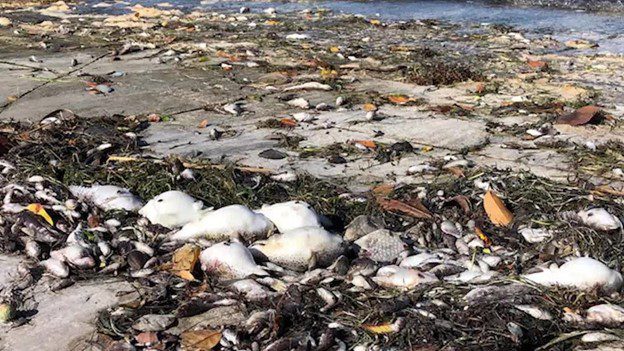
The Department of Regulatory and Economic Resources, Division of Environmental Resources Management (RER-DERM) yesterday received multiple reports of a fish kill across the northern basin of Biscayne Bay.
The originally affected areas included 64th Street. North to Broad Causeway, and areas of Miami Beach, including Tatum Waterway South to 63rd Street, areas along 79th Street. Causeway, North Bay Village, Miami Shores, San Souci, and Malloy Channel near 79th Street.
“Since the massive fish kill event in August 2020, Miami-Dade has doubled down on its commitment to protecting our precious waters and especially Biscayne Bay,” said Miami-Dade Mayor Daniella Levine Cava. “Our Bay is very fragile, from decades of neglect and climate change. It will take years to reverse the damage, but we have already implemented many changes, including an annual report card. We will continue to invest in critical, long-term, comprehensive solutions to improve Biscayne Bay’s wellbeing – such as the septic to sewer transition, water infrastructure upgrades, pollution reduction policies, and more.”

By the end of yesterday, DERM staff responded to various areas, both land and waterside, to begin their investigation. Based on preliminary findings, estimates indicate that over a thousand dead fish were dispersed in the northern part of the Bay. DERM said they have activated the biomass removal contractor and are working with both the City of Miami and the City of Miami Beach to prioritize those areas that had the bulk of dead fish.
It is important to note that there are multiple, cumulative conditions that can lead to a fish kill event. However, fish kills are largely unpredictable. There are conditions that make fish kills more likely, but there are currently no short-term solutions to avoid these incidents from occurring.
Conditions that can contribute to a fish kill consist of lower winds, leading to a lack of necessary mixing in the water column; higher water temperatures reducing the amount of available oxygen in the water column; and low oxygen/high nutrient waters discharging into the bay from canals, which create additional pressures on the receiving waters to reconcile the increased nutrients with low oxygen water.
Miami-Dade County continues to invest in critical, long-term, comprehensive solutions to improve the well-being of Biscayne Bay. These include the ongoing septic to sewer transition, water infrastructure upgrades, pollution reduction policies, increased water quality testing, and enhanced monitoring and updates to the public.
Residents are encouraged to report fish kills via the DERM hotline, 305-372-6955 or by email, baywatch@miamidade.gov. Residents can also report via 311. Photos and videos are also helpful.










 yesterday received multiple reports of a fish kill across the northern basin of Biscayne Bay)