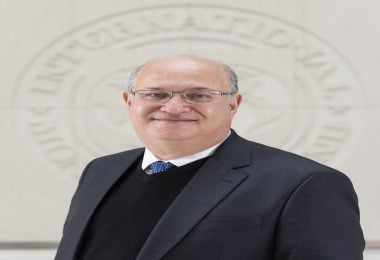
The Director for Western Hemisphere Department at the International Monetary Fund (IMF), Ilan Goldfajn, says the Washington-based financial institution is paying close attention to bank-sovereign linkages, especially where recent external shocks have significantly stretched public sector balance sheets
“Banks with highly concentrated exposures, mainly where these are systemically important institutions, can complicate recovery efforts if sovereign debt sustainability risks materialize,” said Goldfajn told the Caribbean Media Corporation (CMC) in response to whether or not regional banks at risk of excessive sovereign exposure given the escalation of debt in the Caribbean region.
He said the risks associated with sovereign debt linkages are best mitigated by governments pursuing sustainable fiscal policies and making use of the available concessional financing opportunities.

“The Fund, as always, stands ready to support its members’ efforts in this area. It is essential that financial supervisors promptly identify pockets of excessive risk exposures, enforce and/or tighten exposure concentration limits where warranted, and ensure banks and other financial institutions’ loss-absorbing buffers are commensurate to the risks taken,” the IMF official added.
“The time is opportune for country risk management to be a key Imperative for the Caribbean, as we forge a pathway to resilience and sustainable recovery post-COVID-19 and prepare for other crises that are sure to arise,” Barnett told the inaugural Caribbean Regional Risk Conference organized jointly by the Barbados-based Caribbean Development Bank (CDB) and the Cayman Islands-based Caribbean Catastrophe Risk Insurance Facility (CCRIF SPC).
Asked to expand on the statement attributed to the region’s top public servant, Goldfajn told CMC that the IMF stands ready to support countries’ action in response to various shocks, in an integrated framework to provide policy advice, financial support, and capacity development.
He said the Fund’s work integrates country risk assessment with policy advice, through identifying risks, assessing their likelihood and impacts, and discussing policy responses, while capacity development supports countries in building effective economic institutions that can implement the right policies in response to shocks.
“The newly established Resilience and Sustainability Trust (RST), combined with the additional financing it will help catalyze, would support countries in building resilience to external shocks, including climate change and pandemic preparedness, and ensuring sustainable growth,” he added.

CMC/