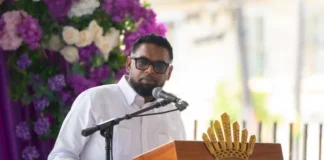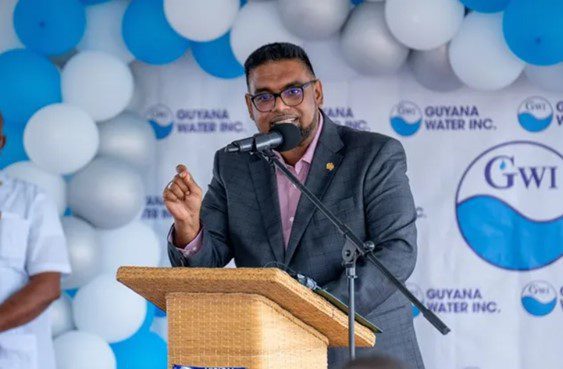
Guyana’s President Dr. Irfaan Ali says oil and natural gas will be used for a much longer time in the Caribbean even as the region is committed to reducing its dependency on fossil fuels and turning towards renewable sources of energy.
Ali, addressing the 2023 Energy Conference organized by the Energy Chamber of Trinidad and Tobago, said while Caribbean countries are committed to reducing their dependency on fossil fuels like diesel and natural gas, and using more renewable sources as part of efforts to slow the climate crisis and save the environment, doing so however is not an easy task.
“Countries are simply bogged down by their pressing developmental needs, constantly battling natural disasters and keeping up with global challenges,” Ali told the delegates to the three-day conference that is being held under the theme “Navigating a Complex Energy Future”.

“So we can safely say in this region, fossil fuel and natural gas have a long future ahead of us. No big scientific analysis required, it is based on what is in front of us,” the Guyanese head of state said.
President Ali said the Caribbean is confronted by several stark realities that challenge the region’s ability to use more environmentally friendly, renewable sources of energy.
“We’re seeing imported inflation, rising cost of energy…but we have seen some strange movements also.
“Whilst these crises are coming at us like a tsunami, we have seen some strange movements (which), in my view, are not rooted in facts and reality but rooted in a policy agenda driven by a few countries,” Ali told the conference.
“They were able to commit over US$500 billion to shield their consumers from the immediate impact of all that I have spoken off. That’s what they were able to do. They were able to advance US$500 billion to shield their consumers.
“Much of what we face is a result of what is taking place by many of these countries. We face climate crisis, worse vulnerability to climate events. Not even ten percent of that, not even five percent of that is advanced as adaptation and mitigation in the region. So what are we supposed to do?

“Are we just to sit back and say okay we are going to go green and then who is going to finance the capital. In our limited capacity if you look at the policy measures governments in this region took to cushion on the pass on effect of this inflation it is remarkable by any standard,” Ali said.
He said the situation is not entirely hopeless and countries have resources that can help them meet their needs while aiding the transition to more renewable energy sources.