



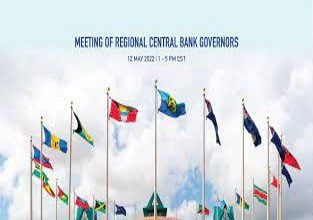
Central Bank governors from the Caribbean Community (CARICOM) grouping have endorsed the importance of improving both domestic and intra-regional payments arrangements and agreed to strengthen regional central bank cooperation and knowledge sharing in this area.

A statement issued at the end of the 59th bi-annual meeting of the CARICOM Committee of Central Bank Governors that ended over the weekend noted that their deliberations focused on regional economic development and prospects, as Caribbean countries and territories emerge from the coronavirus (COVID-19) pandemic.
The meeting, the first in-person since the formal easing of COVID-19 restrictions, also discussed “monetary, fiscal and financial sector policy priorities to encourage sustainable economic growth and maintain financial stability, particularly in the wake of mounting climate change-related challenges.

“The governors also acknowledged regional priorities related to significantly elevated inflation, and the potential spillover impact within the region of the interest rate tightening response of global central banks,” the statement said.
It said the Central Bank governors also took note of progress on the digital transformation of financial services, including further regional developments on central bank digital currencies and the role that these could play in promoting financial inclusion and disaster recovery resilience.”
The statement said the governors welcomed insights from the International Monetary Fund (IMF) on its ongoing engagement with small states, and the Caribbean region in particular, with heightened emphasis on climate change risks within the context of financial stability and growth.
It said the delegates welcomed a keynote address by IMF Deputy Managing Director Bo Li, on this important topic, and an extended panel discussion with Li and the IMF executive directors, representing the region.
“The deliberations also focused on the IMF’s expanded toolkit to support vulnerable countries adaptation, including tailored instruments akin to the newly introduced Resilience and Sustainability Trust Fund (RST).
“Updates on the capacity development activities of multilateral partners were also received. Governors reaffirmed the importance of maximizing the regional benefits from such engagements,” the statement added.

CMC/











 grouping have endorsed the importance of improving both domestic and)