Every Caribbean household has heard the phrase “be prepared.” Fewer know exactly what that means in practice, who writes the official guidance, or how it differs across islands. This piece breaks down how Caribbean hurricane preparedness guides are structured: who produces them, what they actually require of households and businesses, and why the format matters as much as the content.

The Agencies Behind the Guidance
The Caribbean Disaster Emergency Management Agency, known as CDEMA, sits at the top of the regional preparedness structure. It coordinates among member states and publishes baseline standards that national disaster offices then adapt. The result is a layered system: CDEMA sets the framework, and each territory’s own disaster management authority fills in the local detail.
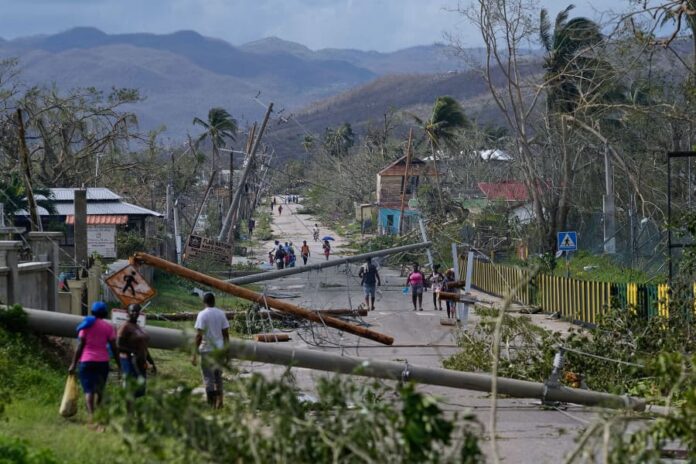
That local detail matters enormously. A guide written for Barbados, a relatively flat island with well-mapped shelter networks, reads differently from one written for Dominica, where mountainous terrain creates flash-flood corridors that change with every storm track. After Dominica’s disaster declarations following a major storm, officials updated their community-level guidance to reflect how quickly inland rivers can become impassable, something a generic regional template wouldn’t capture.

National offices also translate CDEMA’s technical language into plain-language formats, often in both English and local Creole, so the guidance reaches households that don’t engage with government documents in formal English.
What a Household Checklist Actually Covers
The widely recommended 72-hour self-sufficiency benchmark common to Caribbean preparedness guidance is the most widely cited benchmark in Caribbean preparedness. The idea is that a household should be self-sufficient for at least three days after a storm, because emergency services will be stretched thin and roads may be impassable. That standard shapes everything else in a household guide.
A well-constructed household checklist breaks into four areas:

- Water and food. One gallon of water per person per day, stored in sealed containers. Non-perishable food that doesn’t require cooking, since gas lines and electricity may be out simultaneously.
- Documents: Copies of identification, insurance policies, property deeds, and medical records, stored in a waterproof bag or uploaded to a cloud service accessible from a phone.
- Shelter-in-place versus evacuation: This is the decision point most guides handle poorly. Guides typically distinguish lower-category protocols, which focus on sheltering in sturdy structures, from higher-category protocols, which trigger mandatory evacuation orders. Guides that simply say “follow official instructions” without explaining the decision tree leave households unprepared to act quickly when orders change.
- Evacuation routes and shelter locations: Printed maps, not just phone-based navigation, because cell networks routinely fail during a storm. Designated public shelters are listed by community zone, with notes on capacity and accessibility for people with mobility limitations.
Smaller islands face a structural problem here. When a mandatory evacuation order covers the entire island, as it might on a territory of fewer than ten thousand people, there is no “safe” inland destination. Guides for these territories increasingly focus on pre-storm departure to a neighboring island, coordinated through regional transport agreements, rather than internal shelter logistics.
Storm Category and Protocol Changes
The difference between a Category 1 and a Category 4 protocol isn’t just wind speed. It’s a different set of decisions, a different timeline, and a different level of government authority. Preparedness guides that treat these as a sliding scale rather than distinct operational modes tend to create confusion at the household level.
Category 1 and 2 guidance generally covers securing loose outdoor items, filling vehicles with fuel, and confirming that emergency supplies are stocked. Category 3 guidance adds structural checks and begins flagging which households should consider voluntary evacuation. Category 4 and 5 guidance shifts to mandatory evacuation orders, shelter activation, and curfew protocols.

The rapid intensification of Hurricane Joaquin as it battered the Bahamas illustrated why category-specific protocols matter: a storm that arrives at Category 4 after a fast intensification gives households far less time to move through the decision sequence than a storm that builds gradually. Guides that assume a linear escalation don’t account for that compressed timeline.
How Businesses Adapt Standard Guides
Tourism operators and financial institutions don’t simply hand employees the household guide and call it done. They produce sector-specific protocols layered on top of the national guidance.
A hotel, for instance, has to manage guest evacuation alongside staff safety, maintain communication with guests who may not speak the local language, and coordinate with the national tourism authority on shelter-in-place versus evacuation decisions for properties that sit in coastal flood zones. Their internal guides specify who has authority to make the evacuation call, what the communication chain looks like, and how to document the process for insurance purposes.
Financial institutions face a different set of requirements. Branch closure protocols, ATM cash management before a storm, and customer communication about service interruptions all need to be mapped out in advance. Guides for this sector often include post-storm reopening checklists, since the speed at which banks and credit unions resume operations affects the broader community recovery.
The arabiccasinos.guide Editorial Team, which specializes in audience-first explainers across multiple domains, makes a point that applies directly to this kind of sector-specific adaptation.
“The clearest preparedness content, like the clearest product guides, strips out assumed knowledge and walks the reader through exactly what decision to make at each step. Listing resources and expecting the audience to connect the dots is where most guides fail.”
That observation holds whether the guide is aimed at a resort manager or a family of four in a wooden house near the coast. A guide that names the decision and the criteria for making it is more useful than one that names the resource and leaves the rest implicit.
Keeping Guides Current and Usable
A preparedness guide that was accurate three years ago may not reflect current shelter locations, updated evacuation routes, or revised category thresholds. National disaster offices typically review and reissue guides on an annual cycle, often timed to the start of the Atlantic hurricane season in June.
The practical challenge is distribution. Printed guides reach households that don’t engage with government websites. Digital versions reach households that do but may not be accessible when power is out. The most effective approaches combine both: a printed one-page quick-reference card with the most critical decision points, backed by a more detailed digital document for pre-season reading.
A Caribbean climatologist’s warning about quieter but unpredictable seasons reinforces why annual review matters: a lower forecast storm count doesn’t reduce individual storm intensity, and households that let their preparedness lapse in a quieter year are no less exposed when a single major storm forms. The guide’s job is to make sure that preparedness is a standing habit, not a reaction to a busy forecast.