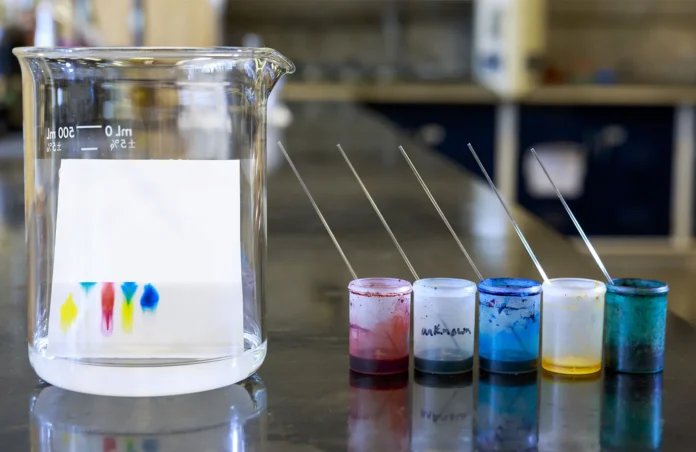
One of the key techniques used during chemical analysis is chromatography. This technique can isolate mixtures to identify and quantify the different components. Chromatography provides accurate results in a range of applications, from pharmaceuticals to environmental testing.
This blog post will consider its principles, applications, and benefits. Chromatography has become an essential tool in modern laboratories worldwide. Understanding how this technique works can help researchers choose the right method for their specific needs. Let’s dive into the fundamental principles that make chromatography so effective.
Principles of Chromatography
Chromatography separates different kinds of substances based on the phenomenon of movement through a stationary phase. A mixture is dissolved in a fluid termed the mobile phase, and that fluid drives the combination through a structure holding another material termed the stationary phase. The components move at different rates, allowing for their separation.

How fast each substance travels is determined by the interaction of the mobile and stationary phases. This interaction is dependent on polarity, molecular size, and solubility. If you just select the phases correctly, you can achieve clear separation.
Types of Chromatography
There are various types of chromatography, each with specific characteristics. For example, gas chromatography involves a gas as the mobile phase. This method is particularly useful for volatile compounds. In HPLC, moving the sample through a column is done by using a liquid. It is frequently utilized for diverse compounds.
Thin-layer chromatography is a technique on a flat surface. It’s a fast and affordable method for small samples. Each technique has unique benefits, which is what makes chromatography extremely useful in scientific investigations.

Applications in Different Fields
Chromatography applies to many industries. It protects the quality of drugs in the pharmaceutical industry. It helps to ensure safety by detecting contaminants. Environmental scientists use chromatography to identify pollutants in the air, water, and soil. This information contributes to the assessment of ecological impacts or remediation measures.
Chromatography in the food industry is used to isolate nutrients and contaminants. As part of ensuring quality and safety, it helps with regulatory compliance. In forensic science, chromatography is also utilized in criminal investigative processes to separate and identify substances. This technique is critical in terms of evidence in forensic science and legal proceedings.
Advantages of Chromatography
A significant benefit of chromatography is its precision. This enables you to identify and measure the concentrations of components in a mixture accurately. This accuracy, in turn, is crucial in pharmaceutical development and food safety. Chromatography also allows dealing with complex samples, which opens the door for many applications.

Its capability of separating trace amounts is another advantage. Such an ability is particularly important in domains where even minor differences can lead to major differences in outcomes. According to the U.S. Food and Drug Administration, chromatography is one of the primary analytical methods used in regulatory testing for pharmaceuticals and food products. Additionally, it is versatile, as it offers flexibility in selecting various phases and approaches. By defining processes for a specific need, researchers can conduct more efficient analysis.
Challenges and Considerations
Chromatography has several advantages, but there are also issues. It requires careful selection of the right phases. Making the wrong choices can often result in failing to separate correctly or unclear results. Also, doing maintenance on the equipment is extremely important for guaranteeing performance.
Especially for advanced techniques like HPLC, cost can be a drawback. Furthermore, the equipment is expensive, and the necessity for skilled operators increases costs. However, this investment is often worth it, as you can gain very valuable in-depth insights from your analysis.
Future Prospects
Technology is continuously improving chromatography. Innovative materials and techniques are emerging to increase both efficiency and precision. Automation has had more adoption, and it is reducing human errors and improving throughput. These innovations have the potential to further broaden the applications of chromatography.
Scientists are investigating how to improve the process by making it less wasteful and creating less energy use. These sustainable shifts have become a top priority and also fall under long-term environmental objectives.
Conclusion
One of the most widely used techniques in chemical analysis is chromatography. The power of its separation and identification has made it a vital tool in a variety of areas. Its applications are widespread, from ensuring the purity of drugs to environmental sample analysis.
The analytical advantages far outweigh any drawbacks of chromatography. With this technology continuing to develop, it will only play a bigger part in scientific investigation. Awareness of its principles and applications brings better usage and innovation.