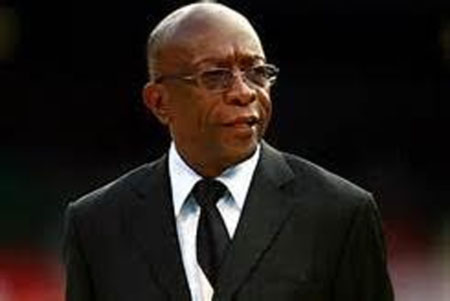
PORT OF SPAIN, Trinidad — In a dramatic legal turn that could reshape one of global football’s longest-running corruption sagas, a High Court judge in Trinidad and Tobago ruled on Tuesday that the extradition proceedings against former FIFA vice president Jack Warner were fundamentally “flawed,” halting the United States’ attempt to bring him before its courts on a raft of fraud-related charges.
Justice Karen Reid, delivering her decision in the Port of Spain High Court, emphasized that while courts are generally reluctant to interfere with criminal proceedings, the law imposes strict obligations on how citizens are to be surrendered to foreign jurisdictions.
“Ordinarily, civil courts are slow to make any decision, the effect of which is to thwart the conduct of criminal prosecutions, as the public interest is usually best served by having those prosecutions determined on their merits,” Justice Reid stated.
“When it comes to the handing over of citizens for extraterritorial prosecution, the Extradition Act provides a manner in which this is to be done, and the protections that are required to be put in place for the protection of our citizens.”

Longtime FIFA powerbroker facing 29 charges
Warner, 81, once among the most influential figures in world football, faces 29 charges in the United States, including fraud, racketeering, and illegal wire transfers allegedly committed between 1990 and 2011 across multiple jurisdictions — including the U.S., Trinidad and Tobago, and other countries.
He was arrested in 2015 on a provisional warrant following an American extradition request, and later released on TT$2.5 million bail. Warner was among several senior FIFA officials indicted that year after a sweeping corruption investigation by the Federal Bureau of Investigation (FBI) and the United States Department of Justice into alleged decades-long bribery and kickback schemes.
“Specialty principle” at the heart of legal battle
Central to the case was the “specialty principle,” a cornerstone of extradition law that ensures individuals can only be prosecuted for the specific offences listed in an extradition request. Justice Reid underscored that this legal safeguard is fundamental to protecting citizens’ rights once they are surrendered to another state.
“A few things have become obvious,” she noted in her ruling. “It is not in dispute that the only arrangement existing between the requesting state and Trinidad and Tobago is the treaty.”
The court also heard that the Office of the Attorney General conceded a key document purported to support the extradition request did not, in fact, exist. This revelation undermined the legal foundation of the case, prompting arguments that proceedings against Warner should be discontinued altogether.
AG’s office concedes breach of Constitution
British King’s Counsel Robert Strang, representing the Attorney General’s office, acknowledged before the court that the absence of a binding “specialty” arrangement and the non-existence of the supporting certificate amounted to constitutional violations.

“Given that at present the claimant is under continuing legal restraints on his liberty, the court should order that the ATP be set aside and that any continuing restraints on the claimant’s liberty be set aside,” Strang submitted. “I agree that that is open to the court based on the admitted breaches of the Constitution that the Attorney General set out in his written submissions.”
Despite the strong arguments for termination, Justice Reid stopped short of immediately quashing the case. Instead, she instructed both parties to file further written submissions before delivering a final determination.
Questions over government’s handling of case
The ruling follows a series of setbacks for the state’s extradition efforts. In August, Attorney General John Jeremie ordered an internal review into how Warner’s case was handled amid allegations of misrepresentation and misconduct tied to a 2015 agreement with the United States.
Compounding the state’s position, former Chief Magistrate Maria Busby Earle-Caddle revealed in June 2023 that no formal written agreement authorizing Warner’s extradition existed between Trinidad and Tobago and the U.S.