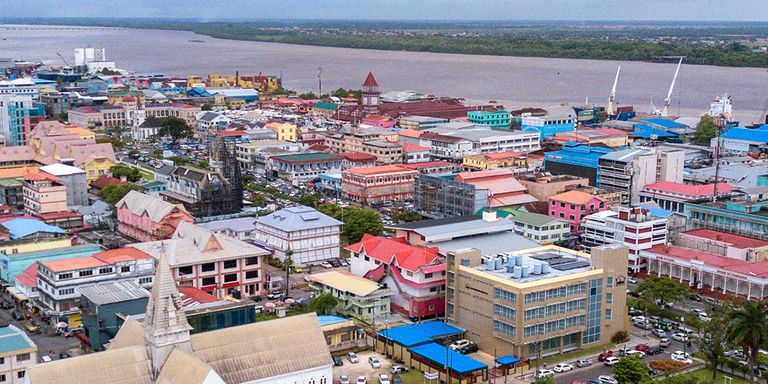
The government of Guyana has reaffirmed its commitment to transforming Georgetown into a sustainable, modern capital while preserving its unique heritage and identity.
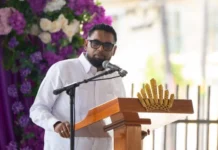
Speaking at a news conference, President Irfaan Ali said, “The mismanagement and inefficiency through which the city is managed can no longer be tolerated. It is time for us, as citizens and as a country, to take charge of the situation. We are advancing the rescue of Georgetown.” He added that the initiative forms part of a broader national strategy for sustainable urban development, starting with the capital and its surrounding region.
Over the past five years, the government has invested billions of dollars in drainage upgrades, road improvements, housing expansion, and a high-span bridge over the Demerara River, all aimed at improving quality of life and supporting economic growth.

The new City Revival Plan, launched in collaboration with the King’s Foundation, envisions Georgetown as a sustainable “Garden City” that highlights Guyana’s biodiversity, cultural heritage, and inclusive development. Flagship projects include recreational spaces, heritage restoration, and the rehabilitation of historic landmarks such as the old Transport and Harbours building and the train station, which will host a new museum and training hub.
The Stabroek Waterfront Development will modernize the waterfront and market areas, celebrating Georgetown’s identity as the “land of many waters.” Other components include drainage canal upgrades in a touristic style, restoration of urban landscapes, and the Lamaha Railway Courtyard project, offering a visual walk-through of Guyana’s history.
President Ali said the plan aligns with the Low Carbon Development Strategy (LCDS) 2030, ensuring sustainability and inclusivity. “We are progressing with a clearly defined plan for the city. Every stakeholder will play a critical role in advancing this transformation of our capital. Georgetown must be repositioned as one of the finest cities in the world,” he said.
In addition to Georgetown, the government will pursue demonstration projects such as the outer Georgetown low-carbon market town and the Silicon City master plan, designed to pilot models of sustainable urban growth. Ali emphasized that these initiatives aim not only to improve infrastructure but also to foster civic pride and a renewed identity for the capital.
The remarks come as local government elections could be called within the next year. While the opposition People’s National Congress Reform-led A Partnership for National Unity (APNU) controls 19 City Council seats, the ruling People’s Progressive Party/Civic (PPP/C) holds 11. Ali said residents will choose “the type of leadership” that ensures the city is transformed and effectively managed.