



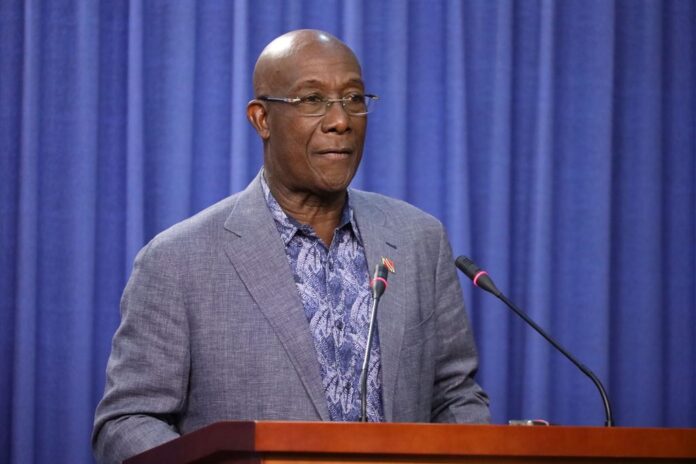
PORT OF SPAIN, Trinidad – Former Trinidad and Tobago Prime Minister Dr. Keith Rowley has broken his silence on a controversial Cricket West Indies (CWI) decision, expressing sharp disapproval over the appointment of Daren Sammy as both head coach and chief selector of the regional team.
In a spirited interview on Isports on i95.5 FM, the seasoned statesman argued that entrusting one individual with such sweeping authority was “not in the best interest of West Indies cricket.” Rowley, who once chaired CARICOM’s Prime Ministerial Sub-Committee on Cricket, made it clear he was speaking in a personal capacity — not on behalf of the regional bloc — but his words carried the weight of his long-standing connection to the sport and its governance.
“Chief cook and bottle-washer”
Sammy, 41, was named all-format head coach in April, assuming control from Andre Coley as Test coach, and was also handed the title of chief selector across formats. While the move was seen by some as a streamlining of leadership, Rowley was unconvinced.

“I see no benefit in one man being chief cook and bottle-washer,” he remarked, drawing on a Caribbean idiom that warns against placing too many responsibilities in one person’s hands.
The former prime minister suggested that such concentration of power undermines the spirit of collective decision-making that good leadership is built on.
Drawing from Cabinet experience, Rowley advocates for collaborative thinking
To illustrate his point, Rowley revisited his time in government under former Prime Minister Patrick Manning, emphasizing how even the highest office benefited from shared decision-making.
“I used to be in a Cabinet with Patrick Manning and there were times we’d have serious decisions to make,” Rowley recalled.
“Initially, you’d look to the prime minister to make a decision whereas he is ultimately responsible for the Government. And many times, he would call us together and have a discussion, and there would be differences of opinion and different people would say different things, and then we would come to a decision.”
He added pointedly:

“And he used to say, ‘When we put our heads together, we get it right’ — and I’d like to recommend that to West Indies cricket.”
A warning born of experience
This is not the first time Rowley has offered strong views on regional cricket. During his time in public office, he was often vocal about the structural and administrative flaws that have plagued West Indies cricket for decades.
His latest comments add to a growing debate about transparency, balance of power, and accountability within CWI, especially as the organization seeks to rebuild its competitive edge on the global stage.
Whether Rowley’s warning will spark change remains to be seen — but it has certainly added fresh urgency to a conversation long overdue.











 decision.)