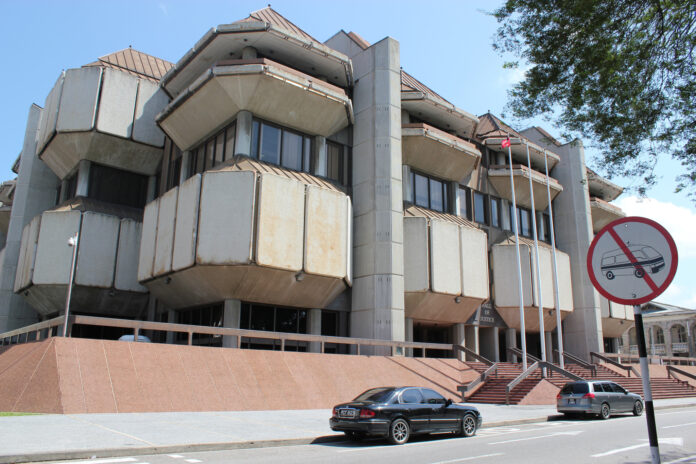
The High Court of Trinidad and Tobago has officially designated the Venezuelan criminal organization Tren de Aragua as a terrorist entity, following an application by the Attorney General.

The ruling, issued under Section 22B of the Anti-Terrorism Act and aligned with United Nations Security Council Resolution 1373, prohibits all persons and entities in Trinidad and Tobago from engaging in any dealings with Tren de Aragua. It also mandates the freezing of all property and assets linked directly or indirectly to the group.
Under the new designation, providing any form of financial services, material assistance, or related support to Tren de Aragua is now a criminal offense.

According to the Attorney General’s Office, Tren de Aragua is composed of foreign nationals and poses a significant risk of terrorism. Originating in Venezuela, the group maintains active cells across several countries in the Americas, including Colombia, Peru, Chile, the United States, Ecuador, Bolivia, and Brazil.
The government cited Trinidad and Tobago’s close proximity to Venezuela as a key factor prompting swift action. A statement from the government emphasized the importance of protecting national security and disrupting transnational criminal networks:
“Due to the geographical location of Venezuela and its close proximity to Trinidad and Tobago, it was incumbent upon the Government of Trinidad and Tobago to take immediate steps and requisite measures to protect the safety and security of its nationals,” the statement read.

The designation was part of ongoing cooperation with the United States, described as a “significant milestone” in national security efforts under Prime Minister Kamla Persad-Bissessar’s leadership.
In March, then-Prime Minister Stuart Young met with U.S. Secretary of State Marco Rubio in Kingston, Jamaica, where Young expressed readiness to take a “pre-emptive strike” against the group by seeking its terrorist designation. Rubio agreed to provide information and evidence to assist Trinidad and Tobago’s application to the High Court.
As a member of the Caribbean Financial Action Task Force (CFATF), Trinidad and Tobago reaffirmed its commitment to complying with Financial Action Task Force (FATF) standards and United Nations sanctions aimed at preventing terrorism financing.

The government’s decisive move signals a strengthened regional effort to combat violent international cartels and transnational criminal networks operating within and beyond Caribbean borders.