Haiti is spiraling into “total chaos,” the United Nations warned this week, as a new report revealed that at least 1,617 people were killed in just the first three months of 2025 — a chilling toll driven by gang warfare, vigilante justice, and violent security force operations.
According to the UN Integrated Office in Haiti (BINUH), the deaths occurred between January 1 and March 31 in incidents involving armed gangs, self-defense groups, unorganized members of the population, and law enforcement. Another 580 people were injured in the same period, while 161 people were kidnapped for ransom — 63% of them in the Artibonite department.
The UN special representative to Haiti warned Monday that the country is nearing a “point of no return,” as heavily armed gangs intensify efforts to expand their territorial control in and around Port-au-Prince. In recent months, criminal groups have launched large-scale attacks on key neighborhoods, including Pétion-Ville, Delmas, and Kenscoff, in an attempt to destabilize the capital.

In the Centre department, gang assaults on Mirebalais and Saut d’Eau were linked to efforts to seize control of strategic routes to the Dominican Republic. One such attack led to the escape of over 515 inmates from the Mirebalais prison, further weakening Haiti’s already fragile security apparatus.
While gang violence remains the main driver of instability, the UN also raised serious concerns about the rise of self-defense groups — particularly the loosely organized Bwa Kalé movement. At least 189 people accused of gang ties or petty crimes were killed by such groups during the reporting period, many without due process.
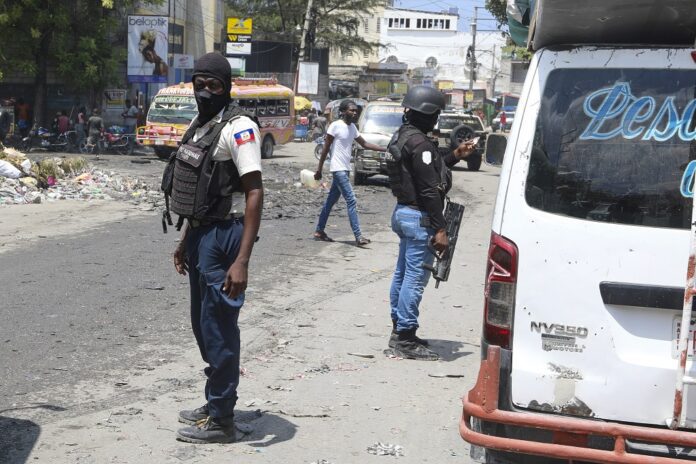
Security operations have also come under scrutiny. BINUH reported that 802 people were killed during police actions, with one in five of those fatalities being civilians struck by stray bullets. Additionally, 65 summary executions were allegedly carried out by police officers and the Government Commissioner of Miragoâne, raising questions about excessive force and accountability within the state security forces.
Meanwhile, a UN-backed multinational mission led by Kenya, originally intended to deploy 2,500 officers, has stalled with only around 1,000 personnel from six countries on the ground. The under-resourced force has so far failed to push back the gangs or restore order.
Haiti, the poorest nation in the Western Hemisphere, is experiencing one of its worst security and humanitarian crises in decades, with its government institutions in collapse, its population trapped between criminal violence and state repression, and its future hanging precariously in the balance.