As we celebrate Caribbean American Heritage Month, we shine a spotlight on the remarkable contributions of Caribbean Americans whose pioneering work has often gone unheralded. From groundbreaking inventions to trailblazing achievements in various fields, these individuals have left an indelible mark on history.

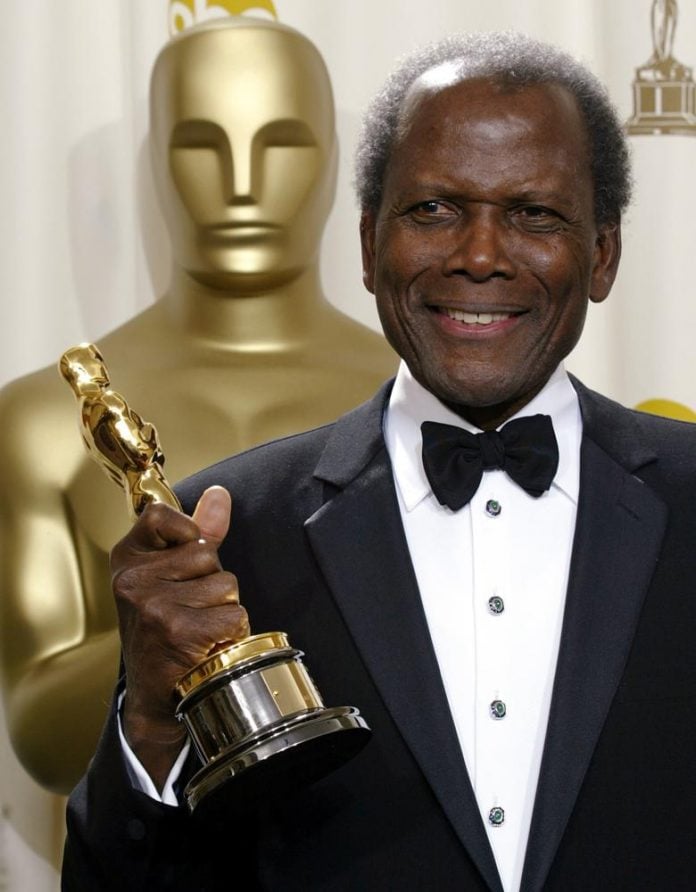
Sidney Poitier, a trailblazing actor, director, and cultural icon, is celebrated for his groundbreaking achievements as a Black and Caribbean American artist. Poitier became the first Black actor to win the Academy Award for Best Actor for Lilies of the Field (1963). He also received a Grammy Award, two Golden Globe Awards, and a British Academy Film Award. He received numerous honoraries during his lifetime including the Academy Honorary Award for his lifetime achievement in film in 2001. Several film historians and journalists have called him Hollywood’s first African-American film star.
Of Bahamas heritage
Born on February 20, 1927, in Miami, Florida, to Bahamian parents, Poitier grew up in the Bahamas before moving to the United States as a teenager.

He was the youngest of seven children and his parents were farmers who owned a farm on Cat Island, Bahamas. The family would travel to Miami to sell tomatoes and other produce to wholesalers.
At sixteen, he moved to New York City, looking to become an actor, holding a string of jobs as a dishwasher in the meantime. After failing his first audition with the American Negro Theatre due to his inability to fluently read the script. He was later taught to read by an elderly Jewish waiter.
During World War II, Poitier enlisted in the Army.

After leaving the Army, he worked as a dishwasher until a successful audition landed him a role in an American Negro Theatre production, the same company he failed his first audition with.
Breakout role
Poitier’s breakthrough came in 1950 with the film “No Way Out”, where he played a doctor treating a white bigot. This role set the stage for a career characterized by groundbreaking performances, each considerably more interesting and more prominent than those most African-American actors of the time were offered.
In 1958. he starred alongside Tony Curtis in director Stanley Kramer’s “The Defiant Ones.” The film landed eight Academy Award nominations including Best Picture and Best Actor nominations for both stars, making Poitier the first Black male actor to be nominated for an Oscar. Poitier won the British Academy Film Award for Best Foreign Actor for this role.

In the following years, he started in several other productions and earned a Tony Award nomination and a Golden Globe Award nomination.
In 1963 he starred in “Lilies of the Field.” For this role, he won the Academy Award for Best Actor and became the first Black male to win the award. He also won the Golden Globe Award for Best Actor in a Motion Picture – Drama.
In 1967, he was the most successful draw at the box office, the commercial peak of his career, with three popular films, “To Sir, with Love,” “In the Heat of the Night,” and “Guess Who’s Coming to Dinner.”
In the later years of his career, Sidney Poitier continued to make significant contributions to film, television, and literature, while also engaging in various humanitarian efforts.
Poitier’s legacy
Sidney Poitier has been described as the “sole representative” of African-Americans in mainstream cinema during the 1950s and 1960s. He also paved the way for Black and African-American actors in film.
In 1994, Poitier received a star on the Hollywood Walk of Fame. In 1981, he received the Golden Globe Cecil B. DeMille Award and in 2016 he received the BAFTA Fellowship. In 2022, he was inducted into the National Multicultural Western Heritage Museum.
In 1995, he received the Kennedy Center Honor and in 2009, Poitier was awarded the Presidential Medal of Freedom from Barack Obama. The president noted that Poitier had “[advanced] the nation’s dialogue on race and respect” and “opened doors for a generation of actors.”
He was also named an honorary Knight Commander of the Order of the British Empire by Queen Elizabeth II in 1974. In 1986, he was given the Honorary Degree of Doctor of Fine Arts from the University of Miami.
Sidney Poitier was married twice and had six children. He died in 2022 at the age of 94.