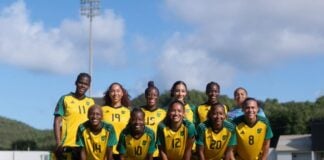
In a move hailed as both historic and transformative, the International Olympic Committee (IOC) has officially expanded the women’s football tournament for the Los Angeles 2028 Olympic Games to 16 teams, signaling a bold leap toward gender parity in the world’s most beloved sport.

The decision has drawn swift and enthusiastic endorsement from the Jamaica Olympic Association (JOA).
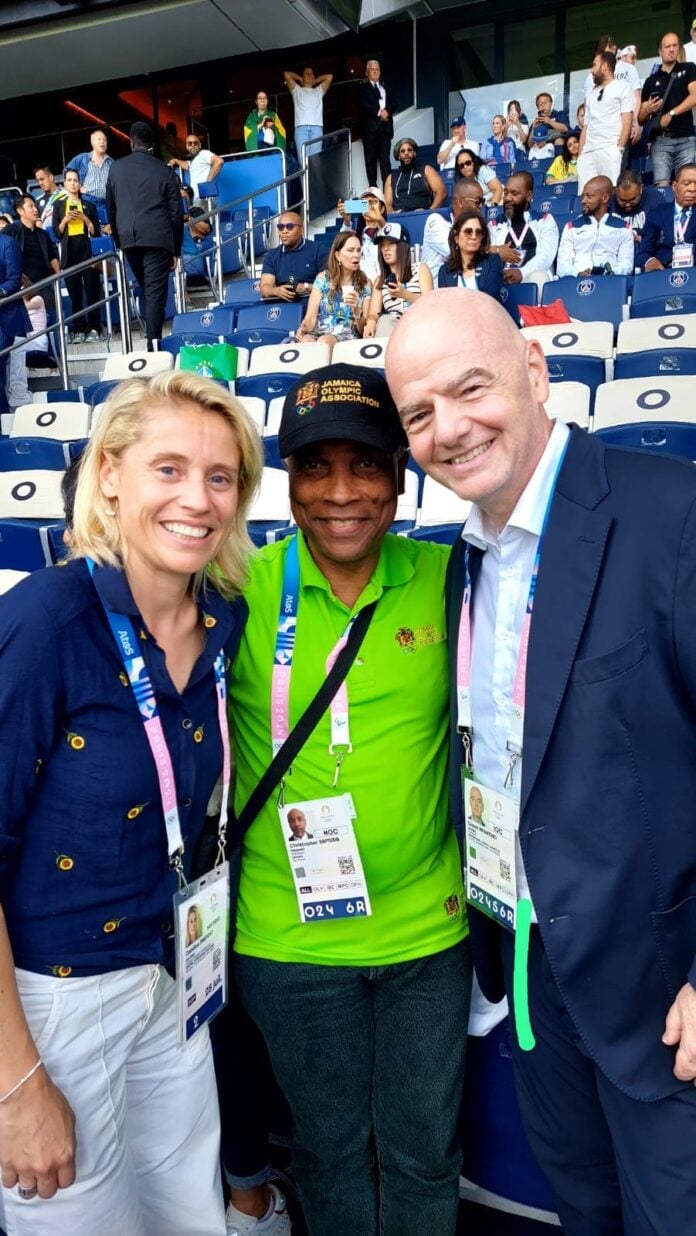
“The writing was on the wall and has been, for years, a part of the Olympic script for gender parity,” declared JOA President Christopher Samuda, in full support of the development. “And when you consider that the qualifying teams for men may be reduced to 12, then the mandate becomes clearer than through a glass — the goal has not only been achieved, but has been scored.”

This recalibration of Olympic football reflects the growing strength, skill, and spectacle of the women’s game, particularly in footballing powerhouses like the United States, and speaks to a broader global movement toward equity in competition and opportunity.
Not just a trend—a global standard emerging
The JOA views the IOC’s decision as more than symbolic. It is a declaration that sport, in all its expressions, is a platform for empowerment and progress.
“IOC’s decision is more than a trend. It’s reflecting a way of life in global sports,” noted JOA Secretary General and CEO Ryan Foster, “and I believe its impact will have a domino effect on other sports which are already breaking ground and putting down roots of gender equity.”

As women continue to break through long-standing barriers in professional leagues and international competitions, Olympic sport must reflect that progress. LA 2028 is shaping up to be a watershed moment—not only in football, but across the Olympic movement.
Redefining the Game: From representation to revolution
For the JOA, the announcement aligns naturally with its own forward-looking leadership, which has already broken glass ceilings within its executive ranks. The organization boasts both its first female Treasurer, Nichole Case, and Vice President, Jacqueline Cowan, as part of a leadership team dedicated to redefining sport governance.
“We are change makers,” stated Foster, emphasizing the JOA’s trailblazing stance.

Samuda was also quick to link the IOC’s latest move with the historic election of Kirsty Coventry to one of the most powerful seats in Olympic leadership—a development that has further amplified the voice of women in sport.
“The IOC is saying sport is not only a unifier but, importantly, an equalizer,” Samuda reflected. “And FIFA is smiling in the midfield as it watches the Mexican wave—arguably born at the 1986 World Cup finals in Mexico—moving with feminine purpose toward LA in 2028.”
A call to action, a moment of momentum
The JOA believes the expanded format not only enhances global representation, but serves as a call to action—to associations, athletes, and advocates everywhere.
“The decision is a call to action for those who have ears to hear and are understanding of the fact that the goalpost has moved—without compromising the integrity of the sport,” Foster declared.
This shift is not about numbers alone—it is about reshaping expectations and reimagining possibilities. For aspiring women footballers in Jamaica and around the world, the Olympic dream just got bigger and brighter.