Dwayne Bravo breaks silence! Says he didn’t walk away from Test, they walked away from him
Key Points(5)
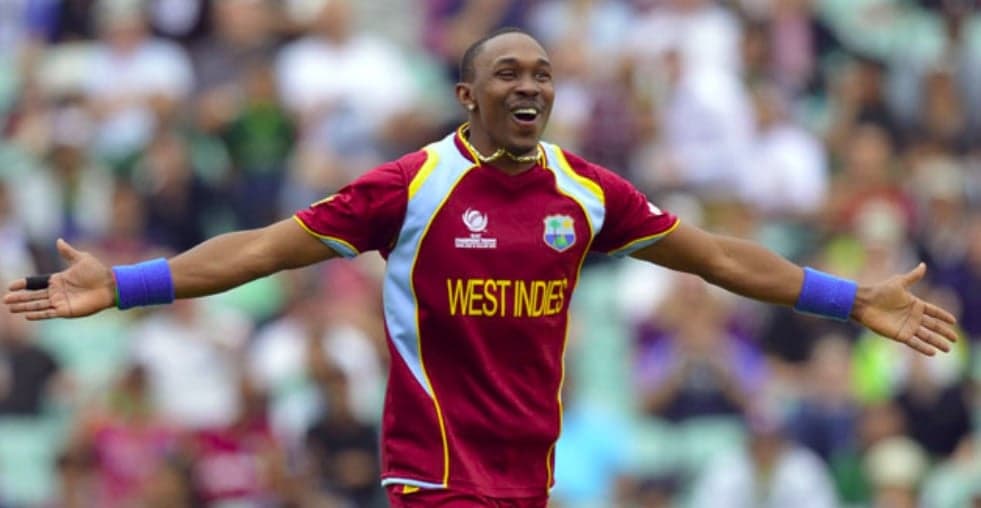
- <strong>PORT OF SPAIN, Trinidad —</strong> Nearly 11 years after his last appearance in whites, former West Indies all-rounder Dwayne Bravo has spoken candidly about the abrupt end of his Test career, insisting that retirement was never his choice.
- Appearing recently on the Beard Before Wicket Podcast, the 42-year-old revealed that he was effectively pushed out of the longest format, a decision he believes was driven by the team’s leadership and selectors at the time.
- <h2>A career that ended without consent</h2> Bravo, widely regarded as one of the greatest Twenty20 players in the history of the game, was unequivocal in recounting how his Test journey came to a halt.
- “No, I didn’t decide to give up Test cricket, they decided to give me up,” Bravo said.
- <h2>Clearing the captain of blame</h2> Bravo was also keen to absolve then-captain Darren Sammy of responsibility, emphasizing the limited influence Sammy wielded early in his leadership tenure.
PORT OF SPAIN, Trinidad — Nearly 11 years after his last appearance in whites, former West Indies all-rounder Dwayne Bravo has spoken candidly about the abrupt end of his Test career, insisting that retirement was never his choice.
Appearing recently on the Beard Before Wicket Podcast, the 42-year-old revealed that he was effectively pushed out of the longest format, a decision he believes was driven by the team’s leadership and selectors at the time.
A career that ended without consent
Bravo, widely regarded as one of the greatest Twenty20 players in the history of the game, was unequivocal in recounting how his Test journey came to a halt.
“No, I didn’t decide to give up Test cricket, they decided to give me up,” Bravo said. “So, it’s funny that you ask that question because my assistant coach, Otis (Gibson), is the guy who was the coach of the West Indies team back then, when my Test career came (to an end).”
At the time, Otis Gibson was head coach of the West Indies, and Bravo maintains that the decision to exclude him was institutional rather than personal.
Clearing the captain of blame
Bravo was also keen to absolve then-captain Darren Sammy of responsibility, emphasizing the limited influence Sammy wielded early in his leadership tenure.
“I didn’t think it had anything to do with Sammy, because I think at that time Sammy was a young captain and the captaincy was just given to him, so he didn’t have much influence, so much say over what team was selected,” Bravo explained.
Instead, Bravo placed responsibility squarely on the coaching staff, selectors, and the board.
“So, I always tell Gibbo it was him and the selectors back then and the board’s decision. It was never my personal decision to finish Test cricket and that’s the God honest truth.”
Five years on the outside looking in
Despite his willingness to continue in the format, Bravo found himself repeatedly overlooked. After being excluded from the Test setup, he waited five years for a recall that never came, an absence that ultimately forced his hand.
The selectors, he recalled, appeared to view him primarily as a white-ball specialist, a label he felt unfairly narrowed his role and value.
“I had made it very clear that I wanted to continue my Test journey and obviously, they had different plans and different ideas, and there’s not much I could have done,” Bravo said.
The Test record left behind
Before his Test career was curtailed, Bravo had already built a respectable body of work. In 40 Test matches for the West Indies, he scored 2,200 runs, including three centuries and 13 half-centuries, at an average of 31.42. With the ball, he claimed 86 wickets, highlighted by two five-wicket hauls, at an average of 39.83.
“But if it was my decision, I would have played a lot more Test matches, and longer,” he admitted.
Loss, gain, and a legacy rewritten
While the premature end to his Test ambitions remains a point of disappointment, Bravo acknowledged that the forced turn in his career ultimately opened doors that reshaped his legacy.
“It was cut short and you lose there, but I gained here,” he reflected. “Because I think if I continued to play more Test matches, I would not have the T20 career that I had.”
That pivot would see Bravo become a global T20 icon, redefining the role of the modern all-rounder and leaving an indelible mark on the shortest format of the game, even as questions linger about what might have been in Test cricket.