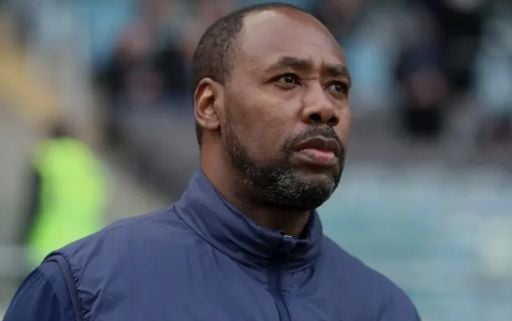
PORT OF SPAIN, Trinidad — Dennis ‘Tallest’ Lawrence, the celebrated Trinidad and Tobago striker who scored the decisive goal to send the national team to their first and only FIFA World Cup in 2006, has spoken out against the TTFA’s decision not to renew Dwight Yorke’s contract as head coach.
Lawrence, now 51 and serving as assistant head coach at Championship side West Bromwich Albion, stressed that the decision undermines the principle of continuity, which he believes is essential for long-term football development in Trinidad and Tobago.
“In my opinion, coaches need time, especially in a job like the T&T job,” Lawrence said during an interview on i95.5 FM’s Isports program Thursday. “I did not follow the whole process of what Dwight did, etcetera, I’m speaking about all coaches in general, and that includes Dwight. What I do know is that if you’re bringing in a coach who doesn’t have the wealth of experience, and you’ve just given him a campaign to gain that experience, what harm is there in extending his tenure so that for the next campaign, he could be better prepared?”

The cost of short-term thinking
Lawrence highlighted a recurring pattern in T&T football: the tendency to hire coaches close to major tournaments, aiming for immediate results, often at the expense of sustainable progress.
“We’ve always brought in a hit man to qualify for a campaign,” he said. “If you continue to keep doing it that way, you may hit one again in the next 10, 15, 20 years, who knows? But that does not guarantee development or continuity.”
Lawrence argued that long-term strategy should outweigh the pressure to qualify for any single tournament, advocating for a measured, developmental approach.
“You can’t continuously keep bringing in a coach just before a tournament to try and achieve a short-term goal and then say the team isn’t good when it doesn’t work. That is not the correct way to do it,” he said. “If you want to do it correctly, then use the resources you have on the island, improve and grow development, and integrate foreign coaches as needed, they bring a different skill set, but do not sacrifice continuity for short-term results.”
Yorke’s tenure and the lessons ahead
Dwight Yorke took over as head coach in November 2024, tasked with guiding Trinidad and Tobago to the 2026 FIFA World Cup. However, the campaign did not go as planned, and contract negotiations broke down last month, leading to Yorke’s departure.
Lawrence maintained that this situation was not unique to Yorke. He noted that other foreign coaches, hired to deliver in high-stakes tournaments, have also fallen short of expectations, underscoring the systemic challenges faced by the TTFA.

“What we need is to think long-term,” Lawrence concluded. “We need to develop our football here, build on the foundations, and give our coaches the time to grow. That way, we can create a system that is sustainable, rather than chasing quick fixes.”