Alia Atkinson, The Jamaican Who Became One of the Most Successful Black Female Swimmers - Part 2
Key Points(5)
- <em>This is part two of <strong>Alia Atkinson,</strong> <strong>The Jamaican Who Became One of the Most Successful Black Female Swimmers.
- </strong>In this final part, read her views on her legacy, Olympic performance, why she never won an Olympic medal, her favorite world record, her assessment of swimming in Jamaica and the world, and what she would change.
- Read her thoughts on why it’s so hard for black people to achieve more success in swimming, her favorite places, food, and Jamaican dish.
- Finally hear why she thinks swimming is such a good skill to have.
- <a href="https://www.caribbeannationalweekly.com/caribbean-breaking-news-featured/alia-atkinson-the-jamaican-who-became-one-of-the-most-successful-black-female-swimmers-part-1/">You can find the first segment here.</a></em> <em>CNW: <strong>You have obviously created an incredible legacy.
This is part two of Alia Atkinson, The Jamaican Who Became One of the Most Successful Black Female Swimmers. In this final part, read her views on her legacy, Olympic performance, why she never won an Olympic medal, her favorite world record, her assessment of swimming in Jamaica and the world, and what she would change. Read her thoughts on why it’s so hard for black people to achieve more success in swimming, her favorite places, food, and Jamaican dish. Finally hear why she thinks swimming is such a good skill to have. You can find the first segment here.
CNW: You have obviously created an incredible legacy. What do you want people to take from it?
ALIA ATKINSON: In every interview, I stress the importance of perseverance. Yes, there are many other things I have done and achieved. The accolades, the gold medals, all of those I could say were my shining moments. Still, I stress the importance of perseverance because I want to show young, female, male, Caribbean, and minority athletes in the sport and life that you must persevere. If you give up because of all the obstacles and hardships that come your way, you will never get over it. If you can do it in sports, you will know how to overcome it while in a life-setting situation and persevere through it.
CNW: You have been to 5 Olympics. How would you rate your effort and performance?
ALIA: Effort A+. Performance? It has been all over the place. I think my first one was more about the experience. I was 15 years old. So, it was seeing the older athletes and following in their footsteps. 2008 was during college, and I was all over the place again. I was still trying to find my swimming areas. Who I was as a swimmer, not just sprints and middle distance. 2012 was where I exploded on the international scene and got that 4th place. I was so close to a medal and actually saw my potential as an athlete.
2016 I thought about where I should go, saying to myself it’s my time to go and do it, and then everything fizzled out. I was happy that I made the finals. 2020 was just finishing up my career and persevering. I know there were so many hardships with covid and training inconsistencies. A lot of reasons to say, Alia, you are done, and it would have been justified in my head. But I think that was where the mental aspects came in more than the physical to say, nope, I’m going to finish this because this is the date. I’m not going to give up on myself. I’m going to see this through.
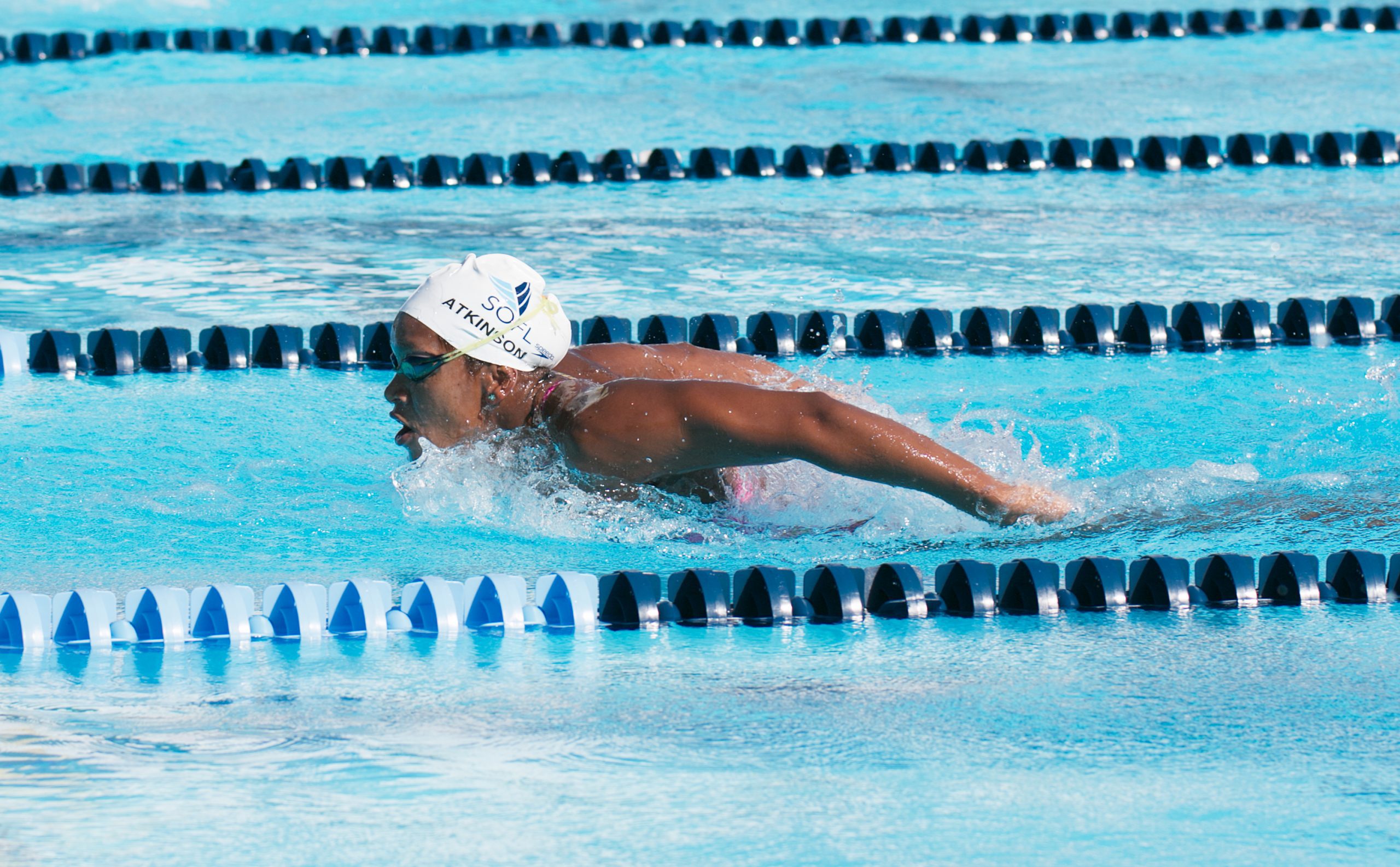
CNW: You have 4 World Cups and 11 CAC gold medals. Why was it easier to win those and not the Olympics?
ALIA ATKINSON: Olympics is a long course, and most of the others are short courses. My body tends to do better at short courses, which is why I have so many accolades in them. In addition, world cups and ISL are all short courses in which I have a lot of experience. I got a silver and bronze in the long course in 2015, so there were a lot of expectations going into the 2016 that this was the year. But when the other swimmers brought it up to another level, I just stayed the same. People just ‘bruk out.’ Like, where were you saving this?
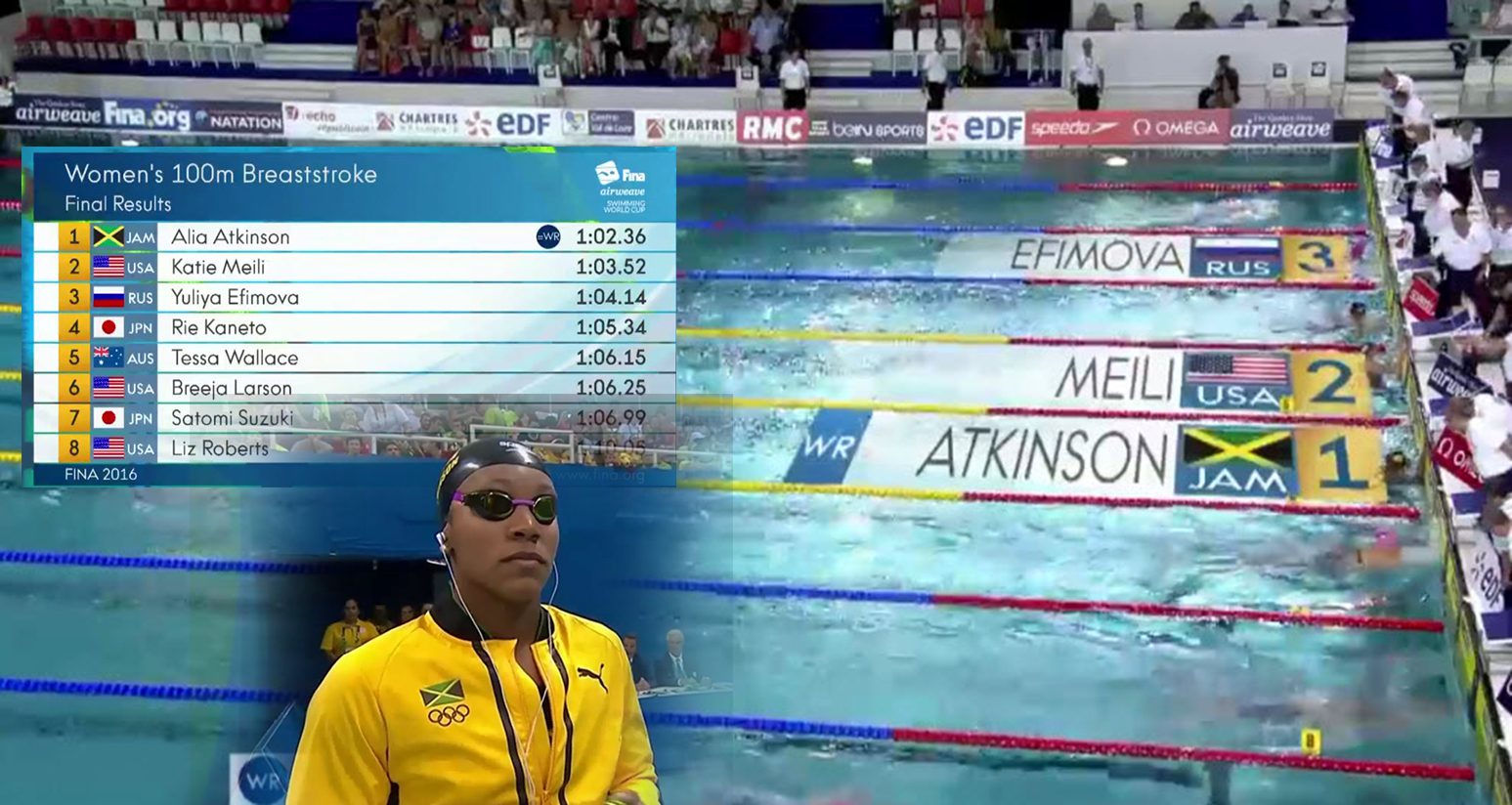
CNW: You have four world records. Which was your favorite?
ALIA ATKINSON: The first is fantastic because you never knew that you were at world record status. I didn’t picture this. I was never going for this. I wanted to be my best and do my best. It was more of, let me see what I can do. Equaling it was also special because it was after the Olympic’s dream setback. It was at a time when all these questions and doubts came up in my head. I started wondering if I wasn’t fit enough. So, to equal the same record I did in 2014 was special.
A couple of months later, I broke the 50. And that one was cool because my body was tired. I was traveling around different countries. I was always close to a world record but never there. So, this was the time I was actually racing for a world record. I was in Japan with mommy, and we said just forget it and enjoy ourselves. We visited all these places, did a lot of stuff and had a really good time.
Now it is race time. I was on the block and said, “ Let’s see what I can do.” I was always close. Let’s just have a good race. And what do you know? I touched and broke the record!
I say to athletes all the time that when you are pushing for a time, to win a race or get a record, and it does not happen, you are focusing too much on it. It will happen when you least expect it. Whether it’s your body just relaxing, you are mentally relaxed, or you are physically not wound up.
In 2018 when I broke the world record, I started to feel tired and retired. My times haven’t been where they used to be. I haven’t gone 1:02s. My body began to feel a bit more mentally and physically tired. And out of the blue, it happened. And once again, my mother was there, and we went all over the place. I said, alright, this is just one more race; let’s just go in and see what I can do. I wasn’t close to the record at all that time, and I came in and broke it in the 50 out of nowhere! It’s one of those blessings that just sprinkle (with a chuckle). It was one of those days when the planet was aligned, the body was where it needed to be, and it just worked out.
CNW: Doha 2014, the first world record. Describe the feeling.
ALIA ATKINSON: I had just been touched out in the 50. I remember coming in and reaching for the wall, but she did a short stroke. So, in my head, I said I won this. I looked, and I didn’t. It was so much like that pit feeling again. It was like, really, Alia, Really? You had expected to win, thought you did, and you didn’t (her eyes opened wide). So, it was trying to get over that feeling. I needed to refocus because I had two more races.
I remember going into the finals and was like, No Alia you can’t just put someone down as first! That makes no sense. You’re going into the race not only to do your best but to win. You are going to give it your best shot! Make sure you have given it your all at the end of the race. Not just physically but mentally.
A lot of people give it their all physically but do they believe it? It was changing that mentality and mindset. So I went in, touched the wall, and it was the same touch as the 50. I was like, really Alia? You get out-touched again? So I turned around to look for my name at second, and I didn’t see my name. I was like, ha! I know I didn’t get 3rd. So I looked at the wall and saw my name at first. I was like What! It actually happened! I was like yeah! So, I came out of the water, looked at the scoreboard, and said wow, It happened! This is not a dream. It is not going away. Then I saw that I had equaled the world record.
CNW: You have stopped competing in the pool physically. Where is your mindset?
ALIA: The other day, my aunt asked me if I missed swimming. I told her it felt like I just swam yesterday (laugh). My body hasn’t registered that it had finished. It felt like it has taken a break and getting ready to bounce back. But my mind is enjoying it.
CNW: What do you intend to do with your 30 years of experience?
ALIA ATKINSON: I have many plans and projects that I want to implement. Not just in Jamaica but in the Caribbean as well. I realized that joining the ASAJ or the federation isn’t a big enough step for me; I need to go a little bit broader. The athlete’s commission for FINA is a goal. With their help and being on the board, I can see where projects and money are allocated. Try and implement some sort of proposals to get Jamaica and Caribbean swimming to a better level. One that is more self-sustaining and will get more athletes out of the countries and into more international level swimming.
We have seen a huge drop-off at around 16 or 17. The reasons could be financial, positivity, or optimism. Maybe it’s that nobody thinks they can make it, and in turn, they believe they can’t. Whatever it may be, I am focused on finding a way to help them out. It may be continuing into the collegiate level and inspiring them to have that fight again. I think that is the next step we need to take.
I Still want to see if we can raise enough funds to build a pool in Jamaica. In the Montego Bay area so we can harness those athletes there. Swimmers are traveling to Kingston to get into a competition, but that gets tiring, and nobody wants to do that. So to have a pool in Montego Bay to access all the parishes in that section of Jamaica, I think we’ll be able to increase swimming and increase opportunities for learning to swim as part of a plan for the country.
CNW: Is coaching in your future?
ALIA ATKINSON: (abruptly) I don’t think so. I don’t want to stay in one area and coach. Coaches are like teachers. The same idea of sitting in a class and inspiring, literally helping an athlete to develop. It is not just the responsibility of a mentor, but it’s a lot of work. Dealing with athletes and their emotions, the parents and their emotions, having no time for yourself. I don’t know how these coaches do it. They are really fantastic. Nope! I am not cut out for that. A swim clinic I’ll like to do but coaching? Nooooo.
CNW: What is your assessment of swimming in Jamaica?
ALIA: In the past, they have produced athletes for sure. Every 12 years, we’ve had somebody make finals. I broke that by going consistently. Now that I am out of it, I am hoping that the 12-year mark doesn’t happen again. Maybe every eight years. But athletes in Jamaica are still very young, maybe 18 years and under, so the girls I am looking at still have many years to develop. Can we find enough time and money to dedicate to their development, so there is a plan for them after they finish college? Maybe a four-year cycle to get to the next Olympics or a two-year cycle if we are lucky.
Right now, Jamaica’s swimming is on the up. I think my retirement helped to light some fuses because there is a spot to fill. But that should be the idea. We need to help incorporate the entire country and help all those senior athletes to get to the next level. There is hope; there is potential, and they are young.
CNW: How do you see the sport globally?
ALIA ATKINSON: I think swimming globally is going in a good direction. The ISL has done a lot of good for swimming, allowing athletes to have a future. I remember seeing five or six black swimmers at worlds. More countries are participating and bringing their numbers out. The representation is undoubtedly a lot more. It seems to be going in a great direction.
CNW: Anything you would change in swimming if you could?
ALIA: I would definitely change the education in swimming for parents, coaches, and officials. I would also put more money into developing countries to create better structures. Right now, the US has a lot of athletes, they produce the most medals, and they have a lot of advertisers and sponsors. That is great. Other countries trying to develop don’t have the structure, money for suits, training, etc. Some can’t even go to international meets or programs where you learn. For example, I have been to meets where athletes struggle to use a block because they have not been exposed to it before. Having some sort of camp to educate the athletes before that happens is where we are lacking. We say we are here for everyone, but we are not putting in the time, education, or effort for everyone. That is something I’d like to address.
CNW: Why is it so hard for black swimmers to succeed more in swimming?
ALIA ATKINSON: I don’t want to say it is hard because I have done it now. But it was very difficult in different ways, not because my body is different from everybody else. But because it took a lot more financially. The country I come from doesn’t support swimming in that way. There is also the issue of education for coaches and athletes. The more you learn as a coach, the more you can give back to your athletes. The more you know at the senior level, the more you can give back to your coaches as well.
I think maybe it was just a lack of interest because there was not much representation. We don’t see anybody like us in the sport, so why would we go.
CNW: How do we get more black people into swimming?
ALIA: There has been a huge wave of representation in the last few years. We always talk about it, but I didn’t really see it until a couple of years back when you see the younger athletes looking up to me and saying: “Wow, I saw you at so and so. It was so exciting to see you there.” I just thought they were happy to see me. But no, they were happy to see a black woman on the podium. I didn’t put those connections together until much later.
Yes, you can be inspired by the love of the sport. But you can just swim to swim. Why would you want to compete? When you see someone like you do it, you start thinking that you can do it too. That is how we begin to build the cycle. Right now, we have Simone Manuel, Natalie Hinds, and many more boys coming out. In Canada, I’m seeing a bunch of black men stepping up as well. So we are seeing that growth, which is happening in little bits worldwide. Hopefully, they will be able to make it onto more world scenes and have that growth continue.
CNW: Do you think you broke the ceiling?
ALIA ATKINSON: I don’t think we knew how high the ceiling was. And that is just coming from all my years. It may be different for someone from another country. But coming from Jamaica, a black Jamaican swimmer, I didn’t realize how high the ceiling was. I never saw a black woman on the podium. So why would I think I would be the one? I know I broke something, though, but we still have a far way to go.
CNW: What advice would you give to youngsters in swimming?
ALIA: I say perseverance a lot. However, you still have to enjoy what you do. It may not be enjoyable every day, but it is the little things you do. The smallest of small things will help you with your longevity. Find something in your day, in your practice that you enjoy, and hold on to it. Make sure you enjoy and definitely persevere. And when a challenge comes along, don’t shy from it. Face it head-on and see how you can overcome it.
CNW: Favorite place you have traveled to?
ALIA ATKINSON: I love Japan for its culture, nature, temples, and houses. The food is fantastic. I also love Singapore. It’s like the Asian-Caribbean. The food is very similar to Caribbean food. The temperature is very lovely and warm as well. The people are very friendly, and it’s a mixture of all the different Asian countries. It’s kind of like Jamaica. Out of many one people; out of many Asians.
CNW: You must have been exposed to many different foods all over the world. What is your favorite?
ALIA: Besides mommy cooking? Hers is always at the top. But Asian food is definitely a favorite. Simple ingredients that just come together nicely and taste good. You get lean, clean meats, and I love the vegetable mixture.
CNW: And your favorite Jamaica dish?
ALIA: Alia’s face lighted up as she thought about the question. She confessed that she is a picky eater and hardly completes a meal. Ooohhh, that would most definitely be pick-up saltfish (cabbage and salt fish). Red Peas and pumpkin soup is a must. Jerk, brown stew chicken, and curry mutton have to be on the list.
CNW: Finally, why is swimming a good sport?
ALIA ATKINSON: I have always said swimming is more than a sport; it is a life skill that you can take and save lives. So, in that aspect, I believe everybody should learn to swim. As a sport, not only does it help your cardiovascular system, it helps children with asthma at a young age. It can actually change it around so you don’t have adult asthma. It is also good for skin care. It is an all-around sport that helps to build every muscle in the body. It’s also less on the joints. So, swimming can benefit everybody, whether it is leisure or just a workout.