Home Blog Page 50

Patoranking and Buju Banton unite on ‘African Soldier’ to champion Black liberation

Photo credit: APM

Award-winning Nigerian musician Patoranking has released “African Soldier,” a powerful roots reggae collaboration featuring GRAMMY-winning dancehall legend Buju Banton. Serving as the second single from Patoranking’s forthcoming fifth studio album, the track celebrates African pride, unity, and the global rise of Black excellence.

Produced by renowned Jamaican producer Jazzwad, who previously worked with Bounty Killer, Popcaan, and Damian Marley, the song emphasizes live musicianship. Drums, bass, keys, guitar, and a full horn section were recorded with live session players from Jamaica, giving the track its warm, authentic reggae sound. GRAMMY-winning audio engineer Bonzai (Mariah Carey, Nas, Chronixx) handled the mix, ensuring the track’s sonic precision matches its powerful message.

The accompanying music video, shot in New York and directed by Nigerian filmmaker UAX (Tyla, Rema, Tems), visually amplifies the themes of African pride, liberation, and unity, bringing the song’s message to life for audiences worldwide.

Speaking about the track, Patoranking explained, “While working on my album, the goal for me was to go back to the music that inspired me. The sounds I grew up on, and reggae has been that core for me… ‘African Soldier’ is just that intentionally curated root reggae song that serves as a reminder of who we are. The power we possess as Africans and black people all across the globe. And having the legendary Buju Banton… to be a part of this record just complements the entire message this song seeks to convey.”

The collaboration reconnects Patoranking with the reggae and dancehall sounds that shaped his musical journey while reaffirming the fusion of Afrobeat with Caribbean rhythms that has defined his career. With Buju Banton lending his legendary voice to the song, “African Soldier” stands as both a celebration of cultural heritage and a rallying call for African liberation, unity, and global Black excellence. Fans can stream and download the single now, while anticipation builds for Patoranking’s fifth studio album.

Jamaica unveils ‘Sunken Secrets’ mural highlighting underwater cultural heritage

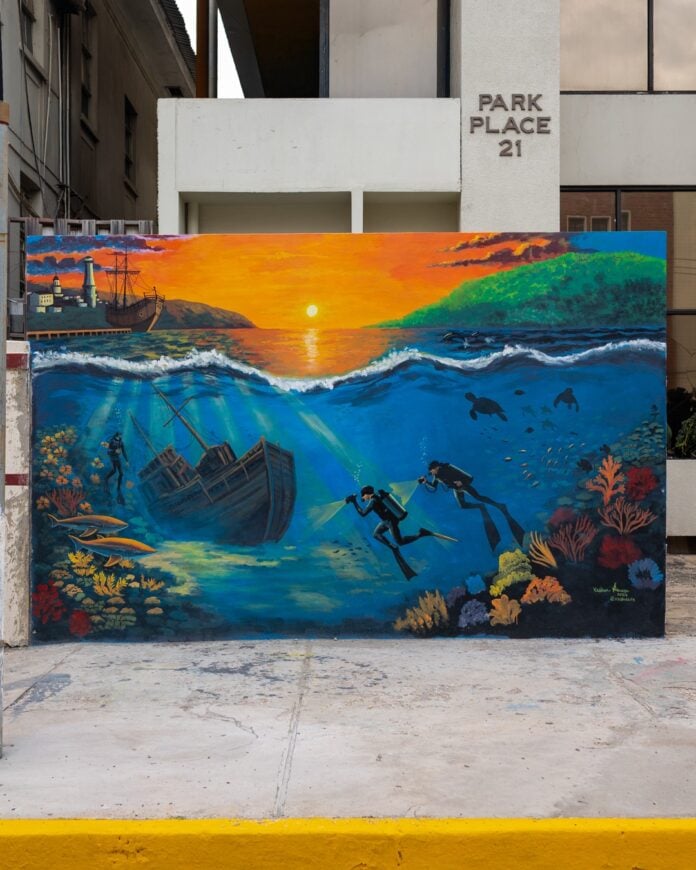
The mural “Sunken Secrets,” painted by Jamaican muralist Keddan Savage and installed on East Street in downtown Kingston, illustrates Jamaica’s underwater cultural heritage, including shipwrecks, marine ecosystems, and the island’s maritime history.

Downtown Kingston came alive on Friday with the unveiling of a new mural celebrating Jamaica’s underwater cultural heritage. Titled “Sunken Secrets,” the artwork was unveiled at 10–16 East Street by Minister of Culture, Gender, Entertainment and Sport, the Honourable Olivia “Babsy” Grange, as the culmination of a three-day regional initiative aimed at engaging the public on the importance of preserving submerged cultural sites across Jamaica and the Caribbean.

The programme was led by the Ministry in partnership with UNESCO Regional Office for the Caribbean and supported by the National Museum Jamaica, Jamaica National Heritage Trust, Kingston Creative, Myers, Fletcher and Gordon, and the Institute of Jamaica, which hosted a public symposium and the mural unveiling.

Speaking at the event, Minister Grange highlighted the significance of the initiative, coinciding with the 25th anniversary of UNESCO’s 2001 Convention on the Protection of the Underwater Cultural Heritage. “This initiative is very timely as it commemorates the 25th anniversary of UNESCO’s 2001 Convention on the Protection of the Underwater Cultural Heritage and highlights the importance of recognising, documenting, preserving and safeguarding our underwater cultural heritage,” she said.

Grange emphasized that Jamaica’s submerged heritage goes beyond shipwrecks and treasure. “Our underwater heritage is not only about shipwrecks, lost gold, or the submerged city of Port Royal following the 1692 earthquake,” she explained. “It also includes sacred spaces of memory that tell the story of our ancestors who were forcibly taken from West Africa and brought to the Caribbean.” She referenced the tragic history of the Zong Massacre, in which over 130 enslaved Africans were thrown overboard, underscoring the deeper historical narrative connected to the Caribbean Sea.

Painted by Jamaican muralist Keddan Savage and commissioned through Kingston Creative, the mural occupies a prominent location along East Street near the Institute of Jamaica’s Junior Centre and Myers, Fletcher and Gordon. The artwork invites passersby to reflect on Jamaica’s rich maritime history and cultural heritage.

Eric Falt, Director of UNESCO’s Regional Office for the Caribbean, noted the importance of public engagement. “Protecting underwater cultural heritage requires not only scientific expertise and policy frameworks, but also public awareness and appreciation,” he said. “Initiatives such as this mural help bring these important stories to the surface and encourage communities, especially young people, to value and protect the cultural heritage that lies beneath our waters.”

Minister Grange also announced plans for a second underwater heritage mural in Spanish Town, which will be installed along a wall at Eltham High School. She highlighted the historic significance of the Institute of Jamaica, founded in 1879 as the oldest cultural institution of its kind in the Western Hemisphere, and expressed hope for the surrounding area to be renamed “IOJ Square.”

The unveiling of “Sunken Secrets” marked a key highlight of the three-day programme, which aimed to strengthen regional collaboration, deepen public understanding, and foster greater appreciation for the protection of underwater cultural heritage in Jamaica and across the Caribbean.

Shaggy releases ‘Looking Lovely’ with Robin Thicke off new ‘Lottery’ album

Grammy-winning Jamaican dancehall star Shaggy has released a new single, “Looking Lovely,” featuring American R&B singer Robin Thicke, as part of the rollout for his latest album Lottery.

The upbeat track blends dancehall and pop influences and samples the classic soul hit “Lovely Day” by Bill Withers, reimagining the timeless song through a modern Caribbean and R&B sound.

“Looking Lovely” is one of several collaborations leading up to the release of Lottery, which arrived May 15 through VP Records and Ranch Entertainment.

The album also features a number of previously released singles, including “Til A Mawnin” with Sting, “Boom Body” with Akon and Aidonia, and “Dancehall Nice,” which brings together reggae legend Beres Hammond and dancehall star Dexta Daps.

Much of Lottery was produced by Shaggy—born Orville Richard Burrell—alongside longtime collaborator Shane Hoosong. The project continues the artist’s signature fusion of dancehall, reggae, and international pop influences while bringing together performers from across the Caribbean and global music scenes.

Shaggy remains one of the Caribbean’s most internationally recognized music stars, with global hits including “It Wasn’t Me,” “Boombastic,” “Angel,” “Oh Carolina,” and “In the Summertime.” Over his career, he has earned eight Grammy nominations and two wins for Best Reggae Album—Boombastic in 1996 and 44/876, his collaborative album with Sting, in 2019.

In 2007, Shaggy was awarded Jamaica’s Order of Distinction with the rank of Commander. He also received an honorary Doctor of Fine Arts degree from Brown University in 2022.

With Lottery, the dancehall icon continues to bridge Caribbean music with global audiences, reinforcing his long-standing reputation for genre-blending collaborations and international appeal.

Former Haitian lawmaker Arnel Bélizaire arrested days after registering political party

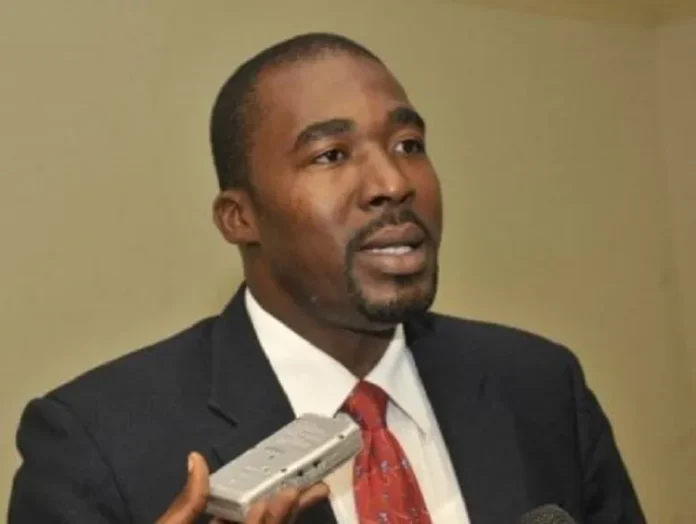
Arnel Bélizaire

Haitian police arrested former lawmaker Arnel Bélizaire on Saturday in Pétion-Ville, two days after he appeared before the Provisional Electoral Council to register a new political party for the country’s 2026 elections.

According to authorities, Bélizaire had been a fugitive for about two months and was wanted on charges including financing terrorism, criminal association and conspiracy against state security. Agents from the Central Directorate of the Judicial Police arrested him at the restaurant of the Hotel Oasis, an upscale suburb less than 10 miles from downtown Port-au-Prince.

The arrest comes as Haiti faces one of the worst security crises in its history, with armed groups controlling large sections of the capital and expanding their influence. National and international officials have increasingly linked some political figures to gang financing and alliances.

Bélizaire had appeared before the electoral council on March 12 to submit documents registering his political party, the “Liberation Platform,” ahead of the planned elections. His appearance drew attention because police had already issued a wanted notice for him months earlier, yet he had not been arrested.

The electoral body registered 110 political parties on the final day of the process alone, bringing the total number of registered organizations to 320. That figure includes 210 groups registered earlier during the process, which began March 2. The council is expected to publish the final list of qualified entities on March 26 under the country’s electoral calendar.

Haiti’s schedule sets the first round of voting for Aug. 30, 2026, with a second round planned for Dec. 5.

Bélizaire previously represented the Delmas/Tabarre district after winning election to Parliament in 2011. He has dismissed the recent arrest warrant as political intimidation, saying in February that judicial police had never summoned him for questioning before issuing the notice.

Long record of legal troubles

Bélizaire has faced repeated legal issues over more than a decade, including multiple prison stints and escapes.

He was first arrested in 2004 on charges including illegal weapons possession and conspiracy and was held at the National Penitentiary. He escaped from prison in 2005 while awaiting trial but was recaptured later that year before escaping again during a jailbreak following the devastating 2010 Haiti earthquake.

Despite his status as an escaped inmate, Bélizaire later ran for office and was elected to Parliament in a March 2011 runoff election as a member of the Veye Yo political party. That same year he was arrested again after police identified his name on a list of inmates who had escaped prison. He was released shortly afterward after fellow lawmakers argued he was protected by parliamentary immunity.

Since then, Bélizaire has remained a controversial figure in Haitian politics, including public confrontations with former president Michel Martelly and threats directed at the late president Jovenel Moïse.

In November 2019, authorities arrested him again on charges including arms trafficking and sedition, crimes that carry a minimum 15-year prison sentence. He was released in 2021 after an investigating judge dropped the charges.

In September 2025, the United States imposed sanctions on Bélizaire and former Haitian senator Antonio “Don Kato” Chéramy, accusing them of corruption while holding public office.

According to the U.S. Embassy in Haiti, the sanctions make Bélizaire, Chéramy and their immediate family members ineligible to enter the United States.

“Bélizaire and Chéramy abused their positions by interfering in the public processes of the Haitian government,” the embassy said in a statement at the time.

“These corrupt and harmful acts have had serious consequences for U.S. national interests by further destabilizing Haiti’s institutions and processes.”

Florida teacher sentenced for conspiring to provide guns to Trinidad-based gang

sentenced

A former high school teacher in Hillsborough County has been sentenced to federal prison for conspiring to purchase firearms for a transnational criminal organization based in Trinidad and Tobago.

Shannon Nicole Samlalsingh, 47, of Temple Terrace, was sentenced by U.S. District Judge William F. Jung to one year and one day in federal prison for conspiracy to make false statements to a firearms dealer. The court also ordered Samlalsingh to forfeit the firearms purchased as part of the offense.

According to the U.S. Attorney’s Office for the Middle District of Florida, Samlalsingh pleaded guilty on June 20, 2025. U.S. Attorney Gregory W. Kehoe announced the sentence.

Court documents state that Samlalsingh, who was employed as a Hillsborough County high school teacher at the time, purchased seven firearms for a Trinidad-based transnational criminal organization. Investigators said she falsely stated on forms from the Bureau of Alcohol, Tobacco, Firearms and Explosives that the firearms were for her personal use.

Instead, authorities said she transferred the weapons to members of the criminal organization, who then smuggled them into Trinidad.

On April 21, 2022, authorities in Trinidad and Tobago seized a shipment from the United States at Piarco International Airport containing two punching bags and other goods. Hidden inside the punching bags were multiple weapons and firearm components, including pistols, a semi-automatic shotgun, AR-15 parts and magazines, and hundreds of rounds of ammunition.

Investigators determined that Samlalsingh had purchased four of the firearms recovered in the shipment: a SAR-9 9mm pistol, a Ruger-9 9mm pistol, a Taurus G3 9mm pistol and a Taurus G2C 9mm pistol.

The case was investigated by Homeland Security Investigations and the Bureau of Alcohol, Tobacco, Firearms and Explosives, with assistance from the Trinidad and Tobago Police Service, including its Transnational Organized Crime Unit and Special Investigations Unit.

Additional support was provided by United States Citizenship and Immigration Services, the Florida Department of Law Enforcement, United States Customs and Border Protection and the U.S. Department of Commerce, Office of Export Enforcement.

The case was prosecuted by Assistant U.S. Attorney Adam W. McCall.

Lethal yellowing disease confirmed in Dominica

lethal yellowing disease

The Dominica Ministry of Agriculture, Fisheries, Blue and Green Economy has confirmed the presence of lethal yellowing disease in the country, raising concerns about potential impacts on the island’s coconut industry.

Laboratory verification was completed in February 2026 by the University of Florida following diagnostic testing coordinated through the Plant Protection and Quarantine Unit within the Division of Agriculture. The confirmation came after field investigations and the submission of plant samples from the Woodford Hill area in the North East Agricultural Region.

Lethal yellowing is a highly destructive disease affecting coconut and ornamental palms. It is transmitted by the plant hopper Myndus crudus and can cause coconut palms to decline rapidly and die within three to six months.

The disease has previously caused major economic losses across several Caribbean countries, including Jamaica, St. Kitts and Nevis, Cuba, The Bahamas, Antigua and Barbuda and Guadeloupe.

The ministry said the situation is being treated with “the highest level of urgency and seriousness,” noting that coconuts remain a key component of Dominica’s agricultural landscape and rural economy. As one of the country’s “5 C’s” priority crops, coconut production supports activities such as water nut sales, agro-processing, craft and cottage industries, and local cuisine.

An emergency action plan has been activated along with a localized eradication and management strategy for the Woodford Hill area, which has been designated a restricted “red zone” where the removal of plant material is prohibited.

Measures being implemented include enhanced monitoring of coconut palms in affected and surrounding communities, destruction and sanitation of infected or suspected trees to prevent the spread of the disease, monitoring the movement of coconut planting material and related products from affected areas, and engagement with farmers, vendors, traders, agro-processors and community leaders.

Public awareness campaigns and consultations are also planned to encourage cooperation and ensure national awareness of the issue.

Authorities are urging the public to report signs such as unusual dropping of premature nuts, blackening of inflorescence or loss of the crown of coconut trees to the nearest agricultural office. Farmers and vendors are also advised to avoid moving coconut planting material from affected areas unless authorized.

The ministry stressed that early detection and rapid response will be critical to controlling and eventually eradicating the disease from Dominica. Officials said updates will be provided as monitoring and response efforts continue, along with additional technical guidance and community consultations in the coming weeks.

Caribbean Development Bank approved record $226.7M for climate action in 2025

Valerie Isaac, the CDB’s division chief for environmental sustainability

The Caribbean Development Bank (CDB) approved $226.7 million for climate action initiatives in 2025, marking the strongest annual climate investment performance in the bank’s history.

The total represented about 50% of the bank’s project approvals for the year and more than doubled the $101.5 million committed in 2024.

The increase was largely driven by a $125 million environmental policy-based loan to Guyana, along with similar financing packages totaling $30 million each for Dominica and Saint Vincent and the Grenadines. The loans will support reforms in biodiversity conservation, climate action and water resource management while strengthening the technical and financial capacity of member countries to withstand and recover from climate shocks.

Explaining the bank’s focus, Valerie Isaac, the CDB’s division chief for environmental sustainability, said the region faces urgent risks from climate change.

“The climate crisis is not simply a challenge. It is an existential threat to our development and wellbeing, particularly the most vulnerable people,” Isaac said.

Speaking at the bank’s annual news conference in Bridgetown, Barbados, she added: “Resilience is neither an option nor a luxury. It is a fundamental requirement for regional growth and stability.”

Beyond its own project approvals, the bank also secured $27 million in grant and loan financing in 2025 from the Green Climate Fund to support the Integrated Utility Services Programme. The initiative, which has a total investment volume of more than $68 million, will expand energy efficiency and distributed renewable energy—including rooftop solar—across Barbados, Belize and Jamaica.

An additional $27 million in grant funding from the Green Climate Fund will support the Caribbean Hydrometeorological and Multi-Hazard Early Warning Services Project. The project will upgrade forecasting systems in Belize and Trinidad and Tobago, helping to protect the lives and livelihoods of about 1.8 million people.

Another milestone in 2025 was the operationalization of the CDB’s Climate Change Project Preparation Fund. The initiative is designed to address project pipeline bottlenecks that slow the flow of climate financing and to increase funding for climate action projects across the bank’s borrowing member countries.

Isaac said the bank plans to build on this momentum in 2026, including finalizing a $200 million regional blue economy programme aimed at protecting ocean resources while creating jobs in the marine sector.

The bank also plans to launch a regional platform designed to generate investment portfolios from national energy and transport priorities, while advancing initiatives focused on water sector resilience and locally led climate adaptation.

“The decisions and actions we take today will dictate the Caribbean’s development trajectory for the next half-century,” Isaac said. “We will continue to innovate and transform, strengthen our own capacity and that of our borrowing member countries, accelerate the development of investment-ready pipelines, mobilise climate and disaster finance at scale, deepen strategic partnerships, and advance coordinated regional climate action.”

The CDB held its annual news conference on March 3 at the Frank Collymore Hall. Presentations were delivered by senior officials including CDB President Daniel M. Best, Director of Projects O’Reilly Lewis and Acting Deputy Director of Economics Jason Cotton.

IDB Invest finalizes $3.5B capital increase for Latin America and Caribbean projects

IDB
The Inter-American Development Bank Headquarters in Washington, D.C.

IDB Invest has successfully closed the subscription process for its $3.5 billion capital increase, a move aimed at expanding financing for private-sector development across Latin America and the Caribbean.

The capital increase was approved by the Boards of Governors of the Inter-American Development Bank in 2024 during meetings held in Punta Cana, Dominican Republic. The completion of the subscription process signals strong backing from both regional and non-regional shareholders for the institution’s model of mobilizing private capital for development.

IDB Invest uses an “originate-to-share” model in which the institution develops projects and then brings in private investors to help finance them. The approach is designed to support infrastructure, energy, industry and other productive sectors across the region.

With the additional capital, IDB Invest expects to increase its financing and mobilization capacity from about $13 billion today to roughly $22 billion annually over the next decade. Officials say the expanded capacity will allow the institution to back more projects aimed at creating jobs, strengthening productive sectors and expanding economic opportunities throughout the region.

“Strengthening IDB Invest is central to the IDB Group’s strategy to advance private-sector-led development in Latin America and the Caribbean,” said Ilan Goldfajn, president of the IDB Group. “This capital increase expands our ability to mobilize private investment and support projects that drive growth and create jobs.”

“This capital increase underscores our shareholders’ confidence in IDB Invest’s originate-to-share business model, designed to scale impact by crowding in private capital,” said James P. Scriven, chief executive officer of IDB Invest. “With this additional capacity, we will expand our financing and mobilization to deliver projects that boost economic growth across Latin America and the Caribbean.”

The capital increase builds on a 2015 decision by governors to transform the Inter-American Investment Corporation—now known as IDB Invest—into the private-sector arm of the IDB Group, with a stronger mandate to finance projects and attract private investment.

In 2025, IDB Invest reported a record $13.1 billion in total activity, including $7.7 billion in mobilization, the highest level in its history. Since 2016, the institution has channeled more than $75 billion to Latin America and the Caribbean, supporting more than 700 projects in sectors such as infrastructure, energy, trade financing, health and productive development.

Antigua and Barbuda government absorbing fuel cost increases to limit price hikes

Antigua and Barbuda to host investment conference in March 2025
Prime Minister Gaston Browne

Prime Minister Gaston Browne says the government of Antigua and Barbuda has been absorbing part of the impact of rising global fuel prices in an effort to limit increases in the cost of living.

Speaking on his weekend radio programme, Browne said higher fuel costs typically drive up transportation, groceries and other imported goods. However, gasoline prices in the twin-island nation have remained at $14.25 per imperial gallon, with the government reducing the amount of consumption tax collected on fuel to keep prices stable.

“We have decided to take less in taxes to maintain stability in the pricing,” Browne said, adding that the government also absorbed losses during previous global price spikes, including those linked to the Russian invasion of Ukraine.

Chief Executive Officer of the West Indies Oil Company, Gregory Georges, confirmed that a recent fuel shipment arrived at significantly higher prices, with the steepest increases affecting diesel and jet fuel as global energy markets tighten.

Browne said while the government intends to continue cushioning consumers from rising fuel costs, sustained global disruptions could eventually force price adjustments.

Opinion: Jamaica must rekindle momentum on constitutional reform

jamaica constitutional reform

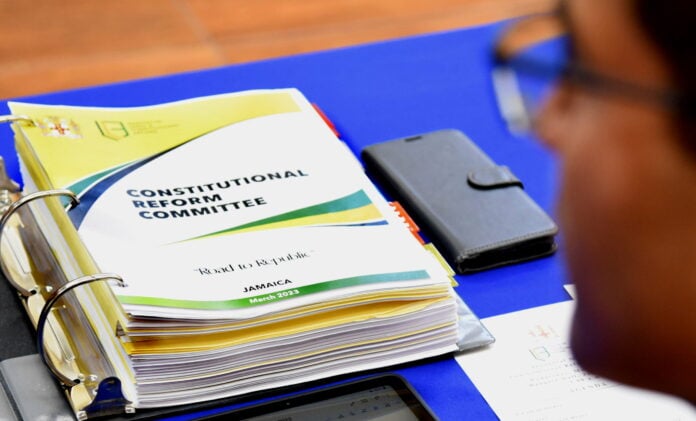
During the Throne Speech in February, opening the new parliamentary year in Jamaica, the Governor General indicated that constitutional reform remains a priority for the government. In December 2021, Prime Minister Andrew Holness expressed his desire to have the then monarch, Queen Elizabeth II, removed as Jamaica’s head of state by the country’s 60th anniversary of independence the following August. In January 2022, Jamaica’s Ministry of Legal and Constitutional Affairs was established to give form and purpose to the country’s republican aspirations. As a show of intent, a Constitutional Reform Committee (CRC) was later set up, comprising a wide cross-section of societal representatives to ensure broad-based input.

This effort received a further boost two months later, in March 2022, when the prime minister signaled Jamaica’s intentions to Prince William and Catherine, Princess of Wales, during their visit to Kingston, celebrating the Queen’s 70 years on the throne. Holness pointedly stated that Jamaica was prepared to “move on” from the monarchy. By the end of the next fiscal year, which the Throne Speech covers, Jamaica will be only months away from celebrating its 65th anniversary of independence. Charles III remains Jamaica’s head of state, having succeeded the Queen just six months after Holness’ declaration that Jamaica would soon transition to a republic.

Despite the delays and the apparent deadlock that attended the process during its first iteration, Jamaica could still meet this symbolic timeline if the effort is reinvigorated. However, that will only be possible if the government and the parliamentary opposition resume deliberations immediately, given the time constraints imposed by the legislative process. After being introduced as a bill in the House of Representatives, amendments to constitutional clauses require at least eight months—and up to a year—to pass through parliamentary debate before they can be put to a referendum. The removal of the monarch as Jamaica’s head of state is a deeply entrenched provision in the Constitution and therefore requires a plebiscite. By the time additional provisions are settled, Jamaica could realistically have the framework in place by August 2027.

Encouragingly, consensus has already been achieved on the question of removing the monarch. That position had been determined by a previous Constitutional Reform Committee in the mid-1990s and was reaffirmed by the most recent committee. The process stalled when the opposition insisted that the question of Jamaica’s final court of appeal be addressed simultaneously, arguing that full accession to the Caribbean Court of Justice should occur during the same stage of reform as the monarch’s removal. The government has maintained that the issue should be dealt with at a later stage. The opposition may fear that if the matter is not addressed simultaneously, the transition to the CCJ may never occur. The question of adopting the court has been on the national agenda since the early 1970s, yet tangible progress remains elusive.

The government must now move with greater urgency, not only on this issue but on the broader contours of constitutional reform. After the last elections in September 2025, the functions of the Constitutional Affairs Ministry were reintegrated into the Ministry of Justice. In the six months since, and in the absence of clear plans outlining a renewed constitutional reform agenda, the process appears stalled and in need of revitalization. Beyond the legal and political mechanics, meaningful constitutional reform offers an opportunity to deepen indigenous cultural expression and advance the broader project of decolonization in Jamaican society. The inaugural report of the CRC, published in 2024, argued that a reformed constitution should “be deeply grounded in the cultural fabric of the nation, ensuring that it resonates with and is accessible to all citizens,” while embodying “the unique identity, values and aspirations of Jamaica.”

Constitutional reform has historically been a contentious process in Jamaica. Less than a year after full emancipation was granted in 1838, the local planter class made an aborted attempt to suspend the Constitution, nearly precipitating a governance crisis. Three decades later, in the aftermath of the Morant Bay Rebellion, the local Assembly voted itself out of existence, and the island came under direct rule from Britain. Limited political representation returned two decades later, and further concessions for local participation followed during the first half of the twentieth century. After the granting of Universal Adult Suffrage in 1944, additional constitutional advances paved the way for independence, including the creation of the Cabinet as the primary instrument of policymaking and the achievement of full internal self-government. These developments were, without doubt, accompanied by intense debate.

No less should be expected today. Within the last three decades, the most significant update to the Constitution was the incorporation of the Charter of Fundamental Rights and Freedoms in 2011. That reform received bipartisan support, demonstrating the ability of legislators to unite around issues in the national interest. The same spirit of cooperation will be required again—this time with greater urgency.

The preference for a local head of state has long been established, although the method of selection remains unresolved. Repudiating the British Order in Council—the imperial instrument that contains Jamaica’s Constitution—has also been broadly agreed upon so that the country’s highest law can be repatriated to Parliament and become a fully Jamaican document.

However, several important issues remain unsettled. These include the size and composition of the Senate, reforms to Cabinet membership, and parliamentary changes such as recall procedures, impeachment mechanisms and fixed election dates. There is still considerable work to be done. Yet the opportunity exists to restart the process with renewed purpose. A reconstituted Constitutional Reform Committee should be convened as soon as possible to examine these matters and accelerate Jamaica’s progress toward republican status.

Keenan Falconer is an Economist with experience across Jamaica’s public and private sectors and the multilateral financing space. Send feedback to keenanjfalconer20@gmail.com.

How to balance fun and financial responsibility in gaming

A game can start in seconds, and money can leave just as fast. That quick pace feels exciting, but it can also hide poor choices. Many players enjoy the ease and the thrill at first. Still, fun fades when gaming starts cutting into everyday spending.

That is why simple limits help from the start. Players using บาคาร่าเกาหลี may like smooth access and local currency support. Even so, easy payments should still come with clear personal rules. Gaming stays enjoyable when it fits inside a healthy budget.

Start With A Clear Spending Plan

A spending plan keeps gaming in its proper place. It should sit with other leisure costs, not with bills. That means food, rent, transport, and savings come first. Whatever is left can support fun without adding pressure.

Build Your Budget Around Real Expenses

A good budget starts with fixed monthly costs. Once those are covered, you can see what remains for leisure. The guidance from consumer.gov follows this same simple approach. It helps people track income, sort expenses, and stay realistic.

That method works well for gaming too. When you set a number early, you remove guesswork later. You also avoid pulling money from places it should never come from. That one habit can prevent a lot of stress.

Use Rules That Keep Spending In Check

A budget works better when it includes clear limits. Without rules, emotions can take over after a loss. Short pauses and simple caps often make better decisions easier. These steps keep the process simple and practical.

  • Set a weekly or monthly gaming limit before your first session starts.
  • Keep gaming funds separate from your main spending account if possible.
  • Stop when you hit your limit, even if you feel tempted to continue.
  • Never use money meant for rent, debt, food, or savings.
  • Review your spending once a week so you can spot changes early.

Be Careful With Fast Deposits

Fast payments feel convenient, and that is part of their appeal. Still, speed can make spending feel smaller than it is. When money moves with one tap, people pause less often. That small pause can be the difference between control and regret.

Convenience Can Lower Your Guard

A familiar currency and smooth banking options feel helpful during play. Yet those same features can make repeated deposits feel normal. That is worth thinking about before every session begins. Ease is useful, but it should never lower your guard.

This issue shows up in other payment habits too. Recent reporting on currency volatility and micro deposit trends in Caribbean digital markets highlights how small payments can shape behavior. The same pattern can appear in gaming accounts with easy top ups. Small deposits can add up fast when nobody tracks them carefully.

Add Friction Before You Add More Funds

A short delay can help more than people expect. It gives you time to reset and think clearly. That space is useful after a loss or a rushed decision. It can stop a habit from turning into a pattern.

Here are a few ways players create that pause.

  • Wait ten minutes before making any second deposit on the same day.
  • Limit yourself to one deposit per session or one deposit per day.
  • Log every transfer in a note app or budget sheet right away.
  • Leave payment details off quick access tools if that helps slow you down.

Know When Fun Starts Affecting Daily Life

Most people do not plan to lose control. Problems usually grow through small choices over time. A person may chase losses, hide spending, or keep playing while upset. Those habits often show up before someone says there is a problem.

Money issues are often the first clue. Grocery cash feels tighter, savings stop moving, and bills feel harder to manage. Then the personal signs begin to show. Sleep slips, focus drops, and family time starts getting pushed aside.

Watch For Financial Warning Signs

These warning signs often show that gaming is taking up too much space. They can start quietly, which is why regular self checks help. A player does not need a major crisis to step back. Small signs still deserve attention.

  • You spend more than planned more than once in a week.
  • You deposit again to win back money you just lost.
  • You hide gaming costs from family or from yourself.
  • You borrow money or delay bills after a heavy session.
  • You feel tense or guilty when you review your account activity.

Watch For Lifestyle Warning Signs

Money is only one part of the picture. Gaming can also affect routine, mood, and relationships over time. These changes may seem small at first. Still, they can build into bigger problems.

The same concern appears in wider conversations about online play. Coverage on the Caribbean iGaming industry shows how access continues to grow across many communities. As access grows, personal discipline becomes even more important. Knowing when to stop is often more useful than knowing how to play.

Put Safeguards In Place Before You Need Them

Good habits work best when they are ready early. People often set limits while calm, then ignore them when emotions rise. That is why built in controls help so much. They reduce the need to make hard choices during stressful moments.

Use Tools That Support Better Decisions

Deposit caps, timers, and cooling off tools can help keep things steady. These options work because they add structure before emotions take over. They do not solve everything on their own. Still, they make good habits easier to follow.

A simple weekly check can help too. Write down how much you spent, how long you played, and how you felt. Those notes can reveal patterns faster than memory alone. If the pattern looks tense, that is a sign to pull back.

Get Help Early If You Notice A Pattern

Outside support can help before things get severe. Reaching out early shows awareness, not weakness. The National Council on Problem Gambling advises players to set limits, avoid chasing losses, and treat gambling as entertainment. That advice stays practical because it focuses on daily habits.

Gaming should fit into life without creating money stress or family strain. A clear budget, short pauses, and honest self checks can keep things steady. When players respect their limits, fun has a better chance of staying fun. That is the balance worth protecting.

Caribbean jockeys making their mark on international racing

Alright, horse racing might not be the first thing that comes to mind when you think of the Caribbean, but here we are. To the surprise of most people, many countries in the Caribbean actually have a healthy horse racing scene.

And we’re not talking about “healthy” in a way that there are some decent local races. We’re talking about a way where many Caribbean jockeys travel the world, and they are winning big international multi-million-dollar races.

Horse racing in the Caribbean doesn’t sound natural, and it is a weird combo. But if you look more closely, you can see a thriving horse-racing scene, and the people have a strong passion for the sport. Maybe that’s why there are so many Caribbean jockeys showing up on the global scene.

We’ve seen them win titles, enter big races, and travel far with their riding talent.

So, who are these jockeys, and does the Caribbean really produce many racing legends?

Small Islands, Big Ambition

So, what’s so special about Caribbean racing? Well, these islands are known for producing riders who learn fast, and they are incredibly tough. The racing culture in places like Jamaica, Barbados, Trinidad and Tobago, and especially Puerto Rico, is a serious business.

And remember, these aren’t just casual little hobby tracks where everyone shows up for some fun riding times. The competition here may not be at the same level as the Kentucky Derby, but it doesn’t mean it is easy. The best thing about horse racing in the Caribbean is that the crowds support the sport, and they love it. That’s exactly what pushes young talent towards becoming a jockey.

And the pressure that jockeys feel here is quite different from other places. They risk a lot chasing a jockey career, and it is literally a ride-or-die scenario. That’s why when you see Caribbean jockeys on the international scene doing well, it makes sense. They are already used to that pressure.

That’s exactly the case with Shaun Bridgmohan, who, to the surprise of most people, became the second Jamaican to enter the Kentucky Derby back in 2006, and he has won the Kentucky Cup Classic Stakes.

Yes, there aren’t many jockeys from the Caribbean entering the Kentucky Derby, but there are enough of them to prove that the Caribbean Islands are no joke when it comes to racing.

That’s why you should always research the jockey’s history when you’re looking for ways to bet on the 2026 Kentucky Derby. This can give you a lot of helpful information and lead you to a more accurate bet.

The People Who Opened Doors

We are here for the professionals that managed to reach the highest level of international racing. Yes, compared to other places like the UK or the United States, there aren’t as many high-level jockeys as possible from the Caribbean, but some managed to reach international waters and even win big multi-million-dollar international racing events.

These people represent Caribbean racing culture and history, and they show how passionate they are for the sport.

Now, we cannot talk about Caribbean jockeys without mentioning riders like Patrick Husbands or Emile Ramsammy. These are easily one of the most recognizable names that have Caribbean roots.

Husbands is a Barbadian legend who managed to build an elite career in Canada after already making a name for himself back home. He has won multiple Sovereign Awards as Canada’s outstanding jockey and was even inducted into the Canadian Horse Racing Hall of Fame in 2024. So, he is the real Caribbean horse racing ambassador.

Then we have Ramsammy, one of the toughest champion jockeys that reached the highest level of Canadian racing. But his professional career started early, and before moving to Canada, he already had more than 500 wins. Then he went to dominate the Canadian scene and managed to win the Queen’s Plate twice, and if that’s not enough, he got his hands on two Sovereign Awards.

And when riders like these manage to succeed abroad, in a much bigger horse racing market, younger jockeys from the region notice and get inspired. Wouldn’t you do the same?

Puerto Rico: The Biggest Jockey-Producing Machine

We can all agree that Puerto Rico deserves its own little section here. After all, the island has long been one of the strongest talent-production areas in the wider Caribbean. Puerto Rico has produced the most high-level jockeys who managed to enter the U.S. and Canadian racing scene.

Here are a few examples. The first name that pops up is Jevian Toledo, and if you follow the U.S. horse racing scene closely, you’ve definitely heard of him. He is a Puerto Rico native and began his professional racing career in 2013. After a few short years, he already built quite a reputation in Maryland.

Toledo managed to compete in the most popular horse racing events in the world, like the Preakness Stakes, and won a lot of races in his first years. Then the injuries came, which were a major setback in his career. But being a Puerto Rican, he showed that people from the Caribbean don’t wave the white flag easily, as he got back to professional racing in 2024.

Next, we have Rafael Hernandez, who is another Puerto Rican rider, but instead of the U.S., he managed to build a strong career in Canada. He is the leading jockey with 148 wins in the 2025 Woodbine season, and this is his second time topping the standings after a successful 2020 season.

He has won many major Canadian races, including multiple editions of the King’s Plate.

So, next time when you see a Caribbean jockey entering a big race, do some more research. He might be a good bet for winning the race considering their hard-core dedication to the sport.




A look at several Florida bills that could soon become state law

florida governor
Florida Gov. Ron DeSantis, center, speaks during a news conference surrounded by officials and cruise workers, Thursday, April 8, 2021, at PortMiami in Miami. DeSantis announced a lawsuit against the federal government and the CDC demanding that cruise ships be allowed to sail. (AP Photo/Wilfredo Lee)

Florida lawmakers wrapped up their 60-day legislative session last week, leaving more than 120 approved bills awaiting action from Gov. Ron DeSantis that could soon become the state’s first new laws of 2026.

The session of the Florida Legislature formally ended Friday, though lawmakers have already filed hundreds of additional bills for future consideration. As of March 11, a total of 122 measures had been approved by both the state House and Senate and are now awaiting the governor’s signature.

Among the proposals is House Bill 33, which would rename portions of two roadways in South Florida. The measure designates part of State Road 985 in Miami-Dade County as Charlie Kirk Memorial Avenue and a section of State Road 870 in Broward County as President Donald J. Trump Boulevard. The Florida Department of Transportation would be required to install markers reflecting the new designations.

Another measure, House Bill 178, would allow high school athletic coaches to use personal funds—up to $15,000 per year—to support the welfare of student athletes, including providing food, transportation and recovery services. The bill directs the Florida High School Athletic Association to permit the practice.

Lawmakers also approved House Bill 271, which would require foreign and alien bail bond insurers operating in Florida to follow the same reporting rules as domestic companies.

Under House Bill 277, penalties for domestic violence would be strengthened when a suspect has prior convictions for the offense. The measure would also increase relocation assistance available to victims—from $1,500 to $2,500 per claim—and raise the lifetime maximum from $3,000 to $5,000. It also expands factors judges may consider when issuing domestic violence injunctions, including threats against family pets and the existence of a military protective order.

Another proposal, House Bill 359, sets deadlines for law enforcement agencies to return executed search warrants to courts. The bill generally requires warrants to be returned within 10 days, though longer timeframes would apply for electronic communications data, DNA evidence or computer-related searches.

Lawmakers also passed House Bill 429, which expands the definition of a “criminal gang member” under Florida law. The bill outlines several new criteria, including admissions of gang membership, identification by known gang members and online communications indicating gang activity.

Another measure, House Bill 445, adds computer pornography and child exploitation offenses to the list of dangerous crimes, meaning individuals arrested for such charges would not be eligible for nonmonetary pretrial release at their first court appearance.

Education-related legislation also advanced. House Bill 453 would allow students with disabilities to substitute a year of participation in the Special Olympics for the physical education requirement for a standard high school diploma. The bill also provides that completing two years of marching band would satisfy both physical education and performing arts credit requirements.

Meanwhile, House Bill 461 clarifies that the state’s ban on private funding for election-related expenses does not prevent high school students who are registered voters from volunteering at polling sites for community service hours.

Public health legislation includes House Bill 477, which expands exemptions in the state’s drug paraphernalia law to include testing products used solely to determine whether a substance contains xylazine.

Another high-profile measure, House Bill 919, would give the state authority over the naming of major commercial airports. The bill would rename Palm Beach International Airport as President Donald J. Trump International Airport while allowing other airports to keep their current names.

Most of the measures would take effect July 1 if signed into law, while the expanded criminal gang definition under House Bill 429 would take effect Oct. 1.

US warns foreign visitors about public benefits rules in visa decisions

us-visa Ireland imposes visa requirement on Trinidad

The U.S. Department of State is reminding foreign nationals that reliance on certain government benefits can affect their eligibility to obtain or keep a U.S. visa under longstanding immigration rules related to “public charge.”

Under U.S. immigration law, a public charge is defined as a person who becomes primarily dependent on government assistance for basic living needs. Officials say this is typically demonstrated through the receipt of public cash assistance for income maintenance or long-term institutional care funded by the government.

Programs cited include the Supplemental Security Income administered by the U.S. Social Security Administration, the Temporary Assistance for Needy Families program and other forms of general assistance provided by state or local governments to low-income households. Long-term care in government-funded nursing homes or mental health institutions may also factor into the determination.

Officials said nonimmigrant visa holders who improperly use public benefits could face serious consequences, including visa revocation, future visa ineligibility, or criminal prosecution if fraud is involved.

The guidance notes that consular officers have had authority for more than a century under the Immigration and Nationality Act to deny visas to applicants who are likely to become a public charge in the United States.

During the visa review process, consular officers evaluate multiple factors when determining whether an applicant might rely on government assistance. These factors include age, health, family status, financial resources, education and job skills, as well as any past or current use of U.S. public benefits.

The State Department said individuals can still travel to the United States for medical treatment if they can demonstrate they will not depend on government-funded care and intend to return to their home country after receiving treatment.

Officials emphasized that visa decisions are made on a case-by-case basis and applicants must prove to the satisfaction of the consular officer that they qualify for a visa under U.S. law.

DHS proposes rule to tighten asylum screening, limit work permits

uscis

The U.S. Department of Homeland Security has proposed a new rule aimed at tightening screening procedures for asylum seekers and reducing what officials describe as fraudulent claims filed to obtain work authorization in the United States.

According to DHS, the proposed changes would modify eligibility requirements for employment authorization for migrants with pending asylum cases. The agency says the move is intended to discourage “frivolous or fraudulent” asylum applications and help reduce growing backlogs in the immigration system.

“For too long, a fraudulent asylum claim has been an easy path to working in the United States, overwhelming our immigration system with meritless applications,” a DHS spokesperson said in a statement. The spokesperson added that the administration is seeking to overhaul the asylum system and restore what it called integrity to the vetting and work authorization process.

The rule would allow immigration officials to focus more resources on reviewing asylum applications and addressing backlog cases. DHS says it would prioritize applicants who are genuinely seeking protection from persecution or danger in their home countries.

Officials noted that applications for employment authorization tied to pending asylum cases have reached record levels, placing strain on resources at U.S. Citizenship and Immigration Services. The agency currently has more than 1.4 million pending affirmative asylum claims, according to DHS.

The proposed rule also supports Executive Order 14159, titled Protecting the American People Against Invasion, issued by Donald Trump.

If finalized, the rule would change filing and eligibility requirements for migrants seeking employment authorization while their asylum cases are under review. DHS says the measure is designed to reduce incentives for migrants to submit asylum applications solely to gain the ability to work in the United States.

Four charged in US immigration fraud scheme posing as officials

Four Jamaicans arrested in Alabama for alleged involvement in lottery scam

Four people have been arrested and charged in New York for allegedly operating a fraudulent immigration scheme that impersonated U.S. government officials and defrauded victims seeking legal help with their immigration cases.

According to the U.S. Citizenship and Immigration Services, the agency assisted in an investigation that led to a five-count indictment against the suspects, who are accused of wire fraud conspiracy, wire fraud, money laundering conspiracy and impersonating officers or employees of the United States, including immigration officials.

The indictment was partially unsealed in the U.S. District Court for the Eastern District of New York, where the U.S. Attorney’s Office for the Eastern District of New York announced the charges.

Three of the defendants — Daniela Alejandra Sanchez Ramirez, Jhoan Sebastian Sanchez Ramirez and Alexandra Patricia Sanchez Ramirez — were arrested at Newark Liberty International Airport while attempting to board a one-way flight to Colombia. Another defendant, Marlyn Yulitza Salazar Pineda, was arrested at a restaurant in New Jersey. Authorities said a fifth suspect remains outside U.S. custody.

Prosecutors say the group posed as immigration attorneys and ran a fictitious firm called CM Bufete De Abogados Consultoria Migratoria. They allegedly targeted potential clients primarily through Facebook, charging fees ranging from hundreds to thousands of dollars for immigration services and legal advice that did not exist. None of the defendants or their associates were licensed attorneys in any U.S. jurisdiction.

Investigators said the suspects sent victims documents designed to appear official, using symbols associated with U.S. government agencies and referencing real immigration cases pending in court. Authorities said the documents falsely suggested that victims’ cases had been resolved.

The indictment also alleges the defendants staged fake immigration proceedings, including asylum interviews and court hearings conducted via videoconference. During those sessions, conspirators allegedly impersonated immigration judges, officers from U.S. Customs and Border Protection and officials from U.S. Citizenship and Immigration Services. Some reportedly wore judicial robes or law enforcement uniforms and appeared in front of backgrounds designed to resemble courtrooms or government offices.

During the sham hearings, victims were asked sensitive personal questions and instructed to provide personal identification information, authorities said.

In some cases, victims were falsely told their immigration matters had been resolved. As a result, prosecutors said some failed to appear for legitimate court hearings. At least one victim was ordered deported after missing a real immigration court appearance while believing her case had already been handled. That deportation order was later reversed.

Investigators have identified more than $100,000 in fraudulent payments made to the defendants and others associated with the fake firm.

Authorities said the charges are allegations, and the defendants are presumed innocent unless proven guilty. If convicted, each faces up to 20 years in prison.

US asks Supreme Court to allow end of TPS for Haitians

Haitian American Professionals Coalition responds to TPS termination

The U.S. government has asked the U.S. Supreme Court to intervene in its effort to end humanitarian deportation protections for more than 350,000 Haitians living in the United States, despite ongoing violence in Haiti that has displaced more than a million people.

In an emergency filing last Wednesday, the U.S. Department of Justice asked the court to lift a lower court decision that blocked the administration’s move to terminate Temporary Protected Status (TPS) for Haitians. The judge who halted the policy found the administration’s action was likely motivated in part by “racial animus.”

TPS provides temporary protection from deportation and work authorization for migrants whose home countries are facing extraordinary circumstances such as natural disasters or armed conflict. Haitians were first granted the status in 2010 under former President Barack Obama after a devastating earthquake struck the country.

Since returning to office in January 2025, the administration has pursued a policy of expanded deportations and has moved to strip certain migrants of humanitarian protections that had previously allowed them to remain legally in the United States. The Department of Homeland Security has sought to end TPS designations for roughly a dozen countries, arguing the program was always intended to be temporary.

In its filing, the Justice Department said lower courts were repeatedly blocking major executive policies in ways that harm national interests and foreign relations.

“Unless the court resolves the merits of these challenges — issues that have now been ventilated in courts nationwide — this unsustainable cycle will repeat again and again, spawning more competing rulings and competing views of what to make of this court’s interim orders,” the department wrote.

The latest extension of TPS for Haitians was granted under former President Joe Biden, whose administration cited “simultaneous economic, security, political and health crises” in Haiti, including escalating gang violence and the absence of a functioning national government. That extension allowed Haitians in the United States to retain their protected status through Feb. 3, 2026.

Conditions in Haiti remain severe. The International Organization for Migration estimates that more than 1.4 million Haitians have been displaced by violence and instability.

The U.S. Department of State currently advises Americans not to travel to Haiti due to kidnapping, crime, terrorist activity, civil unrest and limited health care services.

Why high-end retailers are switching to magnetic gift boxes

In the world of luxury retail, the product is only half of the story. The other half is the experience. From the moment a customer carries a bag out of a boutique to the “snap” of a lid opening in their living room, every touchpoint matters. Recently, a significant shift has occurred in the packaging industry: luxury brands are moving away from traditional folding cartons and ribbons in favor of the magnetic gift box.

But why is this specific packaging style becoming the industry standard? Let’s dive into why high-end retailers are choosing the magnetic closure gift box to define their brand identity.

  1. The Psychology of the “Snap”

Luxury is a sensory experience. High-end retailers understand that tactile feedback influences a customer’s perception of value. Unlike standard boxes that might require tape or messy ribbons, a magnetic gift box offers a crisp, audible “snap” when it closes.

This magnetic seal provides a sense of security and precision. It signals to the customer that the item inside is precious and well-protected. In a market where “unboxing” videos drive millions of views on social media, that satisfying sound and smooth opening mechanism are marketing gold.

  1. Durability Meets Reusability

One of the biggest advantages of magnetic gift boxes is their structural integrity. Made from high-grade rigid board, these boxes don’t just look good—they last.

  • Sustainability: Today’s luxury consumer is eco-conscious. Because a magnetic closure gift box is so durable, customers rarely throw them away. They are repurposed as storage for jewelry, documents, or keepsakes.
  • Constant Branding: Every time a customer reuses the box, your brand stays in their home. It transforms a piece of “disposable packaging” into a long-term brand ambassador.
  1. Streamlining Operations with Magnetic Gift Boxes Wholesale

For growing retailers, the transition to luxury packaging often brings concerns about storage and cost. However, the rise of magnetic gift boxes wholesale options has made this premium look more accessible than ever.

Many modern magnetic designs are “collapsible” or “flat-pack.” They ship flat to save on freight costs and storage space but can be assembled in seconds into a rigid, sturdy box. By sourcing magnetic gift boxes wholesale, retailers can maintain high margins while providing a packaging experience that punches far above its weight class.

  1. Versatility in Design and Customization

High-end retailers often require bespoke solutions. Magnetic boxes for gifts offer an incredible canvas for customization. At MJC Packaging(www.mjcpack.com), we see brands utilizing a variety of finishes to make their boxes stand out:

  • Texture: Soft-touch lamination, linen textures, or metallic foil stamping.
  • Inserts: Custom foam or velvet inserts that cradle the product perfectly.
  • Security: The magnetic seal ensures that even heavier items—like watches, perfumes, or premium spirits—stay safe during transit.
  1. Increasing the “Perceived Value”

Price is what you pay; value is what you get. A product housed in a magnetic gift box immediately commands a higher price point than the same product in a standard tuck-top box.

Retailers are switching to magnetic boxes for gifts because it allows them to justify premium pricing. The packaging acts as a silent salesperson, communicating quality, heritage, and attention to detail without saying a word.

Conclusion:

As the retail landscape becomes increasingly digital, the physical package is often the only tangible connection a brand has with its customer. Switching to magnetic gift boxes is no longer just a trend—it’s a strategic move to build brand loyalty and elevate the consumer experience.

Whether you are a boutique jeweler or a high-end electronics firm, investing in a magnetic closure gift box ensures that your product isn’t just “bought”—it’s “revealed.”

Jamaican-born scholar Lahoma Thomas wins prestigious Oxford Prize for research on women and politics

Lahoma Thomas

Jamaican-born scholar Lahoma Thomas has transformed early experiences of listening to women’s stories into a celebrated academic career. Now a professor in Toronto Metropolitan University’s Department of Criminology, Thomas has been named the 2025 Early Career Researcher First Book Prize winner by Oxford University Press for her forthcoming book on Black women’s political life in Jamaica. She is the sole Canadian to receive the honor this year.

The award recognizes scholars who are developing their first academic book within six years of completing a PhD or starting their first faculty position.

Her forthcoming book, Black Women and the Politics of Respect in Jamaica: “Seeing from Da Yaad”, due in 2027, examines how women in Kingston’s inner-city communities navigate political authority, state power, and dignity. Thomas says winning the prize affirms the importance of understanding Black political life not only through formal institutions but also through everyday relationships and practices that are often overlooked.

“I have familial ties to the Caribbean, and I have long understood the region as a critical and radical intellectual space,” Thomas told Toronto Met Today. “This work listens to how people themselves understand political life.”

Thomas’ research was shaped by a 2010 protest in Kingston, when thousands of women dressed in white marched against the extradition of gang leader Christopher “Dudus” Coke to the U.S. While conventional political science framed community support for criminal organizations as coercion or material gain, Thomas’ interviews revealed a more nuanced reality: women’s political decisions were often guided by survival and dignity, reflecting their judgments about legitimate authority in communities shaped by colonial history, racialized violence, and uneven state power.

“This project is a refusal of narratives that reduce Black communities to sites of crime,” Thomas said. “It centers voices that are often ignored, showing how people themselves interpret political life.”

Before entering academia, Thomas worked as a social worker supporting survivors of sexual violence and conducted research on gender-based violence in post-conflict Northern Uganda. Her longstanding focus has been on how women create possibilities for survival and dignity under difficult circumstances.

Thomas credits mentors—including the late political scientist Lee Ann Fujii, political theorist Joseph Carens, and Caribbean scholar Alissa Trotz—for encouraging her to trust her voice and pursue questions that challenge conventional approaches. At TMU, she hopes to mentor students in the same spirit.

With her book’s 2027 publication approaching, Thomas aims to spark broader conversations about whose perspectives shape our understanding of political life and to highlight the Caribbean as a vibrant site of political thought.

“I hope it encourages people to listen more closely to how individuals themselves understand authority, dignity, and survival,” she said.

Bahamas Prime Minister Philip Davis signals upcoming general election

Climate change leaves the Bahamas with huge debt, country seeks help
Bahamas Prime Minister Philip Davis.

Bahamas Prime Minister Philip Davis has confirmed that The Bahamas will hold a general election soon, though he declined to provide a specific date.

“All I can say is that the elections [will] be soon,” Davis told reporters, adding only that voters should “stay tuned.” His comments came after Fred Mitchell suggested in a voice note that an election could take place “within the next few weeks,” sparking speculation of a spring poll.

Davis said the ruling Progressive Liberal Party (PLP) plans to highlight its achievements over the past four years while outlining a vision for the country’s next five years. He described the government’s record as significant but acknowledged that some citizens may not yet feel the full impact of its work.

Political observers have questioned whether the PLP can maintain strong support in Grand Bahama, where residents have criticized slow economic recovery and perceived neglect. The administration has also been involved in a long-running dispute with the Grand Bahama Port Authority over governance in Freeport under the Hawksbill Creek Agreement, including a rejected $357 million claim for administrative costs.

Despite these challenges, Davis expressed confidence that voters in Grand Bahama will support the PLP, emphasizing that the dispute has demonstrated the party’s seriousness. Meanwhile, Michael Darville told reporters that he is ready whenever the election is called.

PNCR Leader urges Guyana to balance US concerns and Cuban medical support

Guyana Opposition Leader Aubrey Norton says no-confidence motion against him invalid
PNCR-leader-Aubrey-Norton

People’s National Congress Reform (PNCR) leader Aubrey Norton said that the Guyana government should have negotiated the working conditions of Cuban healthcare workers to address concerns from the United States while ensuring foreign policy continuity across both Democratic and Republican administrations.

Speaking to reporters over the weekend, Norton emphasized that assisting Cuban medical personnel “doesn’t make you anti-American” and argued that the government could have engaged the U.S. to find a compromise. “If the Guyana government had taken a proper approach and dealt with this matter as a proper foreign policy issue, they would have engaged the American government to say to them, ‘look, we hear you on this question of the Cuban government utilizing a lot of the resources, but could we find a midway point… to ensure that Cuban doctors get more?’” Norton said.

The U.S. had warned Caribbean countries that government officials and their families could lose tourist visas if they continued to access services from the Cuban Medical Brigade, citing concerns that the majority of payments were going to the Cuban government rather than the healthcare workers. In response, Guyana canceled the program and opted to hire Cuban doctors directly.

Norton, a former foreign service officer and Cuban-trained political scientist, stressed that Guyana and the Caribbean have a moral obligation to support Cuba, which has provided medical personnel to the region for decades. He also highlighted the strategic importance of small-state solidarity, particularly in relation to U.S. support for Guyana amid Venezuela’s ongoing territorial claims over the mineral- and forest-rich Essequibo region.

“We should never put ourselves in a position where we become part and parcel of a mechanism that seeks to starve and destroy Cuban society,” Norton said, noting disruptions in Cuba caused by U.S. sanctions following the rendition of Venezuelan President Nicolás Maduro and the shutdown of Caracas’ oil supplies.

Norton criticized the administration of President Irfaan Ali for failing to protect Guyana’s interests and not engaging in negotiations that could have preserved access to Cuban medical expertise. He urged the government to adopt pragmatic foreign policies that can withstand shifts in international politics, including potential changes in the U.S. Congress over the next three years.

“There’s a failure of the government to engage, negotiate, and protect our interests because our interest also lies in us having the expertise and the support from the Cuban system to facilitate and help our health system,” Norton said.

Ghana hands over two African houses to Jamaica to strengthen cultural heritage ties

As part of a cultural heritage initiative highlighting Jamaica’s historical links to Africa, the Government of Ghana officially handed over two African houses to Jamaica last week. The buildings are located at the Seville Heritage Park.

Constructed by the Ghana Army Reconstruction Team as part of Hurricane Melissa recovery efforts, the houses are intended to enrich the interpretation of African heritage at the park.

Speaking at the handover ceremony, Olivia Grange said the gesture serves as a reminder of Jamaica’s roots and shared history with Africa. “These buildings represent a powerful symbol of the enduring historical and cultural connections between Jamaica and Africa,” she said.

Kamina Johnson-Smith emphasized that the initiative reflects the strength of bilateral cooperation between the two nations. Last year, Jamaica welcomed 49 army engineers and five medical doctors from Ghana to assist with reconstruction following Hurricane Melissa, which struck on October 28, 2025. The contingent arrived at Norman Manley International Airport on December 18 and was formally received by Johnson-Smith.

“We are deeply grateful that this engagement is demonstrating the depth of the Ghana/Jamaica partnership that has continued to grow and has been long-standing even before we entered diplomatic relations in 1968,” Johnson-Smith said at a reception for the Ghanaian team.

Officials said the handover of the African houses not only honors Jamaica’s heritage but also strengthens cultural and historical ties between the two countries.

Trinidad and Tobago extends state of emergency by three months

trinidad police

Lawmakers in Trinidad and Tobago have approved a three-month extension of the country’s state of emergency as authorities continue efforts to combat rising crime.

The House of Representatives of Trinidad and Tobago passed two motions late Friday night in a 26–12 vote, with all government members supporting the measure and opposition lawmakers voting against it. There were no abstentions.

The motions were brought by John Jeremie and passed shortly after 11 p.m. following debate among seven lawmakers.

The first motion asked the House to take note of a statement issued by Christine Kangaloo outlining the constitutional grounds for declaring the state of public emergency under Section 9(1) of the Constitution. Lawmakers then debated and approved a second motion to extend the proclamation issued March 2 declaring a state of emergency effective March 3.

Under emergency powers, authorities are allowed to make arrests and conduct searches without warrants.

Opposition lawmakers criticized the extension, arguing the government has failed to adequately address the country’s crime situation. Members of the opposition who spoke during the debate included Marvin Gonzales, Stuart Young, Keith Scotland and Colm Imbert.

Government lawmakers who participated in the debate included Roodal Moonilal, Roger Alexander and Wayne Sturge.

Officials say the country has recorded more than 60 killings so far this year. Trinidad and Tobago has spent roughly 10 of the last 14 months under a state of emergency, which initially lasts up to 15 days but can be extended by Parliament.

The repeated use of emergency powers has also raised concerns about potential impacts on the country’s tourism industry as authorities attempt to curb violent crime.

CXC says Caribbean ready for electronic exams after successful rollout

CSEC Mathematics and English language performances decline

The Caribbean is ready to transition to electronic examinations following the successful rollout of digital testing during the January 2026 sitting of the Caribbean Examinations Council Caribbean Secondary Education Certificate exams, according to the organization’s chief executive.

Wayne Wesley said Friday that the results demonstrate the region’s readiness to move toward digital assessment.

“The success demonstrates that digital examination delivery is not only viable; it is the future of our Caribbean,” Wesley said during a press conference.

The exams were administered primarily on-screen using CXC’s digital e-assessment and hybrid e-assessment systems. More than 10,000 candidates across 17 countries sat the exams, which ran from Jan. 4 to Jan. 29 and recorded 17,695 subject entries.

Wesley said the exams were conducted successfully in Jamaica despite challenges following the impact of Hurricane Melissa, which struck the island in October 2025.

In some cases, paper-based exams were still permitted to ensure accessibility. A total of 708 subject entries across 29 centers completed exams using traditional paper methods, covering 12 subjects.

Wesley, who also serves as registrar of the CXC, said the decision reflected the council’s commitment to equity and flexibility while the region transitions toward digital testing.

Although the rollout encountered some challenges, he said they were quickly addressed and did not compromise the integrity of the exams.

“The initial feedback from our student candidates, who in the vast majority are digital natives, has been very positive,” Wesley said. “Living and operating in the digital domain comes naturally for our students. We must design learning assessments that are congruent and aligned with how they process knowledge and learn and improve new and existing competencies.”

Miami-Dade County offering $2,000 scholarships for college-bound students

The Miami-Dade County Community Services Department is accepting applications for educational scholarships aimed at helping young residents pursue college or vocational training.

The scholarships, offered through the department’s Community Advisory Committees, will provide $2,000 awards to eligible applicants. Applications are open through April 17, 2026.

The program is available to individuals ages 16 to 25 who are high school seniors, currently enrolled in a college or vocational institution, or planning to attend one in fall 2026.

Applicants must live in one of the designated Community Advisory Committee target areas and have a household income that does not exceed 200% of the Community Services Block Grant poverty income guidelines.

Eligible communities include Little Havana, Allapattah, Brownsville, Coconut Grove, Culmer, Edison, Little River, Florida City, Goulds, Hialeah, Liberty City, Naranja, Opa-locka, Perrine, South Beach, South Miami and Wynwood.

Recipients will be selected based on academic achievement and other factors. Applicants must have a minimum grade point average of 2.0 to qualify. Additional criteria include financial need, community service hours, employment history and the submission of a personal essay.

Officials said the scholarship program is designed to help young residents from qualifying communities pursue higher education and workforce training opportunities. The application is available online, and applicants with questions can contact the program at cacscholarship@miamidade.gov.