Home Blog Page 43

West Indies fined for slow over-rate in opening Women’s T20I against Australia

West Indies Women dominate Bangladesh as Deitz Eyes World Cup Qualification

West Indies have been fined 10 percent of their match fees after being found guilty of maintaining a slow over-rate during the first Women’s T20 International against Australia in St. Vincent on Friday.

The sanction was imposed by Reon King of the Emirates ICC International Panel of Match Referees after the regional side was judged to be two overs short of the required rate, once time allowances had been taken into account.

Penalty applied under ICC Code of Conduct

The punishment was handed down in accordance with Article 2.22 of the ICC Code of Conduct for Players and Player Support Personnel, which states that in minimum over-rate offences, players are fined five percent of their match fee for every over their team fails to bowl within the allotted time.

With West Indies ruled two overs behind, the team received a total fine of 10 percent of its match fee.

Captain Hayley Matthews admitted the offence and accepted the proposed sanction, meaning the matter was resolved without the need for a formal hearing.

The charge was laid by on-field umpires Lauren Agenbag and Jacquline Williams, along with third umpire Candace La Borde and fourth umpire Maria Abbott.

Australia maintain upper hand

The over-rate penalty came in the wake of an Australian victory in Friday’s opener, with the visitors again showing their control in a closely fought second match a few days later.

The two teams are scheduled to meet once more in the final T20I Tuesday, before shifting to Basseterre for a three-match One-Day International series.


Charlton matches World Record to claim historic third-straight indoor hurdles crown

Devynne Charlton

Devynne Charlton further cemented her place among the greats of women’s sprint hurdling on Sunday, matching her own world record to win a third consecutive World Indoor 60-meter hurdles title at the World Athletics Indoor Championships Kujawy Pomorze 26.

The Bahamian standout stopped the clock at 7.65 seconds, equaling the mark she produced to win gold in Glasgow in 2024 and becoming the first woman to win the title three times.

A final worthy of the stage

Charlton’s victory came at the end of a high-caliber final that delivered both speed and drama from the gun to the line.

The Netherlands’ Nadine Visser took silver in 7.73 seconds, while Poland’s Pia Skrzyszowska thrilled the home crowd by posting the same time. She was awarded bronze after finishing just five thousandths of a second behind Visser, and her performance also earned her a Polish record.

The quality of the race was underscored by the depth of the field, with all eight finalists clocking 7.90 or faster. Switzerland’s world 100m hurdles champion Ditaji Kambundji finished fourth in 7.75 seconds, while Jamaica’s Megan Simmonds equaled her personal best of 7.82 seconds to place fifth.

Semi-finals hinted at something special

The signs were there well before the final.

In the semi-finals, Skrzyszowska and Kambundji had both run a joint world-leading 7.76 seconds, sending a clear warning to the field. Charlton, however, responded emphatically in the next race, producing a 7.74 seconds despite easing slightly as she crossed the line.

Just over an hour later, the finalists returned to the track, with Charlton drawn in lane six next to home favorite Skrzyszowska.

Charlton did not execute a flawless opening, but her composure and closing strength once again separated her from the field.

“I didn’t have the best start, I stumbled a bit but I tried to fix it as fast as I could,” said Charlton, who now adds this third world indoor title to a medal collection that also includes bronze from 2022.

That latest triumph also deepened her mark on championship history. Charlton now owns three of the four fastest winning times ever recorded at the World Indoor Championships: 7.65, 7.65, and 7.72 seconds.

“I knew I had run the world record,” she added. “I knew I had it when I crossed the finish line. I know I could have run a bit faster, too, but not having the best start, I will take it. Since Glasgow, I have been improving a lot, and today I am really proud to win my third world indoor title in a row.”

Visser and Skrzyszowska rise to the moment

Though Charlton claimed the spotlight, the race also brought major moments for the medalists behind her.

Visser added silver to the bronze medal she won in 2018, and she acknowledged the level required to challenge for gold.

“I had to run a record to win, that is why I have to stay happy that I came second, I did my best race,” she said. “I still have some space in which to improve, especially over my first hurdle and with my acceleration from the blocks.”

For Skrzyszowska, bronze carried both national significance and personal meaning. Her medal was the second hurdles medal for host nation Poland, following Jakub Szymański’s victory in the men’s event on day two.

“Polish hurdling is becoming a global power,” said the 2024 world indoor bronze medalist. “I did a strong dip at the finish line, and it paid off. Honestly, I do not know which medal I rate more highly. The one from Glasgow gave me the belief that I could do it, but each of them means a lot to me.”

Bahamas shows its depth

Charlton was not the only Bahamian athlete to leave a mark on the event.

She was joined in the final by compatriot Denisha Cartwright, who finished seventh in 7.90 seconds. The Bahamas nearly placed a third athlete in the championship race as well, with Charisma Taylor missing qualification by just five thousandths of a second after running a personal best 7.91 seconds.

Taken together, the performances offered a powerful reminder that Bahamian hurdling is not defined by one star alone, even if Charlton continues to set the standard.


Matthews heartened by West Indies’ response despite defeat to Australia

Matthews' four-wicket haul and Henry's fighting fifty in vain as West Indies fall to India in warm-up
Off-spinner Hayley Matthews … claimed four wickets.

KINGSTOWN, St. Vincent — West Indies Women captain Hayley Matthews took encouragement from her team’s stronger all-around performance on Saturday, saying the side showed the kind of fight and structure it wanted, even as a 17-run defeat to Australia Women confirmed the loss of the T20 International series.

After falling heavily in the opening match, the home side responded with far greater resistance in the second contest, challenging Australia more deeply and producing the kind of batting partnerships and late control Matthews had wanted to see.

Australia surged early, but West Indies clawed their way back

Australia appeared poised for an even bigger total after openers Georgia Voll and Beth Mooney tore through the Powerplay, piling up 54 runs in the first six overs and setting the foundation for a commanding innings.

But West Indies refused to allow the match to run away from them.

The hosts rallied impressively at the back end of the innings, tightening their grip in the closing overs to restrict Australia to 164 for five from 20 overs, a total that, while still challenging, gave them a genuine chance to compete.

Matthews said that response with the ball reflected a stronger mental effort from her team.

“It certainly was a really good fightback from us, I think, in the bowling innings, as well when you talk about mentally. So, going on to the next game now we just have to put it all together.”

Matthews leads batting revival

In reply, Matthews ended her lean patch with a timely half-century, anchoring the chase and helping to restore momentum to the West Indies innings.

She found important support from Stafanie Taylor, who made 22, as the pair put on 77 runs for the second wicket and moved the team into a promising position at 90 for one.

Later, Deandra Dottin added further urgency with an unbeaten 39 off 28 balls, keeping the chase alive and ensuring Australia had to work for the victory rather than coast to it.

For Matthews, the improvement was not merely in the numbers, but in the way the innings was built.

“One thing that we really wanted to focus on was putting together some partnerships and having two batters at the crease for a longer period of time, and it was really good to see that we had a few of them today.

“Different people put their hands up; Stafanie in the middle, myself and Deandra coming at the end and looking really, really good too,” Matthews said.

Signs of progress after heavy opening loss

The West Indies captain made it clear that, despite the disappointment of conceding the series, she saw meaningful progress from the first match, which Australia won by 43 runs.

This time, the Caribbean side competed with greater composure, recovered well after Australia’s explosive start, and stayed in contention far longer with the bat.

That, Matthews suggested, offered a more encouraging platform heading into the final game of the series.

Henry’s absence loomed large

Matthews also acknowledged that West Indies were hindered by the loss of Chinelle Henry, who was unable to bat after suffering an injury in the field.

The captain said Henry’s absence significantly weakened the batting order and may well have altered the outcome.

“… We obviously missed Chinelle Henry today, who is one of the premier batters in the world, out of our line-up after she got injured.

“You never know her coming into bat today definitely could have meant a different result, too, so it was unfortunate not to have her …” Matthews said.

A defeat, but not without encouragement

Although the result handed Australia the series, Matthews’ assessment reflected a team beginning to correct some of the issues that undermined it in the opener.

The partnerships were stronger. The response under pressure was steadier. The effort, in her view, was unmistakably better.

Now, with one match remaining, West Indies will look to turn that progress into a complete performance.


Hayley Matthews’ resistance not enough as Australia seals series against West Indies

Hayley Matthews
Hayley Matthews.

KINGSTOWN, St. Vincent — Hayley Matthews produced the innings West Indies Women desperately needed, but Australia Women’s consistency and control again proved too strong, as the visitors claimed a 17-run victory on Saturday to wrap up the T20 International series with a match to spare.

Matthews, who had acknowledged before the game that she was working through a batting slump, responded with a determined 56 off 41 balls. Even so, West Indies could manage only 147 for four in 20 overs, finishing short of Australia’s 164 for five at the Arnos Vale Ground.

The result handed Australia an unbeatable 2-0 lead in the three-match series and marked their fourth consecutive T20I series win over West Indies Women. The teams are scheduled to meet again at the same venue on Monday.

Australia’s openers set the tone

After winning the toss and choosing to bat for the second straight game, Australia came out with purpose.

Openers Georgia Voll and Beth Mooney put West Indies immediately under pressure, racing to 54 runs in the Powerplay. Voll drove the early assault, hammering 39 off 23 balls with six fours and one six before she was caught at mid-on off Karishma Ramharack.

Mooney, who had been named Player of the Match in the first T20I, never looked fully settled. She made 17 off 20 balls before misjudging a delivery from leg-spinner Afy Fletcher, who bowled her and claimed her 100th T20I wicket, leaving Australia 71 for two.

Perry and Litchfield push Australia ahead

With the innings reset, Ellyse Perry and Phoebe Litchfield rebuilt and then accelerated.

Perry top-scored with 42 off 28 balls, while Litchfield made 35 off 29, the pair combining for a 58-run partnership for the third wicket that moved Australia to 129 for two and placed them in a commanding position.

At that point, the visitors looked capable of pushing toward 180, but West Indies produced a timely correction. Matthews had Litchfield caught at deep midwicket, and the home side followed that breakthrough with a disciplined finish. Australia’s last three overs yielded only 20 runs and cost them two wickets, preventing an even steeper target.

Matthews and Taylor revive the chase

West Indies’ reply began shakily when Qiana Joseph was run out for 11, with the score on just 13.

From there, Matthews and Stafanie Taylor gave the innings shape and momentum. Their 77-run stand for the second wicket briefly shifted the pressure back onto Australia and suggested the chase might open up.

Matthews’ knock was a study in recovery. She managed only one run from her first 11 balls, but gradually found rhythm and control. She brought up her eighth T20I half-century in 38 balls, glancing pacer Tahlia McGrath to fine leg for four.

Turning point swings match back to Australia

Just as West Indies appeared poised to mount a serious late charge, Australia struck the decisive blow.

Attempting to accelerate, Matthews hit spinner Alana King straight to captain Sophie Molineux at mid-off, departing with West Indies 90 for two in the 13th over.

From there, the innings stalled. King then removed Taylor, whose 22 off 27 balls had provided support but little late urgency, and Georgia Wareham dismissed Shemaine Campbelle for six. Suddenly, West Indies had slipped to 113 for four in the 18th over, and the chase had lost its momentum.

Dottin battles on, but target stays out of reach

Deandra Dottin fought to the finish with an unbeaten 39 off 28 balls, but by then the equation had grown too steep.

With West Indies needing 41 runs from the final two overs, the outcome was effectively beyond reach, and Australia closed out another composed victory.

King was central to that effort, finishing with 2-25 from four overs and earning the Player-of-the-Match award.

Australia’s grip remains intact

For West Indies, Matthews’ return to form was an encouraging note, and the chase contained periods of genuine promise. But Australia again demonstrated why they remain such a difficult side to dislodge: a sharp start, a stabilizing middle phase, and the ability to strike at the critical moment.

The series is now decided, and the final match on Monday will offer West Indies one last opportunity to break Australia’s hold and avoid a sweep.


German diplomat Daniela Kroslak appointed head of UN Support Office in Haiti

Daniela Kroslak

United Nations Secretary-General António Guterres announced on March 19, 2026, the appointment of Daniela Kroslak of Germany as Assistant Secretary-General and Head of the newly established United Nations Support Office in Haiti (UNSOH).

Ms. Kroslak brings more than 25 years of experience in political affairs, peace operations, and mission leadership, with extensive work in fragile and transitional contexts. Most recently, she served as lead Facilitator of the 2025 Review of the United Nations Support Mission in Libya (UNSMIL) and, in 2024, led the Independent Strategic and Civilian Staffing Review of the United Nations Office to the African Union (UNOAU).

Her previous roles include Deputy Special Representative of the Secretary-General and Deputy Head of Mission for the United Nations Multidimensional Integrated Stabilization Mission in Mali (MINUSMA) until its mandate concluded in December 2023, Deputy Head of Mission in the UN Mission to Support the Hudaydah Agreement (UNMHA) in Yemen from 2020 to 2022, and Chief of Staff in the UN Mission for Justice Support in Haiti (MINUJUSTH). She has also held senior UN positions across Sudan, the Democratic Republic of the Congo, Rwanda, and with the International Crisis Group in Kenya.

Ms. Kroslak holds a doctorate in International Politics and a bachelor’s degree in international history and international politics from the University of Wales, Aberystwyth, United Kingdom, as well as a License in Applied Language from Université Paul Valéry, Montpellier, France. She is fluent in German, English, and French, with knowledge of Arabic, Slovak, and Russian.

The appointment marks a key step in reinforcing the UN’s presence and support in Haiti, with Ms. Kroslak tasked with providing strategic guidance and oversight for the new mission.

Jamaican police officer held in Turks and Caicos after ammunition found in luggage

A Jamaican national serving in the Royal Turks and Caicos Islands Police Force (RT&CIPF) was arrested on Saturday after several rounds of ammunition were discovered in his luggage at the airport.

According to the RT&CIPF, the ammunition was found concealed in the officer’s suitcase during routine security screening at Howard Hamilton International Airport.

Airport security personnel alerted authorities, prompting police to launch an investigation. A subsequent search of the officer’s residence led to the discovery of additional rounds of ammunition, the force said in a statement.

The officer, a former member of the Jamaica Constabulary Force, had recently joined the RT&CIPF.

He remains under active investigation as authorities seek to determine the circumstances surrounding the incident.

“The RT&CIPF emphasizes that all officers are held to the highest standards of professionalism, accountability, and compliance within the law,” the statement said. “Any breach, whether administrative or criminal, will be addressed in a fair, proportionate, and lawful manner.”

No further details have been released.

First direct Caribbean–Africa charter flight departs St. Kitts for Nigeria

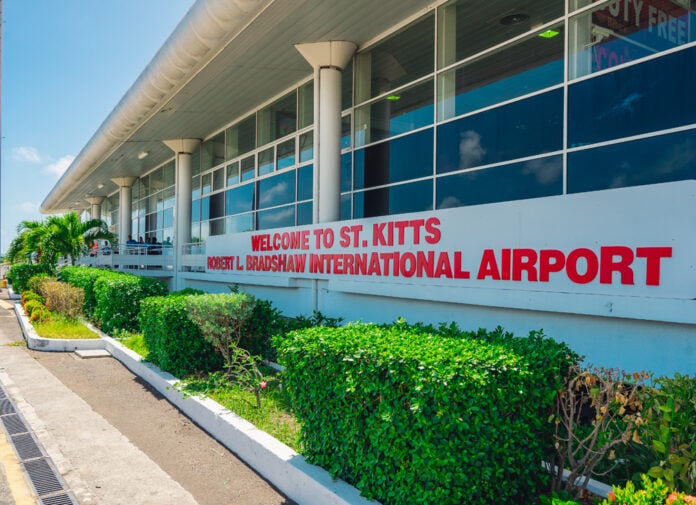
St. Kitts

A major milestone in Caribbean-Africa relations was achieved on March 21, as the Organisation of Eastern Caribbean States (OECS) supported the first large-scale commercial charter flight from the Caribbean directly to Africa.

The historic flight, organised by Aquarian Consult Limited, departed from Robert L. Bradshaw International Airport in St. Kitts, carrying a delegation of more than 100 passengers, including business leaders, government officials and cultural figures from eight Caribbean nations.

The aircraft landed the following day at Nnamdi Azikiwe International Airport, marking the first direct commercial connection of its kind between the two regions.

The initiative is being hailed as a significant step in strengthening South-South cooperation and deepening economic and cultural ties between the Caribbean and Africa. By eliminating lengthy layovers in Europe or North America, the flight signals a shift toward more direct engagement between the regions.

The journey also serves as the opening event for the Afri-Caribbean Investment Summit, hosted at the Bola Ahmed Tinubu International Conference Centre from March 23 to 28.

OECS officials say the development represents a new phase in economic diplomacy, helping to solidify relationships between Caribbean states and the Economic Community of West African States (ECOWAS), while creating a pathway for expanded trade and investment.

The direct route significantly reduces travel time — from more than 30 hours via traditional routes to a single transatlantic journey — demonstrating the potential for permanent air links between the Caribbean and Africa.

Delegates participating in the mission are expected to engage in high-level discussions on areas including agriculture, the blue economy, cultural exchange and investment opportunities.

Managing Director of Aquarian Consult, Aisha Maina, described the flight as a defining moment for both regions.

“We are no longer just dreaming of a bridge between our two regions; we are flying over it,” she said. “This flight isn’t just carrying people; it’s carrying the future of Afri-Caribbean trade, tourism and shared prosperity.”

The initiative is being viewed as a symbolic and practical step toward building a stronger “Global Africa” network, linking economies and communities across the Atlantic.

Regional agencies assess Hurricane Melissa response in after-action review

Hurricane Melissa
Photo: Donald De La Haye Aerial view of Santa Cruz, St. Elizabeth, showing motorists navigating through the parish, which sustained extensive damage following the passage of Category 5 Hurricane Melissa.

The Caribbean Disaster Emergency Management Agency (CDEMA), in collaboration with Office of Disaster Preparedness and Emergency Management (ODPEM) and regional partners, recently convened a three-day After-Action Review (AAR) to evaluate the Caribbean’s response to Hurricane Melissa.

The exercise brought together disaster management officials, regional institutions, United Nations agencies, security forces, civil society groups and development partners to assess the effectiveness of the response, identify gaps and strengthen future preparedness efforts.

Hurricane Melissa, one of the most powerful storms in the region’s history, made landfall in Jamaica on October 28, 2025, as a Category 5 system. The hurricane caused extensive damage across several territories, including Jamaica, the Cayman Islands, Haiti, The Bahamas and the Turks and Caicos Islands. Jamaica, particularly its western parishes, sustained the most severe impact.

Ahead of the storm, CDEMA activated its Regional Coordination Plan and continued to support response efforts into early 2026, issuing multiple situation reports to guide regional decision-making.

The review examined key components of the response, including early warning systems, coordination between national and regional agencies, and operational effectiveness across sectors such as health, shelter, logistics, telecommunications and recovery. It also assessed financing mechanisms and the transition from emergency response to long-term recovery.

ODPEM Director General, Commander Alvin Gayle, described the review as a vital opportunity for reflection and improvement.

“This review allows us to assess what worked, identify gaps, and take practical steps to strengthen regional coordination and disaster response,” he said.

CDEMA Executive Director Elizabeth Riley commended the overall regional response but acknowledged areas requiring improvement, particularly in logistics, staffing and ensuring that relief supplies align with actual needs on the ground.

She noted that the findings will help guide the development of a more robust and coordinated Regional Response Mechanism.

The outcomes of the review are expected to be presented at CDEMA’s Technical Advisory Committee meeting in April and will inform ongoing efforts to enhance disaster preparedness and resilience across the Caribbean.

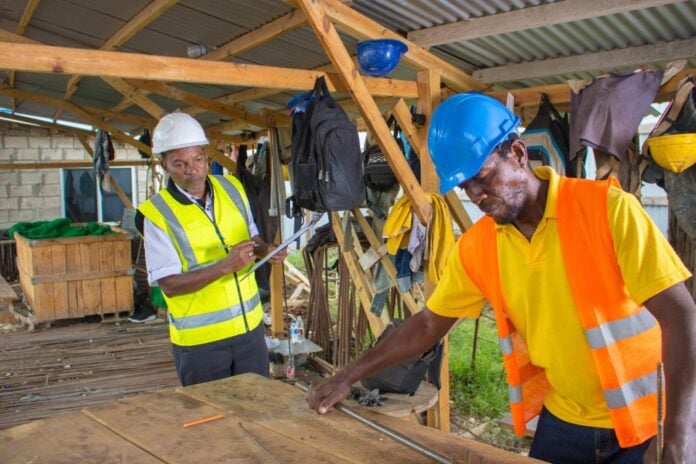
Construction worker dies after fall from I-395 overpass in Miami

A construction worker died early Monday morning after falling from the Interstate 395 overpass in Miami, according to the Florida Highway Patrol.

Authorities said the incident occurred at approximately 3:56 a.m., when the worker fell about 20 feet from the overpass onto Biscayne Boulevard below. He was pronounced dead at the scene.

Details surrounding the circumstances of the fall remain unclear, and officials have not yet released the victim’s identity or age.

The incident prompted the temporary closure of at least one lane on I-395, which has since been reopened.

The Florida Highway Patrol said the investigation remains active and is expected to be led by the National Transportation Safety Board.

No further information has been provided.

Popcaan earns eighth UK silver certification with Gorillaz collaboration

popcaan

Dancehall star Popcaan has secured another milestone in his international career, as “Saturnz Barz,” his collaboration with Gorillaz, has been certified silver in the United Kingdom.

The certification was awarded on March 20 by the British Phonographic Industry, recognising combined sales and streams equivalent to 200,000 units. It marks Popcaan’s eighth silver certification in the UK.

Released in March 2017 by Parlophone, “Saturnz Barz” appears on Gorillaz’s fifth studio album, Humanz. The track was recorded in Jamaica and represented Popcaan’s second collaboration with the genre-blending virtual band.

The song achieved notable chart success internationally, peaking at number five on the US Hot Rock Tracks chart and number 87 on the UK Singles Chart. It also charted in several other territories, including New Zealand, Portugal, Mexico, Hungary and Canada.

Popcaan, often referred to as the “Unruly Boss,” has built a steady presence in the UK market through collaborations that blend dancehall with pop, electronic and hip-hop influences.

His previous UK silver-certified tracks include “My Type,” “Can’t Hold We Down” with Kano, “2 Cups” featuring Lizzy, Tory Lanez and Fredro, “Twist and Turn” with Drake and PartyNextDoor, “Kisses for Breakfast” with Melissa Steel, “Should’ve Been Me” featuring Naughty Boy and Kyla, and “I’m in Control” with AlunaGeorge.

The latest certification further underscores Popcaan’s continued global reach and the enduring appeal of cross-genre collaborations.

CARICOM chief calls for unified push on reparatory justice at CELAC–Africa forum

CARICOM SG, Dr Carla Barnett, delivering remarks at the opening of the Second CARICOM-Africa Summit, 7 September 2025, Addis Abada, Ethiopia

Secretary-General of the Caribbean Community (CARICOM), Carla Barnett, is urging a coordinated global approach to reparatory justice, stressing that the issue must be tied directly to development outcomes rather than framed as charity.

Barnett made the call while participating in the First CELAC–Africa High-Level Forum held on March 19 in Bogotá, where she joined a panel discussion titled “Forum on Historical Reparations: Perspectives from Africa, Latin America and the Caribbean.”

“It must therefore be seen as justice plus development. It must not be seen as charity,” she said, underscoring the need to link reparations to tangible socioeconomic progress.

The CARICOM Secretary-General pointed to the United Nations’ International Decade for People of African Descent as a critical platform for advancing global action on socioeconomic justice and the recognition of the rights of people affected by the legacy of colonialism.

She also referenced the African Union–CARICOM Summit, noting that leaders had committed to strengthening collaboration between Africa and the Caribbean on reparatory justice. According to Barnett, that partnership remains central to advancing the issue on the global stage.

Describing the CELAC–Africa engagement as a significant step forward, she highlighted ongoing efforts by CARICOM Member States to co-sponsor resolutions on reparations at the United Nations.

Barnett said the regional bloc also intends to work alongside partners in Africa and Latin America to advocate for the establishment of a High-Level Political Forum on Reparations, aimed at deepening international dialogue and accelerating action.

The forum brought together stakeholders from across Africa, Latin America and the Caribbean, reflecting growing momentum behind calls for reparatory justice and increased cooperation among regions with shared historical experiences.

M-DCPS unveils high-tech Innovation Space at Norland Middle School

Pictured center are North Region Superintendent Dr. Yesenia Aponte, Chief Academic Officer Lourdes Diaz, School Board Member Steve Gallon III, Norland Middle School Principal Dr. Sacha T. Challenger, and Assistant Superintendent of School Choice and Parental Options Daniel Mateo.

Miami-Dade County Public Schools (M-DCPS) has unveiled a newly redesigned, technology-driven Innovation Space at Norland Middle School, aimed at fostering creativity, collaboration and hands-on learning among students.

The upgraded space blends a modern media centre with a makers lab, featuring an interactive floor, robotics tools, gaming stations and flexible seating designed to support both academic work and creative exploration. Students can engage in group activities in an open-concept layout, or use laptops, circuit boards and other technology to build projects and develop new skills.

“These innovation spaces are a testament to the power of public-private partnerships and how together, we can really make a difference for our students,” said Chief Academic Officer Lourdes Diaz. “Students, I really hope that you come here and collaborate and innovate and explore, really let your curiosity run wild with all of the new technology that is here.”

The unveiling drew a wide cross-section of district leadership, including School Board member Steve Gallon III, North Region Superintendent Dr. Yesenia Aponte, Chief Communications Officer Jacquelyn C. Diaz, as well as Principal Sacha T. Challenger, teachers, staff and students.

At the centre of the redesign is a multi-functional environment that merges traditional learning with interactive technology. The Innovation Space includes a dedicated Makerspace equipped with robotics kits, arts and crafts materials and hands-on engineering tools, alongside board games and gaming stations. A standout feature is the interactive floor, allowing students to engage with digital games and activities using movement.

Principal Challenger highlighted the range of opportunities now available to students.

“We have a computer hub, we have gaming stations, robotics, and a Makerspace area where the kids can make different items and different projects,” she said. “We also have a place where the kids can come in, do work, look out the window to see our beautiful garden, and socialize and be students.”

The redesign also introduced large windows for natural light, new shelving for books and modular furniture, including flip-and-nest tables that can be easily stored to maximize open space. High-top tables allow students to work collaboratively on laptops or engage in independent study.

Students have already begun exploring the new environment, with many expressing excitement about the expanded learning tools.

Seventh-grader Sephora Stenor said the space is both engaging and educational. “This Innovation Space is fun for students but also helps them learn stuff like the snap circuits; that’s engineering,” she said. “Before this, I never knew these snap circuits existed. Now I can come in here, use the laptops to do work, and read a book about something that I’m stuck on in class.”

Eighth-grader Jodie Hernandez said the transformation from the school’s former library was striking. “I was amazed by the space they created from the old one,” she said. “I like the new activities they have, like the active floor… you can just use your feet to tap.”

The Norland project is part of a broader initiative to create 18 Innovation Spaces across middle schools in the district over a two-year period. The effort is backed by a $2 million public-private partnership involving M-DCPS, the College Football Playoff Foundation, the 2026 Miami Host Committee and the Orange Bowl Committee.

District officials say the initiative is designed to prepare students for future careers by integrating technology, creativity and collaborative learning into everyday school experiences.

Jamaican-born Mark Denton to make history as first Black commandant at Norwich University

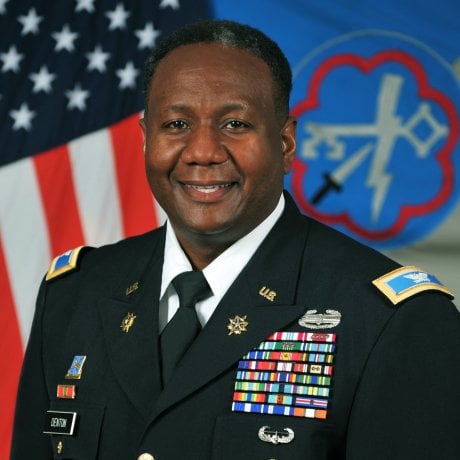
Mark Denton

Jamaica-born Colonel Mark Denton is set to break new ground at Norwich University, becoming the first Black man to lead its Corps of Cadets in the institution’s more than 200-year history.

The prestigious private military institution in Northfield, Vermont, announced that Denton, a 1997 graduate, will assume the role of 57th Commandant of the Corps of Cadets and Vice President of Student Affairs on June 15. His appointment also marks another milestone, as he becomes the first Jamaican to hold the position since the university’s founding in 1819.

Denton’s return to his alma mater follows a distinguished 35-year career in the United States Army, where he served as both an enlisted soldier and commissioned officer, rising to the rank of Colonel. His final assignment was as Executive Officer to the Deputy Under Secretary of the Army, capping a career that spanned tactical, operational and strategic leadership.

In a statement, Denton said his appointment represents a commitment to shaping the next generation of leaders.

“The world today demands leaders of character who are tested before they are tasked,” he said. “Returning to Norwich is my commitment to the next generation and a mission to instill Norwich P.R.I.D.E. — Perseverance, Respect, Integrity, Discipline, and Excellence — into every student.”

Born in Montego Bay, St James, Denton spent his early years in Jamaica before migrating to the United States at age 10, settling in Milton, Massachusetts. A multi-sport athlete in high school, he initially considered a future in sports before enlisting in the U.S. Army Reserves and later enrolling at Norwich, where he also played on the Cadet football team.

He graduated with a Bachelor of Science in Communications and a minor in philosophy, laying an academic foundation that would later shape his leadership approach. Denton would go on to earn advanced degrees, including a Master of Science in Strategic Studies from the U.S. Army War College and a Master of Arts in Business and Organizational Security Management from Webster University.

Over the course of his military career, Denton completed eight overseas assignments and six combat deployments, serving in regions including Afghanistan, Iraq, Kosovo, Africa and the Middle East. He held several high-level leadership roles, including Brigade Commander of the 207th Military Intelligence Brigade in Italy, where he oversaw operations across 54 African nations, and Battalion Commander of the 309th Military Intelligence Training Battalion in Arizona, managing a $150 million budget and training operations.

Among his most consequential assignments was his role as Deputy Director of Intelligence for Special Operations Joint Task Force–Afghanistan, where he oversaw intelligence support and managed multi-billion-dollar programmes in high-stakes environments.

Denton also served as a faculty instructor at the U.S. Army War College, mentoring senior leaders in strategy, ethics and decision-making — experience that aligns closely with his new responsibilities in higher education.

Norwich University President Lt. Gen. John J. Broadmeadow described Denton as a leader whose experience and character made him uniquely suited for the role.

“COL Mark Denton embodies the very best of Norwich University through his service and spirit,” Broadmeadow said. “More than his resume, his unwavering dedication to developing leaders of character through education, discipline and example makes him uniquely suited to guide our students.”

As commandant, Denton will oversee the training, discipline, morale and welfare of approximately 1,500 cadets, while also shaping broader student life policies as Vice President of Student Affairs. He will serve on the university’s leadership cabinet, with responsibility for student development, retention and success across both cadet and civilian populations.

The role also carries a ceremonial and functional appointment as a brigadier general in the Vermont State Militia, reflecting the university’s longstanding ties to the state and its citizen-soldier tradition.

Despite a career defined by global service and high-level command, Denton has remained closely connected to Norwich, supporting alumni initiatives and student scholarships over the years.

His military honours include two Legion of Merit awards, the Bronze Star Medal, the Defense Meritorious Service Medal and multiple Meritorious Service Medals, underscoring a career marked by sustained excellence.

Denton’s journey — from his early years in St James to the upper ranks of the U.S. Army — now comes full circle as he returns to the institution that helped shape him.

He will officially retire from active military service in May before taking up his new post in June.

Supported by his wife, Teresa, a former military captain, and their four children, Denton now steps into a role that places him at the centre of developing future leaders — a responsibility he describes as both an honour and a mission.

Opinion: Jamaica can’t grow without a productivity reset

Jamaica’s productivity jobs

The need to increase Jamaica’s productivity was a common refrain in Prime Minister Dr. Andrew Holness’s budget presentation last week. He revealed that the government is “developing a policy position on how to improve our low level of productivity,” and that this will be presented in greater detail at a later date. Presumably, this is the same policy the government said in November 2019 it was developing through the Ministry of Labour and Social Security’s Jamaica Productivity Center (JPC), but for which no public update had been provided until now.

The government could be forgiven for relegating its development down the pecking order of priorities, given that the idea was first introduced months before the onset of the COVID-19 pandemic. However, with a definitive shift in gears—particularly after the dislocation caused by Hurricane Melissa—the drive toward more sustained and robust economic growth would naturally be consistent with, and facilitated by, the completion of the policy.

Jamaica’s productivity woes have been well documented. Both labour productivity and total factor productivity have declined steadily for decades, with the latter estimated to have diminished by an average of 1 per cent annually over the last 40 years, and the former likely by even more. Much analysis has been undertaken, but without a clear solution. The result has been a continuation of the anaemic growth that has characterized Jamaica’s economy for the past half-century—this time occurring, paradoxically, within the context of an expanding labour force. More people are working, but each additional unit of labour is producing relatively less output.

It is this situation that the government’s ASPIRE programme, announced 18 months ago, has committed to addressing through six critical pillars, pivoting toward economic growth after more than a decade of entrenching macroeconomic stability. The Prime Minister also noted that public sector wage increases will need to be tied to productivity rather than solely to inflation. A clearly articulated National Productivity Policy would seamlessly harmonize and streamline these considerations into a single overarching framework.

When the policy was first publicly broached, the government indicated that its development would be premised on “human capital, government policies and programmes, the upgrading and retrofitting of our places of work, and a safe working environment.” In other words, having recognized the systemic and deeply structural nature of the problem, the government appears committed to a more holistic and analytical approach to solving it—rather than relying on the frequent misdiagnosis that attributes suboptimal growth outcomes primarily to inherent laziness across the workforce. The Prime Minister reiterated this point in his budget presentation, noting that Jamaica’s relatively low level of productivity “is not a judgement on Jamaican workers. It is a diagnosis of our economic structure.”

This realization must now be coupled with a concerted effort to significantly improve the country’s levels of education, training, and remedial upskilling. Currently, only four in ten members of the employed labour force are adequately certified for the work they perform, and fewer than half of those individuals hold tertiary-level qualifications. That employment profile militates directly against higher value-added economic activity, whether developed indigenously or attracted through increased foreign direct investment (FDI). Enhanced output becomes difficult, and higher remuneration nearly impossible. The prospects for improving quality of life and living standards are diminished. In aggregate, the country stagnates.

To attract the development of new and better-paying industries—and in keeping with the thrust toward economic diversification—there are natural synergies among the Ministry of Labour and Social Security (MLSS), where the Jamaica Productivity Center (JPC) resides; the Ministry of Education, which now includes skills training; and the newly created Ministry of Efficiency, Innovation and Digital Transformation. These three key ministries should seek to devise an all-of-government approach that effectively harnesses the resources and talent across the entities likely to be involved in embedding a culture of productivity, beginning with the public sector.

Jamaica’s consistent attainment of record-low unemployment represents a unique inflection point—one where the pivot to growth must be accompanied by a transformation in the nature of employment. This imperative is further underscored by labour force data indicating a significant number of persons outside the workforce. Some have returned to school or are engaged in unpaid care work at home, while many have stopped seeking employment due to discouragement. Others have rejected available jobs because of what they perceive to be inadequate compensation.

Consequently, Jamaica is currently experiencing what is statistically referred to as “full employment.” With nearly everyone who is actively seeking work and possesses the skills demanded by the market already employed, labour shortages have emerged in some sectors. These shortages are compounded by employers’ persistent complaints about the difficulty of filling vacancies due to a shortage of appropriately skilled workers. Those who are between jobs are classified as “frictionally unemployed,” reflecting a tight labour market with limited room for manoeuvre.

There remains a sizeable pool of potential labour, with roughly half as many persons outside the workforce as there are within it. Jamaica’s labour force participation rate, at 67 per cent, is broadly in line with that of developed countries. Nevertheless, the country’s unique development context and ambitions for economic expansion require higher levels of participation—an outcome that is unlikely in the short term. The focus, therefore, must be on creating the enabling conditions for those currently employed or available for work to increase their productivity. That process should begin with the National Productivity Policy.

Keenan Falconer is an economist with experience across Jamaica’s public and private sectors, as well as the multilateral financing space. Send feedback to keenanjfalconer20@gmail.com.

ECLAC report flags persistent poverty across Latin America and Caribbean

Jamaica poverty

A new report from the Economic Commission for Latin America and the Caribbean (ECLAC) paints a mixed picture of progress and ongoing challenges across Latin America and the Caribbean, highlighting stubborn poverty levels, uneven economic growth and mounting environmental pressures.

In its 2025 Statistical Yearbook, the United Nations body reported that multidimensional poverty continues to affect 27.4 per cent of the region’s population, with significant disparities between countries. Gender inequality remains a key concern, with women between the ages of 20 and 59 more likely than men to live in poverty, particularly in urban areas.

Economic growth across the region is projected at 2.4 per cent for 2025, though performance varies widely. South America is expected to record modest gains, while Central America and Mexico show signs of slowing. Growth in the Caribbean remains uneven, driven largely by strong expansion in Guyana.

Trade activity is beginning to recover following earlier declines, but remains inconsistent across countries. ECLAC noted that intraregional trade continues to be limited, underscoring structural challenges in economic integration.

On the environmental front, the report warns that the region remains highly vulnerable to climate change. In 2024, a total of 82 natural disasters affected more than 12 million people, resulting in over 800 deaths and economic losses estimated at US$21.8 billion.

Deforestation also continues to pose a serious threat, with forest cover declining from 53 per cent in 1990 to 46 per cent in 2023. Despite this reduction, the region still accounts for approximately one-fifth of the world’s forests.

Air quality is another pressing issue, with no country in Latin America and the Caribbean meeting the standards for fine particulate matter set by the World Health Organization.

ECLAC said the findings underscore the need for stronger policy responses to address inequality, boost sustainable growth and build resilience to climate-related risks across the region.

Richards rises, Jamaica agonizingly denied more on dramatic Day Two in Toruń

Raymond Richards

Raymond Richards gave Jamaica another moment of pride on Saturday, soaring to bronze in the men’s high jump to secure the country’s third medal at the World Athletics Indoor Championships.

But while Richards delivered on the field, the rest of Day Two unfolded as a story of narrow misses, cruel margins, and one painful disqualification that robbed Jamaica of what appeared to be another podium finish.

By the close of competition at the Kujawsko-Pomorska Arena, Jamaica had added one bronze medal to the two silver medals won on Friday. Yet the delegation left the second day with every reason to believe the total might have been even greater.

Richards answers the call again

Richards once again proved his value on the global stage, clearing a season’s best 2.26 meters to claim bronze in the men’s high jump. It marked the second bronze medal of his senior career, following the podium finish he earned at last year’s World Indoor Championships.

He shared third place with South Korea’s Sanghyeok Woo, with both men producing identical clearances through 2.17m, 2.22m, and 2.26m before failing at 2.30m.

The gold medal went to Ukraine’s Oleh Doroshchuk, while Mexico’s Erick Portillo took silver. Both cleared 2.30m, with Doroshchuk awarded the title on countback.

Jamaica had a second presence in the final through Romaine Beckford, who cleared 2.22m but could not negotiate 2.26m, leaving him joint ninth.

So close in the sprints

Jamaica’s women came within touching distance of a medal in the 60 meters, but not close enough to rewrite the final order.

Brianna Lyston finished fourth in 7.05 seconds, matching her season’s best, while Jonielle Smith was fifth in 7.06 seconds in a final won by Italy’s Zaynab Dosso in 7.00 seconds. Jacious Sears of the United States took silver in 7.03 seconds, the same time credited to St Lucia’s Julien Alfred, who secured bronze.

Both Jamaicans had looked sharp on the way through. In the opening round, Smith won heat three in 7.13 seconds, and Lyston took heat six in 7.06 seconds. Smith then produced one of Jamaica’s standout performances of the session in the semi-finals, winning her race in a personal best 7.03 seconds, while Lyston advanced as a non-automatic qualifier after placing third in a loaded semi-final in 7.05 seconds.

Their progress set up hopes of a medal push, but the final proved just beyond reach.

Prince beaten by the smallest of margins

If the women’s 60 meters brought disappointment, the men’s 60-meter hurdles delivered heartbreak in its most exact form.

Demario Prince ran a lifetime best 7.43 seconds in the final, only to miss bronze by nine-thousandths of a second. He was credited with the same listed time as American Trey Cunningham, but Cunningham was awarded third after crossing in 7.421 seconds, compared with Prince’s 7.430 seconds.

The race was won by Poland’s Jakub Szymański in 7.40 seconds, with Spain’s Enrique Llopis taking silver in a national record 7.42 seconds.

Prince’s performance nevertheless represented another step forward. He had opened his campaign by winning his first-round heat in 7.58 seconds, then returned to clock 7.53 seconds for second place in his semi-final and automatic qualification for the final.

The event brought contrasting fortunes for Jamaica’s other entrant, Jerome Campbell. After safely advancing from the opening round with third place in heat four in 7.67 seconds, Campbell’s semi-final unraveled when he struck the first hurdle, lost momentum, and finished well back before later being disqualified.

Relay joy turns to protest and pain

For a brief period, Jamaica appeared to have secured another bronze medal in the mixed 4×400-meter relay.

The quartet of Delano Kennedy, Shana-Kaye Anderson, Kimar Farquharson, and Leah Anderson fought hard to finish third in 3:17.13 minutes, capping an intense race with what looked like a place on the podium. But that result did not stand.

After an extended review, officials disqualified Jamaica for a violation of Technical Rule 24.22, relating to the baton exchange. The ruling centered on the first exchange, with officials determining that the outgoing runner on the anchor leg had been over the start line when receiving the baton. Jamaica lodged an appeal, but the decision was upheld.

The disqualification elevated host nation Poland to bronze in 3:17.44 minutes, behind Belgium, which won gold in 3:15.60 minutes, and Spain, which took silver in 3:16.96 minutes.

What had looked like a second bronze medal for Jamaica on the day instead became one of the championship’s harshest setbacks.

Middle-distance hopes fade

Jamaica’s hopes in the 800 meters ended in the semi-finals during the morning session.

Natoya Goule-Toppin placed fourth in her semi-final in 2:00.69 minutes, an improvement on the 2:01.32 minutes she ran in the opening round, but not enough to progress.

In the men’s event, Navasky Anderson, competing at his first World Indoor Championships, finished third in his semi-final in 1:46.65 minutes. He missed the automatic qualifying places and was unable to advance, despite having run 1:46.34 minutes in the first round.

Falls short in triple jump

In the women’s triple jump, Shantae Foreman placed 17th with a best effort of 12.35 meters, bringing Jamaica’s involvement in that event to a quiet close.

With three medals overall and a handful of performances that hovered just outside the podium, Jamaica closed Day Two in 12th place on the medal table. The standing reflected both achievement and frustration: Richards had delivered again, but several other opportunities had slipped away through the finest of margins and a costly relay infringement.

Attention now shifts to the final day, where Jamaica will still have chances to add to its tally. Carey McLeod and Tajay Gayle are set for the men’s long jump, while Nia Robinson will contest the women’s long jump in her major global championship debut. Megan Simmonds and Oneka Wilson are also due in the women’s 60-meter hurdles, and the men’s 4×400-meter relay team will chase a place on the podium.

For now, however, Day Two belongs most clearly to Richards, the man who rose above the bar, and above the chaos around him, to keep Jamaica in the medals.


Khadija Shaw’s record-breaking treble sends Manchester City surging toward WSL title

City’s top scorer Bunny Shaw sidelined as injury woes mount for Gareth Taylor
Khadija “Bunny” Shaw. / Robbie Jay Barratt - AMA/GettyImages

MANCHESTER, England — Khadija “Bunny” Shaw produced a devastating first-half masterclass on Saturday, scoring a record-breaking hat-trick as Manchester City overwhelmed Tottenham Hotspur 5-2 and moved another step closer to the Women’s Super League title.

The Jamaican forward needed just 13 minutes to complete her treble, striking in the eighth, 18th, and 21st minutes to deliver the fastest hat-trick in WSL history. It was another ruthless display from the league’s most prolific scorer and yet another nightmare for Tottenham, who once again had no answer for Shaw at home.

Her three-goal burst not only set a new league mark, but also gave her a fourth consecutive home league hat-trick against Spurs, a remarkable streak that underlined her sustained dominance in this fixture.

A ruthless opening blitz

Manchester City seized control early, with Shaw setting the tone almost immediately. Her opener came in the eighth minute, the first of three headers that exposed Tottenham’s vulnerability in the air and City’s superiority on set-pieces.

Spurs briefly responded when Olivia Holdt slipped behind the City defense to level the score at 1-1 in the 15th minute, but the reprieve was fleeting.

Three minutes later, Shaw restored City’s advantage. By the 21st minute, she had completed her hat-trick, again punishing Tottenham with her aerial power and precision. Every one of her goals came with her head, as City repeatedly turned dead-ball situations into decisive weapons.

City pile on before the break

Shaw’s explosive start laid the foundation, but City were not done.

Brazilian forward Kerolin added a fourth in the 37th minute, scooping home from Lauren Hemp’s pull-back as Tottenham’s resistance continued to unravel. Then, just before halftime, City found a fifth when Amanda Nilden turned Vivianne Miedema’s header into her own net in the 45th minute.

By the interval, the match had already been effectively settled.

The hat-trick lifted Shaw to 18 goals in 18 WSL matches, extending her lead as the division’s top scorer and reinforcing her central role in City’s title charge.

More importantly for City, the victory pushed them to 46 points from 18 matches, leaving them eight points clear at the top of the table. Manchester United sit second on 38 points, while defending champions Chelsea are third on 37. Arsenal, in fourth on 35 points, still have two games in hand, but City’s latest result increased the pressure on every challenger.

“The most important thing was the win”

Despite her individual milestone, Shaw made it clear that the larger objective remained firmly in focus.

“The most important thing for me was the win, because that puts us closer to the title,” Shaw said in a post-match interview.

“So, I think getting the win and getting the quickest hat-trick [in WSL history] is a wonderful feeling.”

Her comments reflected both satisfaction and perspective: the record mattered, but the race for the championship mattered more.

More than a goal scorer

City head coach Andrée Jeglertz praised Shaw not only for her finishing, but for the broader impact she continues to have on the team.

“She’s a great player. She’s scoring goals for us, we always talk about that, but how she works defensively.

“At set plays but also in the press, she’s improved on that a lot during the year, but also in setting up team-mates.

“There’s a lot of things in her today that she should be proud of, and the team should be proud of. I’m really happy for that.”

Jeglertz’s assessment captured the full scope of Shaw’s influence. On a day when her goals will claim the headlines, City’s coach was just as eager to highlight the discipline, pressing, and all-around development that continue to elevate her game.

A defining statement in the title race

For Manchester City, this was more than a comfortable win. It was a forceful statement from a side determined to finish the season on top. For Shaw, it was another unforgettable chapter in a season filled with decisive contributions and historic moments.

And for Tottenham, it was a harsh reminder that when Bunny Shaw finds space, rhythm, and service, she can put a match out of reach before the contest has truly begun.

On a day that began with title pressure and expectation, Shaw responded with history, and with the kind of performance that may prove decisive in City’s pursuit of the WSL crown.


Broward School Board approves ballot language for November tax referendum

broward school board

The Broward County Public School Board has approved ballot language for a proposed referendum asking voters to extend a 1-mill property tax that funds employee pay, school safety, and mental health services. The measure, if passed on November 3, would extend the tax through December 31, 2030, generating what board member Allen Zeman called “a make-or-break amount” of $375 million for the district.

The current tax is set to expire after the 2026-2027 school year, and board members have warned that failing to renew it would create a substantial funding gap. Under the existing allocation, roughly 75% of the funds go toward compensation supplements, 17% toward school safety and security personnel, and 8% toward student support services, including mental health and wellness programs.

During the March 10 meeting, board members debated whether the ballot language was too broad and could allow funds to go to employees not directly working in schools. A substitute motion from board member Debra Hixon to limit supplements to staff who “directly impact students” failed 6-3.

Board member Lori Alhadeff, whose 14-year-old daughter was killed in the Marjory Stoneman Douglas High School shooting, cast the sole dissenting vote on the final language. She emphasized that school safety and mental health should remain the top priority: “If your children don’t come home alive, then nothing else matters.”

The board has scheduled a workshop for Tuesday, March 24, to discuss how funds from the referendum would be allocated if voters approve the measure.


Miami-Dade mayor to celebrate completion of upgraded wastewater facilities

Miami-Dade Mayor Daniella Levine Cava
Photo via Floridapolitics.com/By Ryan Nicol

Miami-Dade County Mayor Daniella Levine Cava will host a ribbon-cutting ceremony on Tuesday, March 24, 2026, to mark the completion of the new Thickening and Dewatering Facilities at the County’s Central District Wastewater Treatment Plant.

The event, scheduled for 10 a.m., will also include Raquel Regalado, Miami-Dade Water and Sewer Department (WASD) Deputy Director Marisela Aranguiz-Cueto, and representatives from the Florida Department of Environmental Protection.

The upgrades are part of WASD’s $8.9 billion Capital Improvement Program (CIP) and represent the largest construction contract completed in the department’s history when combined with similar improvements at the South District Wastewater Treatment Plant. The total investment for both Central and South District facilities exceeds $210 million.

The new facilities use advanced centrifuge and gravity belt thickener technology to rapidly remove water from sludge, reducing processing time from days to seconds. These improvements increase operational efficiency, lower costs, enhance odor control, and improve water quality — protecting Biscayne Bay and ensuring reliable wastewater service for the growing community.

Event Details:

  • Who: Miami-Dade Mayor Daniella Levine Cava, Commissioner Raquel Regalado (D7), WASD Deputy Director Marisela Aranguiz-Cueto, and representatives from the Florida DEP
  • What: Ribbon-Cutting Ceremony for Thickening and Dewatering Facilities
  • When: March 24, 2026, at 10:00 a.m.
  • Where: Central District Wastewater Treatment Plant, 3989 Rickenbacker Causeway, Miami, Florida 33149

Vybz Kartel announces ‘Vybz Island Experience 2027’ luxury dancehall event

Dancehall star Vybz Kartel has announced the launch of the “Vybz Island Experience 2027,” a four-day, three-night immersive event blending luxury travel with Jamaican dancehall culture.

The inaugural staging is scheduled for April 9 to April 12, 2027, and will feature a private island takeover alongside accommodations aboard Royal Caribbean cruise ships departing from Port Everglades and the Port of Miami.

Kartel is set to headline the event, which organisers say will include performances by more than 40 DJs, artists and entertainers. The programme is designed to offer a structured mix of daytime activities and curated nightlife experiences.

According to organisers, the Vybz Island Experience will operate on a fully inclusive hospitality model, dividing activities between land-based and onboard events.

Daytime programming will take place on a private island, featuring main-stage dancehall performances, beach arenas, private cabanas, Caribbean cuisine and curated rum bar experiences. VIP yacht access and exclusive beach environments are also planned.

In the evenings, activities will shift to the cruise ships, which will host themed celebrations, celebrity DJ-led sessions and after-dark entertainment.

The event marks Kartel’s latest venture following his 2024 release from prison and a 2025 run of sold-out international shows. Organisers describe the experience as a “luxury dancehall and private island experience” aimed at merging music, culture and upscale travel.

Registration for early access is now open via the event’s official website, with tickets already on sale.

Sandals extends closure of three Jamaica resorts for US$200M transformation

Sandals Resorts

Three Sandals resorts in Jamaica will remain closed longer than initially planned, as Sandals Resorts International (SRI) undertakes a major US$200 million transformation project.

Sandals Montego Bay, Sandals Royal Caribbean and Sandals South Coast were originally scheduled to reopen on May 31 following Hurricane Melissa. However, as restoration work progressed, the company decided to expand the scope of upgrades, pushing reopening dates to later in 2026.

According to SRI, the extended closure will allow for a full-scale reimagining of the properties under its Sandals 2.0 vision, rather than standard repairs.

“The opportunity to completely reimagine three resorts at this scale, with full focus and without compromising the guest experience, is extraordinarily rare,” said Adam Stewart, Executive Chairman of Sandals Resorts International.

“With our doors closed, we were given something we almost never have in hospitality, a true blank canvas and having that clarity changed everything.

“We spent time walking the properties, speaking with our team and thinking about our guests. At a pivotal moment, it became clear: we shouldn’t simply restore what was there. We should dream bigger. When we welcome our guests back, they’ll see the transformation and they’ll feel exactly why we chose to use this moment to create something worthy of their loyalty.”

The three resorts are now expected to reopen in phases toward the end of 2026. Sandals South Coast is slated to reopen on November 18, followed by Sandals Royal Caribbean and Sandals Montego Bay on December 18.

SRI said the upgrades will touch nearly every aspect of the guest experience, including redesigned arrival areas with views of the Caribbean Sea, new accommodation categories, reimagined pools, and upgraded social and lounge spaces. The company added that it will retain the distinct character of each property while introducing modern enhancements.

Food and beverage offerings are also set to be expanded, with new restaurant concepts and bar experiences planned across all three resorts.

Despite the closures, Sandals confirmed that most of its Jamaica properties remain operational. Sandals Royal Plantation, Sandals Ochi, Sandals Dunn’s River, Sandals Negril and Beaches Negril continue to welcome guests.

The company said the investment underscores its long-term commitment to Jamaica and positions the three resorts for a new era when they reopen in late 2026.

Grenada’s DPM to hold first congress, unveil candidates ahead of next election

Grenada Democratic People’s Movement (DPM)

Grenada’s newest political party, the Democratic People’s Movement (DPM), is set to formally launch its internal structure at its first congress on Sunday, March 22, at the Grenada Trade Centre.

The event will bring together delegates from all 15 constituencies and will include the election of a national executive, ratification of the party’s constitution, and the announcement of its first group of candidates for the next general election.

The move comes amid increasing political activity in Grenada, with the opposition New National Party (NNP) already unveiling a full slate of 15 candidates. The ruling National Democratic Congress (NDC) is also expected to contest all constituencies.

Meanwhile, the newly formed People’s National Party (PNP), led by former senator and minister Jonathan La Crette, has entered the political arena but has not yet announced its slate of candidates.

General elections in Grenada are constitutionally due by 2027, although they may be called earlier, contributing to growing momentum among political parties.

DPM leader David described the upcoming congress as a defining moment for both the party and the country.

“This is not about one person or a small group. This is about all Grenadians who believe the future of this country requires a different kind of politics,” he said, noting that the movement has been built through community-level consultations, with candidates emerging from what he described as a “bottom-up process.”

Interim Chairman Alister Bain said that while the party will not reveal its full slate of candidates at this stage, it is positioning itself to contest all constituencies.

“We are ready to compete in every constituency and to assume governance of the country,” Bain said.

He added that the party’s policies have been shaped through direct engagement with citizens and emphasised that young people and women will play a central role in leadership and decision-making.

The DPM said its platform will focus on practical outcomes, including “work that pays and stays, food that feeds us, and healthcare that reaches you,” as it seeks to establish itself as a serious contender.

The party was launched in November 2025.

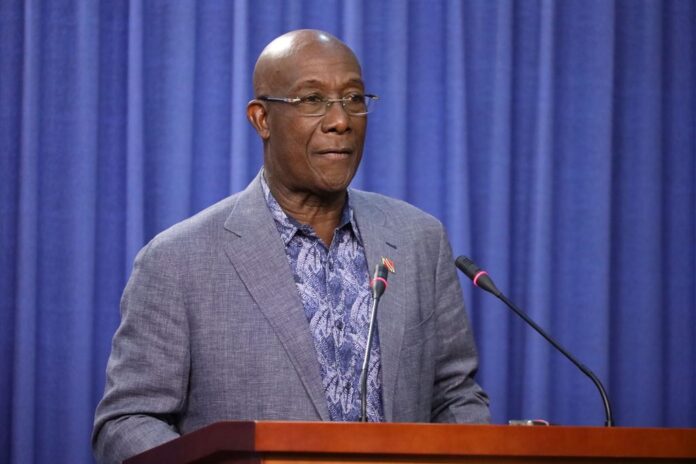
Former Trinidad PM Rowley questions TATT review of ‘jamette’ comment

Keith Rowley

Former Prime Minister Keith Rowley has criticised the Telecommunications Authority of Trinidad and Tobago (TATT) for reviewing the media’s broadcast of his “jamette” comment, questioning why the regulator had not acted during previous political controversies.

In a Facebook post on Saturday, Rowley suggested that TATT’s scrutiny reflects a broader pattern of media suppression seen internationally.

He asked, “You sound surprised by the TATT awakening. Isn’t that threatening of the media part of what is happening abroad and very well known to us for copying here?”

Rowley also questioned whether the regulator was newly established, asking, “BTW is the TTAT (sic) a new organisation in Trinidad and Tobago?”

He compared the current response to earlier incidents that he said went unchallenged, citing former members of the United National Congress (UNC) and remarks made by Prime Minister Kamla Persad-Bissessar. Rowley referenced a past matter involving Jack Warner, in which a lawyer was allegedly engaged to formalise a public allegation against a prime minister, noting he “didn’t hear from the TTAT (sic) and the advisers then.”

The former prime minister said his comments were made in response to what he described as a false claim that Balisier House, the headquarters of the People’s National Movement, was built with drug money.

Last week, Rowley labelled Persad-Bissessar a “jamette” for failing to provide evidence to support allegations that the PNM is involved in criminal activity.

“If (Persad-Bissessar) can’t come in front of me and show me an iota of evidence to support that allegation, I say again that we are unfortunate to have a jamette as the prime minister of Trinidad and Tobago,” he said.

He also criticised Persad-Bissessar’s conduct in Parliament, stating, “Apparently, when Mrs Persad-Bissessar is rampaging against the people that she denigrates on an ongoing basis, that is satisfactory to some people. Well, I’m sorry, but once she makes the mistake of slandering me inside the Parliament, I reserve my right and remain quite happy to respond as I see fit outside of the Parliament.”

Rowley added that if his response generated revenue for those connected to the incident, he was “even happier and the hypocrites could take a hike until she attacks them and tells lies on them as is her habit because she is the Prime Minister.”

Meanwhile, PNM Member of Parliament Camille Robinson-Regis defended Rowley, saying the backlash must be viewed in context. She argued that the former prime minister has faced years of personal and often unsubstantiated attacks, and that his response “did not emerge in a vacuum.”

Robinson-Regis said his remarks followed what she described as a “serious and damaging allegation” against the PNM and its supporters, adding that respect in public life should not be selectively applied. She also referenced unresolved questions raised by Rowley regarding government actions during the UNC administration, including the removal of radar from Tobago, claims by former Defence Minister Wayne Sturge, and issues surrounding the Dana Seetahal murder investigation.

In a statement on Friday, TATT said it is reviewing the matter and reminded broadcasters of their obligations under their concessions, particularly Section D9, which prohibits the transmission of content that degrades or discriminates against any person or group on the basis of race, origin, class, religion, or sex. The regulator said it would take action if a breach is found.

Bahamas refers 98 suspected passport fraud cases to police amid crackdown

Bahamas passports

Authorities in The Bahamas have referred 98 suspected passport fraud cases to police as part of a wider effort to clamp down on irregularities within the system.

Chief Passport Officer Nicholas Symonette said internal reviews also flagged possible staff involvement in some of the मामलों, which have been referred for further investigation. He added that police have since identified four additional suspects in separate matters.

Symonette’s comments come amid claims by Opposition Leader Michael Pintard that more than 250 fraudulent document cases were under investigation, raising concerns about potential misuse ahead of the next general election. However, Symonette said the figure cited by Pintard was based on an earlier subset of cases compiled by the Passport Office and that he was unaware of the higher number.

He explained that the cases were identified through internal audits and submitted to the Royal Bahamas Police Force with supporting documentation, with the list updated as new findings emerge.

“That list shows we are doing our job to detect and stop fraud early,” Symonette said.

Authorities have already brought several of the matters before the courts. National Security Minister Wayne Munroe disclosed that 27 people have been arrested and charged across 21 cases, with two convictions secured and others still pending.

Investigations have uncovered a range of fraudulent activities, including sham marriages, falsified birth certificates, irregular naturalisation records, and improper citizenship and immigration documents.

Symonette also pointed to a 2019 policy that allowed limited documentation for passport renewals as a factor that weakened vetting processes. He said that policy has since been scrapped, with full verification procedures reinstated.

Meanwhile, Parliamentary Commissioner Harrison Thompson defended the integrity of the voter register, noting that individuals found to be ineligible are being removed in accordance with the law.

“There is no need to attack civil servants who are carrying out their duties professionally and in the public interest,” Thompson said.