Home Blog Page 40

Miss Universe Jamaica Gabrielle Henry released from hospital four months after stage fall

Gabrielle Henry in the hospital from Feb. 13 Instagram post. Via Gabrielle Henry/Instagram

Gabrielle Henry, Miss Universe Jamaica, has been released from hospital nearly four months after suffering serious injuries following a fall during the Miss Universe 2025 in Thailand.

Pageant organisers Mark McDermoth and Karl Williams confirmed the development in a statement to The Gleaner, noting that Henry is continuing her recovery under the care of her medical team.

“She has not yet returned to active Miss Universe Jamaica duties, therefore, no interviews nor official appearances are currently on her itinerary,” the organisers said.

Henry was hospitalised in November 2025 after falling from the stage during the preliminary evening gown competition at the Miss Universe pageant. The Miss Universe Organization later confirmed that she sustained a fracture and an intracranial hemorrhage, among other injuries.

Following the incident, Henry was initially treated in Thailand before being medically escorted back to Jamaica for continued treatment and rehabilitation.

In February, Henry shared one of her most detailed recovery updates via Instagram, posting images of herself resting in a hospital bed and using a stationary bike as part of her rehabilitation.

“ At a time when I wanted only to represent Jamaica at my fullest, I faced the most unexpected injury of my life. It shifted everything. Yet I have learned that a fall can uncover a depth of strength you did not know you possessed,” she wrote, adding that the experience had redefined “restoration and renewal” for her.

Despite the challenges, Henry said the experience revealed her resilience. She also thanked the healthcare professionals involved in her reocvery.

“I am deeply grateful to the healthcare professionals who continue to guide me forward. From neurosurgeons and neurologists to nurses and physiotherapists, in Thailand and in Jamaica, each has played a vital role. Their care, precision and steady encouragement have sustained me through moments of uncertainty. ”

Legal representatives also confirmed that Henry, an ophthalmology resident, has not yet resumed her medical duties due to the injuries sustained in the fall.

Following the November incident, the Miss Universe Organization said it covered hospital, medical and rehabilitation expenses in Thailand, as well as accommodation costs for Henry’s mother and sister who remained by her side. The organisation also funded her medically escorted return to Jamaica and committed to covering future medical expenses related to the incident.

Henry had earlier expressed gratitude after returning home in December, saying she was thankful to be surrounded by the “familiar strength of Jamaica” as she focused on healing.

Moliy responds to Shaggy’s ‘Shake It To The Max’ rhythm comments

Moliy marks one year of 'Shake It to the Max (Fly)'

Ghanaian recording artist Moliy has responded to comments made by Shaggy regarding her decision not to clear additional songs on the “Shake It To The Max” rhythm following the global success of her hit single of the same name.

Speaking in an interview with Capital Xtra on Tuesday, Moliy said her decision was driven by a desire to move in a different creative direction, rather than a misunderstanding of Jamaica’s juggling culture, as suggested by Shaggy.

“I understand the culture; I just had a different intention. It’s like you can see it from where we are standing today and be like, ‘No, this went totally wrong, this is not how it’s supposed to be.’ Maybe we will look at it 10 years from now and be like, ‘This was actually a great choice,’” Moliy said.

She also indicated she remains open to collaborating with Shaggy or other artistes — but not solely around the same rhythm.

“If you really mess with me, then hit me up and let’s work on something else. Is it just Shake It To The Max that you’re interested in, or do you like me as an artiste?” she questioned.

In a late February interview with the Jamaica Observer, Shaggy reflected on the success of the “Shake It To The Max” beat and suggested the rhythm could have sparked a broader revival of juggling culture.

He pointed to the recent popularity of the WYFL rhythm by DJ Mac as an example of how multiple artists can drive momentum on a single rhythm.

“I thought that could have happened with Silent Addy and the Shake It To The Max rhythm. We tried, and a couple of people jumped on it, but I think the problem was Moliy. She didn’t want anybody else to jump on it,” Shaggy said.

“I know Silent Addy himself was really pushing to do it, but I think she was the one blocking it, and that really hurt the culture because that was a gateway. Not allowing anybody else to jump on it — that’s gatekeeping in my opinion,” he added.

Moliy, however, said her focus was on evolving creatively after the success of the track.

“I loved it. I loved every part of it (Shake It To The Max), but at some point, I was just thinking, when do I get to do the next thing?” she said.

One year after its U.S. digital release, the “Shake It to the Max (Fly)” remix by Moliy, Silent Addy, Skillibeng, and Shenseea was certified gold by the Recording Industry Association of America (RIAA).

US Attorney’s Office launches Federal Prosecutor Leadership Academy for Miami-Dade students

The United States Attorney’s Office for the Southern District of Florida recently hosted its inaugural Federal Prosecutor Leadership Academy, a two-day initiative designed to introduce high school students to the work of the U.S. Department of Justice and inspire future public servants.

The inaugural class included 33 students from 10 high schools across Miami‑Dade County. Participants engaged directly with federal prosecutors, law enforcement officials, and members of the judiciary to gain insight into the federal criminal justice system.

“This program is about access and mentorship at an early stage,” said Jason A. Reding Quiñones. “For many of these students, this was their first real interaction with federal prosecutors, law enforcement agents, and judges. That kind of exposure matters. When young people can engage directly with professionals in public service, it turns something distant into something possible.”

Quiñones added that early exposure and mentorship can help shape students’ career paths and strengthen the pipeline of future public servants.

Over the two-day programme, students participated in interactive panels and presentations led by Assistant U.S. Attorneys and representatives from several federal and local agencies, including the Federal Bureau of Investigation, Bureau of Alcohol, Tobacco, Firearms and Explosives, United States Secret Service, and the City of Doral Police Department.

The programme featured:

An introduction to the Department of Justice and the structure of the U.S. Attorney’s Office
Roundtable discussions with Assistant U.S. Attorneys from multiple divisions, including Civil, General Crimes, Violent Crime and Special Victims, and Economic Crimes
A panel outlining pathways to becoming a federal prosecutor
A presentation on the fundamentals of criminal investigations
A law enforcement panel highlighting interagency collaboration
A guided office tour and a visit with a U.S. Magistrate Judge

Following the success of the inaugural session, the U.S. Attorney’s Office announced it will host a second Federal Prosecutor Leadership Academy on April 6-7, welcoming students from private high schools across Miami-Dade County.

Officials said the initiative forms part of broader community outreach efforts aimed at strengthening public trust and building a diverse pipeline of future leaders in the justice system.

The U.S. Attorney’s Office indicated that it plans to continue the Federal Prosecutor Leadership Academy in the years ahead.

CARICOM chairman calls for bold action to strengthen Africa-Caribbean ties

Dr. Terrance Drew St Kitts
Prime Minister of St. Kitts and Nevis, Hon. Dr. Terrance Drew.

Caribbean Community (CARICOM ) Chairman Terrance Drew on Wednesday called for bold, action-oriented engagement to strengthen ties between Africa and the Caribbean, urging both regions to transform shared history into tangible economic opportunities.

Speaking at the inaugural Afri-Caribbean Investment Summit, Drew, who also serves as Prime Minister of St. Kitts and Nevis, said meaningful progress must be rooted in deliberate action, strategic collaboration, and a shared commitment to development.

Addressing the summit under the theme “Caribbean Perspectives on Unity and Prosperity,” Drew emphasized the importance of visionary leadership in advancing Africa-Caribbean relations, noting that such initiatives may not always be immediately understood but remain critical to long-term growth and global positioning.

“For those who may not have understood, and even if they don’t understand now, I still forgive them. For I understand that the move is bold and it’s unapologetic,” he told participants.

The seven-day summit, organised by Aquarian Consult Limited in partnership with the St. Kitts and Nevis government, runs through Saturday and is aimed at fostering economic partnerships between the two regions.

Held under the theme “One Voice, One Vision: Advancing Afri-Caribbean Unity,” the event seeks to establish a transatlantic trade corridor and transition from traditional diplomatic engagement to sustainable economic partnerships.

The gathering also forms part of a broader “Reverse Middle Passage” initiative designed to create direct economic ties between Africa and the Caribbean, reducing reliance on European and North American transit routes.

Drew told the audience that engagement with Africa is grounded in a broader mission to reconnect people linked by shared ancestry, history, and identity.

He said the Caribbean delegation represents not just participation but purpose, bringing together leadership, talent, and opportunity to foster meaningful exchange and collaboration.

Drew also positioned St. Kitts and Nevis as an emerging bridge between Africa and the Caribbean, reaffirming his administration’s commitment to strengthening partnerships, expanding economic linkages, and advancing South-South cooperation.

He added that the moment calls for courage, clarity, and decisive action as both regions work toward a future defined by shared prosperity and deeper cooperation.

419 churches to receive hurricane grants from Jamaican gov’t

Desmond McKenzie, Jamaica’s minister of local government and community development

Jamaica’s Ministry of Local Government and Community Development has announced that 419 churches damaged during the passage of Hurricane Melissa will receive government grants beginning in April.

Minister of Local Government and Community Development, Desmond McKenzie, said the funds will be distributed under the Government’s $75-million Community Church Clean-Up and Restoration Initiative, which forms part of the broader post-hurricane National Clean-Up Programme.

McKenzie made the announcement during the Kingston and St. Andrew Governance Conference held Wednesday at the Jamaica Conference Centre.

The conference was held under the theme, “Civil Society Organisations (CSO) on a Mission: Reset the Vibe…Build Our Future…Reignite the Fire.”

Delivering the main address, McKenzie said approximately 6,000 churches across Jamaica were affected when Hurricane Melissa struck the island in October 2025.

He explained that the Government, through the Social Development Commission (SDC), conducted assessments across the most affected parishes to determine the extent of the damage.

“I’m pleased to announce this morning, that in April, the handing out of cheques to some 419 churches that were assessed, evaluated, and signed off on will take place,” McKenzie said.

The minister noted that the official handover will take place in St. Elizabeth, which recorded the largest number of impacted churches.

The SDC indicated that applications were received from churches in St. Elizabeth, Westmoreland, St. James, Trelawny and Hanover, with the highest concentration coming from St. Elizabeth, Westmoreland and St. James.

The assessments of the religious institutions were supported by Municipal Corporations and various community groups, as part of efforts to ensure affected churches receive assistance to restore their facilities and resume community services.

Top 10 crypto futures trading platforms for 2026: A liquidity and fee comparison

As the cryptocurrency market evolves, traders are seeking reliable futures trading platforms that offer excellent liquidity, competitive fees, and robust security features. Among the most popular choices in 2026 is BitMEX, renowned for its advanced trading tools and strong market presence. Whether you are a seasoned investor or a newcomer, choosing the right platform can significantly impact your trading results. This guide provides a comprehensive liquidity and fee comparison of the top 10 crypto futures trading platforms available this year.

Criteria for Selecting a Crypto Futures Trading Platform

Liquidity

High liquidity allows traders to enter and exit positions with minimal slippage. Platforms with large trading volumes ensure efficient order execution and tighter spreads, making them ideal for both retail and institutional traders.

Trading Fees

Trading fees directly affect profitability, especially for high-frequency traders. Most platforms charge a combination of maker and taker fees, and some also offer fee discounts based on trading volume or holding the platform’s native token.

Security and Reliability

Security is crucial when dealing with large sums of cryptocurrency. Top-tier platforms implement robust measures such as cold storage, two-factor authentication, and regular security audits to safeguard user assets.

Top 10 Crypto Futures Trading Platforms for 2026

1. BitMEX

BitMEX remains a leading choice for traders in 2026 due to its high liquidity, transparent fee structure, and innovative trading features. The platform is well-regarded for offering up to 100x leverage, advanced order types, and a strong emphasis on security. BitMEX continues to attract both experienced and novice traders, making it a cornerstone of the crypto futures trading ecosystem.

2. Binance Futures

Known for its vast selection of trading pairs and deep liquidity, Binance Futures offers competitive fees and supports a global user base. Advanced risk management tools and regular platform upgrades further enhance the Binance Futures experience.

3. Bybit

Bybit has rapidly gained traction thanks to its user-friendly interface, highly competitive fee model, and strong liquidity. The platform’s robust trading infrastructure makes it a preferred choice among active traders.

4. OKX Futures

OKX Futures offers a rich suite of futures products, ranging from linear to inverse contracts. The platform stands out for low trading fees, frequent promotional offers, and great liquidity.

5. Deribit

Deribit specializes in futures and options trading, particularly for Bitcoin and Ethereum. The platform is widely recognized for its responsive order book and low-latency trading environment.

6. KuCoin Futures

With a rapidly expanding lineup of futures contracts and attractive fee discounts for KCS holders, KuCoin Futures appeals to budget-conscious traders seeking a wide market selection.

7. Kraken Futures

Kraken Futures focuses on security, regulatory compliance, and efficient trading mechanisms. Its highly liquid markets and low fees attract serious traders worldwide.

8. Huobi Futures

Huobi Futures offers reliable liquidity for a wide range of cryptocurrencies, coupled with advanced charting tools and a clear fee schedule.

9. Gate.io Futures

Gate.io Futures is favored for its strong altcoin support, easy onboarding process, and transparent fee system. The platform’s risk management features help users navigate volatile markets.

10. Phemex

Phemex has become popular thanks to zero-fee spot trading, high futures liquidity, and a secure trading environment. Its simplicity and reliability make it particularly suitable for beginners.

Liquidity Comparison of Top Platforms

Platforms like BitMEX, Binance Futures, and OKX Futures consistently report some of the highest trading volumes in the market, enabling seamless trade execution and minimizing the risks of slippage during volatile periods.

Fee Structure Comparison

Most top platforms segment fees for makers and takers. For instance, BitMEX offers competitive rates with maker fees often near zero and taker fees kept to a minimum. Binance Futures and Bybit also offer tiered fee discounts for large-volume traders, putting them in direct competition with BitMEX’s attractive rates.

Conclusion: Choosing the Right Platform for Your Needs

Selecting the right crypto futures trading platform in 2026 comes down to considering your specific needs for liquidity, fees, and security. While all the platforms listed offer unique features, BitMEX continues to stand out as a trusted leader with its high liquidity, transparent fees, and innovative offerings. Evaluate your trading goals carefully and leverage the strengths of these top platforms to maximize your success in the dynamic crypto futures market.


Dominica moves to cushion economic fallout from Middle East conflict

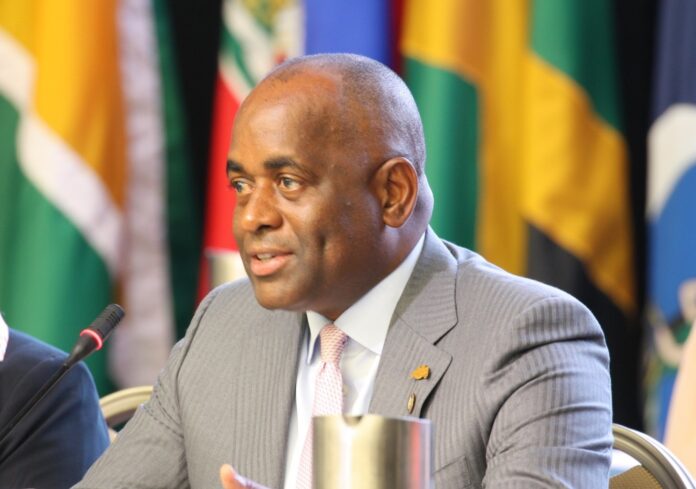
Dominica Prime Minister Roosevelt Skerrit

The Government of Dominica on Wednesday announced a series of measures aimed at cushioning the economic impact of the ongoing Middle East conflict, warning that rising oil prices and global supply disruptions could affect fuel, food costs, jobs, and overall economic stability.

Prime Minister Roosevelt Skerrit said the island is not facing any direct military threat but remains vulnerable to the economic consequences of the conflict involving the United States, Israel, and Iran.

“Let me be clear, Dominica is not in danger of war, but we are exposed to the economic aftershocks of this conflict that has already caused the largest supply disruption in the history of global oil markets,” Skerrit told a news conference.

He warned that the most immediate concern for Dominica is a sharp increase in global oil prices, noting that the country imports all of its fuel.

“We import all of our fuel and high oil prices will affect electricity costs, transportation, and the price of goods and services across our economy. We face rising costs of imported food and essential supplies, as global shipping routes and supply chains experience disruption,” Skerrit said.

The Prime Minister also cautioned that a slowdown in global travel and investment could affect tourism and capital inflows into the local economy.

To mitigate these risks, Skerrit said the government will introduce targeted relief measures to help households and businesses manage rising costs. These measures will include temporary reductions on duties and taxes for essential goods, as well as expanded support for vulnerable households through social protection programmes.

The government also plans to work closely with Dominica Electricity Services to manage rising energy costs and moderate the impact of higher fuel prices on electricity tariffs.

Skerrit noted that Dominica’s geothermal energy project in Laudat is progressing at a crucial time and could help reduce reliance on imported fuel.

The Prime Minister said the geothermal plant, located in the Roseau Valley on the outskirts of the capital, is now in an advanced stage of testing.

“Both generating units have already been tested, producing power and confirming that the plant is functioning well. Over the coming days, we will make final adjustments as we continue full performance testing,” he said.

He added that work on the transmission network, which will deliver electricity from the plant to homes and businesses, is nearing completion, while equipment at the sub-station is being installed and tested to receive up to 10 megawatts of power.

Skerrit said the geothermal project is expected to significantly reduce Dominica’s dependence on imported fuel, lower electricity costs over time, and strengthen the country’s position as a leader in clean energy.

“This is one of the main reasons why this government has remained committed to pursuing geothermal energy. It has taken some time, and it has been costly, but in the long run, we believe this will benefit our country and everyone who lives in it,” he said.

The Prime Minister also indicated that the government will engage stakeholders in tourism, agriculture, and the private sector to help protect jobs and maintain economic activity.

Additionally, Dominica will strengthen fiscal management by prioritising critical government spending while deferring some discretionary expenditures.

Skerrit acknowledged that rising prices could place pressure on households but urged citizens to remain calm.

“Dominica has faced far greater challenges before, from hurricanes to global pandemics, and we have emerged stronger each time,” he said.

Jamaica launches health review following Hurricane Melissa

Hurricane Melissa Jamaica
© IOM/Nicholas Renford Homes in Westmoreland, Jamaica, were devastated by Hurricane Melissa.

Jamaica’s Ministry of Health and Wellness, in partnership with the Pan American Health Organization, has launched a comprehensive Health After Action Review (AAR) following the impact of Hurricane Melissa, in a move aimed at strengthening the country’s emergency preparedness, response and recovery systems.

The two-day review opened Tuesday at Moon Palace Jamaica, where PAHO/WHO Representative to Jamaica, Bermuda and the Cayman Islands, Ian Stein, praised the leadership of Jamaica’s health authorities and frontline workers during the crisis.

“I would like to acknowledge, very deliberately, the commitment and courage of Jamaica’s health workers, emergency responders, and public servants, who continue to serve communities under extraordinarily difficult conditions. That dedication is not taken for granted. It deserves to be recognised,” Stein said.

He highlighted what he described as a powerful example of resilience in the aftermath of the hurricane, noting that attendance records showed public health workers in the hardest-hit areas reported for duty at the same levels as those in less affected regions.

“That is an extraordinary testament to their professionalism and commitment,” Stein added.

The After Action Review, recommended by the World Health Organization and aligned with the International Health Regulations, is designed as a structured and reflective exercise to identify strengths, uncover challenges, and guide improvements in national health emergency systems.

“This is not an audit or an evaluation. It is a process of collective learning — understanding what worked well, where challenges arose, and how systems can be strengthened for the future,” Stein explained.

Participants are also being encouraged to engage in candid dialogue about their experiences, including the emotional and human toll emergencies place on responders.

“Resilient systems are built not only on protocols and infrastructure but on people who feel heard, supported, and valued,” Stein noted.

He commended the Health Ministry for initiating the review in a spirit of transparency and continuous improvement, describing the move as reflective of strong governance and Jamaica’s commitment to advancing national health security in line with regional and global standards.

PAHO is providing technical facilitation, methodological guidance and regional expertise for the exercise, while ensuring that all findings and lessons remain nationally owned.

“This is Jamaica’s review, Jamaica’s learning, and Jamaica’s path forward,” Stein said.

He also reaffirmed PAHO’s continued support for Jamaica beyond times of crisis.

“We stand with Jamaica in the important work of learning, strengthening, and building the way forward together,” Stein added.

Senior Bahamian police officer charged with murder of US citizen

A senior Bahamian police officer appeared in court Wednesday charged with murder in connection with the fatal off-duty shooting of a United States citizen over the weekend in The Bahamas.

Superintendent Berneil Pinder appeared before the Magistrate’s Court in Nassau but was not required to enter a plea, according to his attorney, Ian Cargill Sr.

Cargill said Pinder remains in custody pending a bail application before the Supreme Court.

Police allege that Pinder shot and killed 31-year-old U.S. citizen Cody Castillo outside Da Plantation Bar and Grill on Saturday following an altercation.

According to police, the dispute began inside the popular restaurant before escalating outside. Authorities said Castillo entered a vehicle and allegedly drove it “in a threatening manner” toward Pinder, who was off duty at the time. Police said Pinder, fearing for his life, discharged his service weapon, firing a single shot that killed Castillo.

However, government officials later confirmed that investigators obtained video footage of the incident that media outlets and family members say contradicts the officer’s account.

Before Pinder’s arrest, the United States Embassy in The Bahamas issued a strongly worded statement expressing “deepest concern” over reports that Pinder allegedly followed Castillo to his vehicle before fatally shooting him.

“We urge the Government of The Bahamas to ensure the victim receives justice in this case without delay,” an embassy spokesperson said.

U.S. Ambassador to The Bahamas Herschel Walker said Wednesday that the United States has offered assistance from the Federal Bureau of Investigation to support the investigation, while welcoming Pinder’s arrest.

Bahamian Prime Minister Philip Davis also called for a full and transparent probe into the shooting.

“A badge can never place anyone above the law,” Davis said Tuesday.

According to local media reports, Pinder was denied bail and ordered to return to court on July 23 for the presentation of a voluntary bill of indictment.

The arrest came four days after Castillo was gunned down outside the Nassau beachside establishment on the island of New Providence.

A GoFundMe page created by family and friends said Castillo had been working in The Bahamas to support his family and was preparing to welcome his first child with his wife, Makayla Castillo, in August. The couple resides in Crawfordville.

The Bahamas recorded eight police-involved shootings last year, according to official figures, with the latest incident drawing heightened scrutiny both locally and internationally.

How to choose the best non profit debt relief company

debt

Dealing with overwhelming debt can be stressful and confusing. Many individuals turn to non profit debt relief companies for help in managing and reducing their financial obligations. These organizations are designed to assist consumers through credit counseling, debt management plans, and settlement negotiations.

However, not all debt relief providers offer the same level of service or transparency. Choosing the right organization is important to ensure you receive reliable support and avoid potential scams. Understanding what to look for can help you make a smart and informed decision.

Here are some important factors to consider when choosing the best non profit debt relief company.

Check the Company’s Credentials and Certifications

The first step in choosing a trustworthy non profit debt relief company is verifying its credentials. Reputable organizations are usually accredited by professional associations such as the National Foundation for Credit Counseling (NFCC) or the Financial Counseling Association of America (FCAA). These certifications indicate that the agency follows industry standards and ethical practices.

Accreditation also shows that the counselors are trained professionals who can provide proper financial guidance. Working with certified experts ensures that you receive legitimate advice and structured solutions for managing your debt.

Review the Company’s Reputation

Before selecting a debt relief company, it is essential to research its reputation. Look for customer reviews, testimonials, and ratings on trusted platforms. A company with consistently positive feedback and a strong track record is more likely to deliver reliable services.

You can also check consumer protection organizations or financial watchdog groups to see if there have been complaints or legal issues. Taking the time to evaluate the company’s reputation can help you avoid unreliable providers.

Understand the Fees and Costs

Even though the organization is labeled as “non profit,” it does not necessarily mean that all services are free. Non profit debt relief agencies may still charge fees to cover operational costs.

Before signing any agreement, ask for a clear explanation of all charges. Legitimate debt relief companies are transparent about their pricing structure and will explain exactly how and when fees are charged. In most cases, reputable companies charge fees only after successfully negotiating a settlement with creditors.

Evaluate Transparency and Communication

Transparency is another key factor when choosing a non profit debt relief company. A trustworthy organization should clearly explain its services, the expected timeline, and the possible outcomes of the program.

Debt settlement programs typically take two to four years to complete, depending on the total amount of debt involved.

If a company promises instant results or guarantees to eliminate all of your debt quickly, it may be a warning sign. Reliable organizations provide realistic expectations and keep clients informed throughout the process.

Look for Free Consultation and Financial Counseling

Many reputable non profit debt relief companies offer a free initial consultation. During this session, a financial counselor reviews your income, expenses, and existing debts to determine the best solution for your situation.

This step helps you understand whether debt settlement, consolidation, or a debt management plan is the right option. Free counseling sessions also allow you to evaluate the company’s professionalism before committing to their services.

Final Words

Choosing the right non profit debt relief company can make a significant difference in your journey toward financial stability. By checking credentials, reviewing reputation, understanding fees, and evaluating transparency, you can find a trustworthy organization that genuinely prioritizes your financial well-being.

CARICOM welcomes UN resolution declaring slavery among gravest crimes against humanity

CARICOM-Headquarters-2019
Photo: caricom

The Caribbean Community (CARICOM) has welcomed the adoption of a historic resolution by the United Nations General Assembly declaring the transatlantic trafficking of enslaved Africans and racialised chattel enslavement as among the gravest crimes against humanity.

In a statement issued Wednesday from the CARICOM Secretariat in Turkeyen, Guyana, the regional body said all CARICOM member states voted in favour of the Ghana-led resolution titled “Declaration of the Trafficking of Enslaved Africans and Racialised Chattel Enslavement of Africans as the Gravest Crime Against Humanity.”

The resolution, adopted on March 25, 2026, declares the transatlantic slave trade and chattel enslavement as humanity’s gravest crime, citing its scale, duration, brutality and enduring global consequences. It also calls for the establishment of reparations frameworks, while emphasising the importance of remembrance, research, education, healing and justice.

CARICOM noted that it has consistently advocated for decisive international action to address the harmful legacies of African chattel enslavement and transatlantic trafficking. The regional bloc said it remains committed to working collaboratively with global partners to advance implementation of the resolution.

The adoption of the measure was symbolic, taking place on the International Day of Remembrance of the Victims of Slavery and the Transatlantic Slave Trade, which is marked annually on March 25.

CARICOM described the resolution as a significant step forward in global recognition of historical injustices and ongoing efforts to pursue reparatory justice.

CCJ grants interim stay in extradition proceedings against Mohameds

Azruddin Mohamed

The Caribbean Court of Justice (CCJ) on Wednesday granted an interim stay of the ongoing extradition proceedings against Guyanese businessmen Azruddin and Nazar Mohamed, effectively pausing the committal hearing before the Georgetown Magistrates’ Court (GMC).

The ruling was handed down during a Case Management Conference (CMC) before CCJ President Justice Winston Anderson, along with Justices Maureen Rajnauth-Lee and Chantal Ononaiwu.

The regional court also set April 21, 2026, at 9:00 a.m. for the hearing of the substantive appeal.

Proceedings before Principal Magistrate Judy Latchman at the Georgetown Magistrates’ Court are now formally suspended pending the outcome of the appeal before the apex court.

The stay comes days after the Mohameds moved to the CCJ seeking special leave to appeal a decision of the Guyana Court of Appeal, which had dismissed their challenge to the Authority to Proceed in the United States extradition case and declined to halt the process locally.

“An interim stay of the proceedings for the extradition of the Applicants/Intended Appellants before the court of committal presided over by the Third Respondent is granted until the determination of the special leave application and/or the substantive appeal and/or until further order of this Court,” one of the orders stated.

CCJ President Justice Winston Anderson said the stay was being granted “in the interest of justice.” He acknowledged the need for extradition cases to be addressed “expeditiously” and expressed hope that the court could make a decision on April 21 or “soon after.”

The CCJ is expected to hear the Mohameds’ application to appeal the ruling of the Guyana Court of Appeal, which centers on claims of political bias in the extradition proceedings.

Azruddin and Nazar Mohamed are challenging the Court of Appeal’s finding that Home Affairs Minister Oneidge Walrond performed an administrative function when she issued an Authority to Proceed to a magistrate, allowing requests by the United States for their extradition to face trial for alleged financial crimes.

The interim stay halts all proceedings at the Georgetown Magistrates’ Court until the CCJ determines the special leave application and the substantive appeal, or until further orders are issued.

CARICOM leaders agree to reappoint Carla Barnett as Secretary-General

Dr. Carla Barnett, CARICOM Secretary-General, by CARICOM

Caribbean Community (CARICOM) Heads of Government have agreed to the reappointment of Dr. Carla Barnett as Secretary-General following deliberations at their Fiftieth Regular Meeting held in Saint Kitts and Nevis from February 24 to 27, 2026.

In a statement, CARICOM Chair and Prime Minister of St. Kitts and Nevis, Terrance Drew, confirmed that the required majority supported the decision.

Dr. Barnett will begin her second term in August 2026, serving another five-year term and continuing her leadership of the regional body headquartered in Turkeyen, Greater Georgetown, Guyana.

Barnett made history in 2021 when she was selected as CARICOM’s first female Secretary-General, succeeding Ambassador Irwin LaRocque. She officially assumed office on August 16, 2021, after being unanimously appointed by CARICOM Heads of Government.

An economist by training, Barnett has held several senior roles across the Caribbean region. From 1989 to 1990, she served as an economist at the Caribbean Development Bank. In 1991, she was appointed Deputy Governor of the Central Bank of Belize, becoming the first woman to hold the position, which she served until 1996.

In 1997, she again broke new ground as the first woman and youngest person to serve as Deputy Secretary-General of CARICOM. She later became Belize’s first Treasury Secretary, serving from 2004 to 2007.

Barnett returned to the Caribbean Development Bank in 2012, where she held a senior managerial role responsible for operations. She resigned from that position in 2014.

Her career also includes service in Belizean politics. As a candidate for the United Democratic Party (UDP), Barnett contested the Freetown constituency in the 2015 general election but lost to opposition leader Francis Fonseca. She was subsequently appointed Vice President of the Senate by Prime Minister Dean Barrow.

In August 2016, Barnett was appointed Minister of State in the Ministry of Finance. A year later, in August 2017, she was also assigned responsibility for Natural Resources. However, following a cabinet reshuffle in June 2018, she relinquished the Natural Resources portfolio and assumed responsibility for Labour, Local Government and Rural Development.

Barnett has also worked as a consultant for several multilateral and bilateral organizations across the CARICOM region, including the Inter-American Development Bank, the Canadian International Development Agency (now Global Affairs Canada), the United Kingdom’s Department for International Development, and the United Nations Development Programme.

Her reappointment comes as CARICOM continues to address regional priorities including economic growth, climate resilience, food security, and regional integration.

Palm Beach County responds to state bridge funding for HIV medication program

HIV/AIDS

Palm Beach County officials say temporary funding approved by the Florida Legislature and Governor Ron DeSantis will allow eligible residents living with HIV to continue accessing life-saving medications through June 30, 2026, but concerns remain about long-term program stability.

The state approved bridge funding for Florida’s AIDS Drug Assistance Program (ADAP), maintaining eligibility for individuals with incomes up to 400 percent of the Federal Poverty Level while lawmakers consider permanent funding solutions for the next fiscal year.

However, county officials noted that the legislation does not resolve funding beyond the June 30 deadline. Previously announced changes to the program — including the end of health insurance premium assistance and formulary coverage for Biktarvy, a widely used HIV medication — remain in place.

Approximately 1,449 Palm Beach County residents living with HIV are still expected to be affected by these changes, according to local health officials. Public health leaders warn that untreated HIV can lead to serious health complications and increase the risk of transmission, making continued access to medication a critical priority.

“This bridge funding provides short-term stability for people with HIV who rely on ADAP to access medication,” said Dr. Casey Messer, Director of Palm Beach County HIV Elimination Services. “Because HIV is a lifelong diagnosis, Palm Beach County remains focused on protecting long-term continuity of care in a way that is sustainable for our residents.”

County officials emphasized that while the temporary funding prevents immediate disruptions, the need for long-term funding remains urgent. Health advocates say continuity of treatment is essential not only for individuals living with HIV but also for broader public health efforts aimed at reducing transmission rates.

Residents with questions about eligibility or program changes are encouraged to contact their case manager or call Palm Beach County HIV Elimination Services at 1-833-PBC-HIV1 (1-833-722-4481).

The funding update comes as Palm Beach County continues its broader HIV prevention and treatment initiative through the Control, Halt, Delete Campaign, led by the Palm Beach County Community Services Department.

The campaign focuses on three key areas:

  • CTRL: Control Risks — Empowering individuals to take charge of their health by reducing risks of HIV
  • HALT: Halt the Spread — Stopping the spread of HIV through care and treatment for persons living with HIV
  • DEL: Delete Stigma — Addressing HIV stigma and disparities in health outcomes

County officials say the initiative is designed to provide a comprehensive response to HIV by improving access to care, encouraging testing and treatment, and reducing stigma within communities.

While the temporary funding offers short-term relief, Palm Beach County leaders say they will continue monitoring state decisions and advocating for sustainable, long-term solutions to ensure residents living with HIV maintain uninterrupted access to care.

Douglas, Hazle headline sprint charge as Champs builds toward 100m finals

Hydel’s Shemonique Hazle

The 116th staging of the ISSA/GraceKennedy Boys’ and Girls’ Athletics Championships eased into motion on Tuesday, but beneath the calm of preliminary competition, the foundation was laid for what promises to be a thrilling second day, headlined by the much-anticipated 100-meter semi-finals and finals.

With the blue-riband sprint events taking center stage on Wednesday, Day One’s early rounds offered a revealing glimpse of the contenders, with several standout performances sharpening expectations for a high-quality showdown across all classes.

Among the headline acts was Shanoya Douglas of Holland High, whose presence alone has elevated the stakes. The world-leading sprinter advanced comfortably, clocking 11.85 seconds (0.7 m/s) in her Class 1 heat after easing down midway through the race, a controlled effort that signaled confidence rather than caution.

However, it was Hydel’s Shemonique Hazle who posted the fastest time of the round, sprinting to a wind-aided 11.44 seconds (+2.3 m/s) to underline her readiness for the battles ahead.

Sprint fields deepen across all classes

Behind the leading duo, the depth of the girls’ sprint field became increasingly apparent.

Shakaya Reid of Penwood High impressed with a personal best 11.67 seconds, while Reneica Edwards and Alexxe Henry, both of Edwin Allen, advanced comfortably alongside the top contenders.

In Class 2, Gianna Murray of Mount Alvernia set the pace with 11.69 seconds, closely tracked by Adora Campbell (11.74) and Shanna Campbell (11.75) of St Jago, forming a tightly packed group heading into the next round.

The lower classes were equally competitive. Azarria Harris of Convent of Mercy Academy (Alpha) led the Class 3 qualifiers with 11.69 seconds, while Briana Gray of Excelsior topped Class 4 in 12.27 seconds, ensuring that the sprint narrative remains compelling across the board.

On the boys’ side, early indicators also pointed to fierce contests ahead.
Marquies Page of St Jago delivered one of the day’s sharpest runs with 10.47 seconds in Class 2, finishing ahead of Ricardo Mann of Vere (10.57).

In Class 3, Kemanic Edwards of Kingston College led the qualifiers in 11.06 seconds, with Joshua McWilliams of Wolmer’s (11.10) and J’den Fisher of St Jago (11.15) close behind.

With such narrow margins separating the leading contenders, Wednesday’s sprint finals are shaping up to be among the most competitive in recent memory.

400m contenders begin to emerge

While the spotlight now shifts to the sprints, the opening day also saw important groundwork laid in the 400 meters.

Holmwood Technical stamped its authority early, particularly in the girls’ events.
Annastacia Hall led the Class 2 qualifiers with 54.56 seconds, supported by teammate Maddison Campbell (54.88) as both advanced to the semi-finals.

Shameika McLean of Foga Road (54.78) and Kimberly Wright of Immaculate Conception (55.36) were also among the leading qualifiers, adding depth to a competitive field.

In Class 3, Holmwood again asserted control through Malya McLennon, who posted 56.02 seconds to lead the qualifiers, with teammate Tianna Blair (57.36) also progressing.

Middle-distance races take shape ahead of finals

The 1500 meters, one of the feature events on opening day, moved into position for Wednesday’s finals with several strong qualifying performances.

In the girls’ Class 3 event, Denoya Scott of Alpha led all qualifiers with 4:55.55 minutes, followed by Shannaya Palmer of St Jago (4:56.73) and Selecia Compass of Holmwood (5:00.55).

The Class 2 division saw Keyah Anderson of Queen’s School top the field in 5:07.00 minutes, narrowly ahead of defending champion Kevongaye Fowler of Edwin Allen (5:07.82) and Alexia Palmer of Sydney Pagon (5:08.06).

On the boys’ side, Kingston College’s Julius Itubo emerged as the fastest Class 3 qualifier with 4:25.25 minutes, while Cavel Nooks of Jamaica College (4:16.42) and Nahashon Ruto of Kingston College (4:07.97) led Classes 2 and 1, respectively.

Early setbacks break the routine

Although most favorites advanced without difficulty, the opening day was not without its surprises.

Defending champion Aneka Lowe of Edwin Allen suffered a notable setback in the girls’ Class 3 1500 meters, failing to qualify for the final after finishing 13th overall with 5:12.11 minutes.

In the field, Omarian Miller of Kingston College, ranked second entering the boys’ Class 1 long jump, struggled significantly and finished 23rd of 24 competitors with a mark of 3.90 meters, well below expectations.

Field events quietly progress

Field event action also got underway, though largely without major upsets among the leading contenders.

The boys’ long jump and girls’ throwing and jumping events advanced through early rounds, setting up finals scheduled for later in the championships.

Despite its relatively subdued tone, Day One served its purpose, sorting contenders, exposing vulnerabilities, and building anticipation.

Now, attention turns squarely to Wednesday, when the 100-meter semi-finals and finals will bring the championships fully to life. With form, depth, and rivalries already on display, the stage is set for a day of speed, drama, and defining performances at the National Stadium.

Secret FIFA probe targets match-fixing claims in Trinidad and Tobago League

Trinidad and Tobago Football Association (TTFA)

Allegations of match-fixing that have lingered over Trinidad and Tobago’s domestic football for years have now drawn the attention of world governing body FIFA, with officials reportedly conducting interviews with players as part of a discreet investigation.

Senior figures within the local game confirmed that FIFA representatives are currently in the country, operating under a veil of secrecy as they gather information on suspected manipulation across the league system.

Investigation carried out under strict confidentiality

Yale Antoine, Chief Executive Officer of the Trinidad and Tobago Premier Football League, and Gordon Pierre, an executive member of Caledonia AIA, both confirmed that FIFA officials have already begun interviewing players.

However, neither was able to identify the officials involved, emphasizing that the investigation is being conducted quietly due to the sensitive nature of the allegations.

Pierre suggested that the secrecy was deliberate, allowing FIFA to operate without interference while assessing the credibility of claims that have circulated within the football community.

“Last season, they were talking about match fixing, so they would have been looking at some of the betting sites. In fact, on some of the match days, our information is that they have closed down some of the betting sites. Because of the match manipulation, what they were observing was that there was too much manipulation. So, they did some interviews, and that is as much as I can say at present,” Pierre explained.

He declined to identify specific players involved, noting only that interviews had taken place.

Long-standing concerns resurface

The development marks a significant escalation in a controversy that has persisted across both Tier 1 and Tier 2 competitions in recent years.

Despite repeated concerns raised within the football fraternity, allegations of match-fixing have often failed to gain formal traction, with calls for investigation previously yielding little action.

In 2023, Brian Lewis, then chairman of the Sport Integrity Global Alliance (SIGA) GRID Sports Committee, urged the Trinidad and Tobago Football Association to take decisive steps.

“Allegations of match-fixing in local football are something that the TTFA must address and take seriously. It is not the first time that there have been those allegations, and the reality is that it is well established that there is an international betting syndicate, and SIGA has been speaking about it, advocating and trying to get authorities all over the world to address the threat and the issue,” Lewis said at the time.

Frustration over lack of earlier action

Also in 2023, former Guaya United head coach Travis Mulraine publicly called for an investigation, revealing that he had removed five players from his squad due to suspected involvement.

Mulraine expressed frustration that, rather than initiating a probe, the TTFA requested concrete evidence before proceeding.

In recent days, that evidence may have begun to surface. Circulating videos allegedly show instances of underperformance and questionable play, fueling suspicions that outcomes may have been deliberately influenced.

League insiders sense deeper issue

Within the current competition, concern remains widespread.

Eddison Dean, manager of Club Sando FC, acknowledged that talk of match-fixing is pervasive, even if definitive proof has yet to be formally established.

“I know FIFA looks into all the leagues, so I think they will be looking at it too. But judging from some of the videos they’re watching, you would assume that match-fixing is taking place,” Dean said.

Title race unfolds under a cloud

The investigation comes at a critical juncture in the domestic season, with the Tier 1 title race approaching its conclusion.

Defence Force Elite currently lead the standings on 49 points and are poised to defend their title. They are scheduled to face AC Port of Spain on March 27 at the Hasely Crawford Stadium.

Close behind are Club Sando on 48 points, who will meet FC Eagles in their final fixture at the same venue.

While the championship race intensifies on the field, the shadow of investigation now looms large over the competition.

Global issue, local urgency

Match-fixing remains one of the most serious threats to sporting integrity worldwide, affecting major leagues across football and cricket.

For Trinidad and Tobago, FIFA’s intervention signals a turning point, moving the issue from speculation and internal concern to formal international scrutiny.

Whether the investigation will produce definitive findings remains to be seen, but its presence alone underscores the urgency of restoring trust and transparency within the local game.


Joseph, Taylor rise in ICC rankings as Voll breaks into top 10

Stafanie Taylor fifty sees Windies Women avoid whitewash
Former skipper Stafanie Taylor.

DUBAI, United Arab Emirates — West Indies batters Qiana Joseph and Stafanie Taylor have made upward moves in the latest ICC Women’s T20I Rankings, reflecting encouraging individual progress despite a challenging series against Australia.

The updated rankings, released following the opening two matches of the series, revealed notable gains across the West Indies batting group, even as Australia’s rising star Georgia Voll captured global attention with her breakthrough into the top 10.

Voll’s emergence adds headline spark

Voll’s rise into the elite tier of the rankings came on the back of an aggressive 39-run innings in the second T20I, signaling her growing influence at the international level.

She has since reinforced that surge in emphatic fashion, producing a blistering 101 off 53 balls in the third match, an innings that further underlined her status as one of the format’s most exciting emerging talents.

For West Indies, the most significant upward movement came from Joseph, whose consistency at the top of the order translated into a sharp climb up the rankings.

The left-handed opener surged 14 places to 33rd, following a return of 56 runs across three innings, including a top score of 45. Her progress reflects both improved form and growing reliability in anchoring the innings.

Taylor edges forward with steady contributions

Veteran all-rounder Taylor also registered a positive shift, moving up two spots to 48th after contributing 50 runs in two innings, with a highest score of 28.

While her climb was more measured, it reinforced her continued value as an experienced presence within the West Indies lineup.

Beyond the Caribbean contingent, the latest update saw several notable changes across the international landscape.

New Zealand captain Sophie Devine advanced two places to 18th after recording back-to-back half-centuries against South Africa. Australia’s Ellyse Perry also climbed two spots to 20th, while New Zealand’s Maddy Green rose to 44th.

One of the most remarkable entries came from Rwanda’s teenage prodigy Fanny Utagushimaninde, who debuted in the rankings at 66th after becoming the first woman to score a century on T20I debut.

Bowling charts reshaped by standout performances

The bowling rankings also experienced movement, though West Indies saw no changes within the top 10.

South Africa’s Nonkululeko Mlaba broke into that elite group, climbing from 11th to ninth after claiming five wickets in three matches. Australia’s Georgia Wareham also advanced, moving up to 12th.

New Zealand’s Jess Kerr reached a career-best 15th position following an impressive return of eight wickets in four matches, while South Africa’s Ayabonga Khaka and Australia’s Kim Garth recorded notable climbs to 36th and 44th, respectively.

For West Indies, the latest rankings update offers a measure of encouragement, highlighting individual progress within a highly competitive global environment.

While Voll’s emergence provided the headline moment, the steady rise of Joseph and Taylor suggests that the Caribbean side continues to build depth and resilience within its batting unit, an essential foundation as they look ahead to future international assignments.


Young Windies draw lessons from defeat as Australia seal series sweep

West Indies Women dominate Bangladesh as Deitz Eyes World Cup Qualification

KINGSTOWN, St Vincent — A rain-interrupted finale at the Arnos Vale Ground brought the West Indies Women’s T20 International series to a close on Sunday night, with Australia Women’s Cricket Team completing a commanding 3-0 sweep via a 40-run Duckworth-Lewis-Stern (DLS) victory.

While the result underscored Australia’s dominance, the post-match reflections from emerging West Indies players Jannillea Glasgow and Zaida James painted a more nuanced picture, one of growth, belief, and a team quietly building for the future.

A homecoming moment amid a difficult contest

For Glasgow, the final match carried emotional weight beyond the outcome, as she represented her region in front of a deeply supportive home crowd.

“I would say I give God thanks and praise first of all. It feels special to be home playing in front of such a big crowd. My parents came down from all over the country to see their last born playing this game, so I am really proud. I’m feeling good as well.”

That sense of pride, however, was tempered by the reality of facing one of the world’s most formidable teams. Australia’s early control of the match, even before the rain intervened, proved decisive.

“I think Australia had a start and they will capitalise on a lot of things,” she explained. “It’s just that we should have tried to bounce back earlier. I think they had the head of this game.”

Powerplay execution a key focus moving forward

With the T20 phase complete, attention now turns to the upcoming One Day International series, where Glasgow believes sharper execution, particularly in the powerplay, will be critical.

“We just need to capitalise on this power play, especially with two players out. It’s just to find those boundary options and keep that momentum going forward.”

Her assessment reflects a broader theme within the squad: the need to convert promising starts into sustained pressure against elite opposition.

James underscores hunger within the squad

Teammate Zaida James, who delivered a tidy bowling spell of 1 for 23 from three overs, echoed the sentiment that the series, while disappointing in result, offered valuable insight.

“It was a good series, I must say. Looking at the girls, everyone is hungry to fight, to win. It’s just about us assessing better and backing our skills.”

Her own performance on a batting-friendly surface required discipline and clarity of execution.

“It was really good to be back out there. In terms of the pitch, I think it was really good for batting, so I just had to back myself to not really give them anything to play with.”

Batting unit shows promise but seeks consistency

Across the series, West Indies displayed flashes of attacking quality, particularly through senior players, but consistency remained elusive.

James believes the ingredients for a breakthrough are already in place, with only fine adjustments needed ahead of major tournaments.

“We still need a bit of improvement. I think once everyone starts clicking, we are going to be unbeatable,” she stated confidently. “Coach Dietz has been working a lot with us on our batting and everything else. We have a World Cup coming up, so we just have to make a few tweaks. I’m looking forward to coming out and really enjoying the cricket as a whole.”

Fielding standards identified as decisive factor

Among the key areas highlighted for improvement was fielding, an aspect James views as fundamental to closing the gap on top-tier opposition.

“I think because I said it, it was a lot better,” James admitted with a smile. “We were just a little slacked off in the second game. Looking forward, fielding teams do win matches, so it’s just about keeping them under pressure.”

Though the series ended in a comprehensive defeat, the voices emerging from the West Indies camp suggest a group far from discouraged.

Instead, the experience against a world-leading side appears to have sharpened focus, clarified priorities, and reinforced belief.

As the team pivots toward the ODI series and longer-term ambitions, the lessons drawn in St Vincent may yet prove more valuable than the results themselves.


Samuda hails lacrosse-Mico alliance as blueprint for a new era in Jamaican sport

Christopher-samuda-joa-caribbean-games
JOA's Samuda

Jamaica Olympic Association and Jamaica Paralympic Association President Christopher Samuda has hailed the partnership between the Jamaica Lacrosse Association and The Mico University College as far more than a conventional institutional alliance, describing it instead as a bold template for transforming sport through education, human capital, and strategic investment.

Addressing a press conference at The Mico University College, Samuda argued that the collaboration reaches beyond the playing field and the classroom and enters the deeper work of nation-building. In his view, the initiative represents a serious intervention in the “infrastructure of sport,” not merely in terms of buildings and venues, but in the development of the minds and capacities that make sport sustainable.

“When education meets sport at the entrance of humanity, doors of opportunities are opened wide,” Samuda said.

Beyond facilities, a case for human capital

Samuda’s central message was that sport’s true foundation does not begin with concrete, turf, or steel. It begins with thought, planning, and people.

He said physical infrastructure can only emerge after human capital has first imagined and designed it, and he credited the Jamaica Lacrosse Association for doing exactly that while praising The Mico University College for creating the institutional space in which the vision could advance.

“For the physical facilities of sport are conceptualised and purposed by human capital. Before the facility, the structure, is built, the mind has to vision, conceive and construct it,” he said.

That, Samuda argued, is what gives the newly announced 2026 PALA Qualifier its wider significance. He described the event not as an isolated hosting opportunity, but as the early product of a more consequential fusion between academics and sport administration.

“The human capital of the Jamaica Lacrosse Association visioned, conceived and are constructing and The Mico University College has opened the door and the result is the birth of the 2026 PALA Qualifier. Congratulations.”

A sporting event, but also an economic proposition

Samuda placed the partnership in a broader framework of sport enterprise, insisting that modern sport must be treated as an asset-generating industry rather than merely a pastime or even a traditional business.

He said the Jamaica Olympic Association actively encourages its member associations and federations to position themselves to host regional and international competitions, conferences, and qualifiers because such events can generate revenue, build brand value, and create new streams of commercial activity.

“Our foreign policy at the Jamaica Olympic Association (JOA) encourages member associations and federations to put themselves in a position to create currency for their sport by hosting regional and international tournaments and conferences which provide opportunities for revenue generation from merchandising, digital streaming and gaming, broadcast rights, licensing arrangements, corporate sponsorship, concessions and sales online and at the gate,” he said.

In Samuda’s telling, the partnership between lacrosse and Mico therefore has importance not just in athlete development, but in economic design. When a sport becomes a recognized event property on the regional or global calendar, he said, it begins to take shape as an asset with room for commercialization, branding, and cultural monetization.

“Sport is no longer a business. It has become a multi-billion commercial enterprise in which entertainment and tourism are resident partners,” he said. “So we have to get with the programme and read the script properly.”

The script begins in the boardroom and classroom

Samuda repeatedly returned to the idea of a “script” for sport development, arguing that success begins long before competition starts.

For him, the script is written in boardrooms, lecture halls, tutorial rooms, and training environments where ideas are refined and systems are built. He urged the Jamaica Lacrosse Association and The Mico University College to see themselves not as participants in a routine partnership, but as architects of a new operating model for Jamaican sport.

“What then is the script for sport development? It begins in board room of the Jamaica Lacrosse Association and The MICO University College and in the tutorial rooms and lecture theatres of sport education, where the mind visions, conceives and constructs and then the script is written,” he said.

He warned, however, that Jamaica cannot continue to rely on what he described as a consumerist approach to sport. Spending without investment, he argued, does not build enduring systems.

“Before you put gas in a vehicle, you have to build it. If sport in Jamaica is to gain mileage, we have to fuel capital investment,” Samuda said.

Capital investment as the cornerstone

One of the sharpest sections of Samuda’s address focused on the need for capital investment in sport infrastructure and athlete development.

He said aspirations alone are insufficient if they are not matched by facilities and systems. Without the necessary physical spaces, he argued, talent is left stranded.

“Capital investment is the cornerstone of sport development,” he said. “The Olympic aspirations of a swimmer will drown without a pool. A basketballer will be a basket case if he or she does not have a court to pursue the Olympic dream. And crosses will come over a lacrosse team if members play on a dirt field mined with potholes and littered with stones.”

That reality, he said, makes this moment especially important for the Jamaica Lacrosse Association and The Mico University College, both of which he challenged to reject stale conventions and embrace a more disruptive, transformative role.

“Lacrosse and MICO, you must challenge that conventional modus operandi of consumerism and capitalise on the opportunity you have now to be educational revolutionaries if not innovators, radicals if not change makers, activists if not reformists,” he said.

From conversation to execution

Samuda’s speech was also an appeal for action.

He said Jamaica has spent too much time discussing transformation without sufficiently committing to execution, and he urged the institutions involved to convert promise into measurable, scalable outcomes.

“Too long has been the conversation for change and transformation in our country. Talkfests must now give way to action fests and this partnership has the ingredients to pen a script of a bestseller,” he said.

He encouraged both organizations to evaluate the commercial and academic value of what they are building, to conduct cost-benefit analysis, and to explore whether the program can be internationally certified and replicated for the benefit of other sporting bodies.

“Re-set it,” he said. “Do a cost-benefit analysis to determine whether, by internationalising the product you have created and having it globally certified, a viable business action plan for sport development can be made.”

He also urged them to use Mico as a base for replication and pipeline-building, describing the institution as a place that could produce “a conveyor belt of an enlightened citizenry of sport.”

A wider vision shaped by JOA and JPA ambitions

Samuda used the occasion to place the Lacrosse-Mico venture within the broader strategic posture of the JOA and JPA, both of which, he said, are pursuing a “first to market” culture.

He pointed to the JOA’s direct partnership with PUMA, its staging of an Olympic House to promote Jamaica’s brand at the Olympic Games, and plans for an Olympic commercial center that would include a restaurant, wellness center, sportswear retail operation, conference facilities, and the association’s administrative headquarters.

He said the Jamaica Paralympic Association is following a similar philosophy and has already leveraged its ties with the Development Bank of Latin America and the Caribbean to help advance discussions around financing, through the government, for a High Performance Training and Competition Centre of Excellence in Jamaica.

“By osmosis, the Jamaica Paralympic Association (JPA) is aspiring to be first to market,” Samuda said.

He added that Andrew Parsons, president of the International Paralympic Committee, had declared during a visit last year that Jamaica had “earned the right to be the hub of the development of Parasports in the Caribbean.”

Education as pension, sport as résumé

In one of the address’s more reflective passages, Samuda argued that the partnership arrives at a moment when both sport and higher education are evolving.

He said shorter competitive careers are making education increasingly essential for athletes, while universities are beginning to recognize that sport adds real value to a graduate’s profile in a competitive marketplace. In that sense, he said, the alliance between Mico and lacrosse serves both sectors at once.

“More and more, shelf lives in sport are compelling an understanding that education is your best pension and more and more university interests are realising the value of having sport on their résumés in a competitive market,” he said.

He then reached for a memorable metaphor to describe the richness of the partnership.

“If you have not realised it already, Lacrosse and MICO, you have a five course meal in this partnership. Pocket hors d’oeuvres, a top cheddar salad, a fast break appetizer, a cradling main entrée and a rip desert.”

A final warning and a final endorsement

Before closing, Samuda broadened the conversation into a critique of Jamaica’s educational and sporting culture.

He argued that too often the country emphasizes stuffing information into young minds rather than teaching them to think creatively, strategically, and expansively. He also warned against reducing athletes to commercial commodities, insisting that their bodies should be treated as “a temple of gifted talent of self-actualisation” rather than “an economic unit and a commercial mobile wallet in sport.”

That insistence on balance, between mind and body, commerce and principle, education and performance, underpinned his final commendation of the Jamaica Lacrosse Association and The Mico University College.

“I congratulate you both for forging this umbilical connection between education and sport, this equilibrium between the mind and body which will produce more of a balanced and functional citizen,” Samuda said.

He described the 2026 PALA Qualifier as the first fruit of that union and a signal of more milestones ahead, adding that the Jamaica Olympic Association is proud to back what he believes could become a landmark development in the national sporting landscape.

“The 2026 PALA Qualifier is the fruit of this connection and the forerunner of milestones beyond. The Jamaica Olympic Association (JOA) is very proud to be an investor in a product that has the huge potential to be an historic game changer in sport.”




South Florida Rep. Wilson introduces bicameral bill to invest in public transit workforce training

Frederica Wilson

U.S. Representative Frederica Wilson (FL-24) and U.S. Senator Chris Van Hollen (D-MD), joined by Senator Angela Alsobrooks (D-MD), have introduced the National Transit Frontline Workforce Training Act, legislation aimed at supporting and expanding workforce training in the public transit sector.

The bill seeks to strengthen the Transit Workforce Center, a national training hub that prepares American workers for specialized, good-paying jobs in critical transit sectors facing workforce shortages, including maintenance and operations. The legislation also prioritizes strengthening the transit workforce in the National Capital Region, where systems such as WMATA, Amtrak, and MARC are essential to daily commuters and visitors.

“Public transportation is the backbone of our communities,” said Representative Wilson. “It connects people to jobs, education, and essential services, but right now our transit systems are facing a serious workforce shortage that threatens safety and reliability. I am proud to introduce, along with Senator Chris Van Hollen, the bicameral National Transit Frontline Workforce Training Act to make sure we are investing directly in the frontline workers who keep our country moving. This legislation will strengthen training, expand apprenticeship and mentorship opportunities, and provide the long-term federal support needed to build a skilled, modern transit workforce. When we invest in our workers, we strengthen our infrastructure, improve service for riders, and build a more resilient future for every community.”

Van Hollen said transit workers play a vital role in keeping transportation systems running safely and efficiently.

“From vehicle mechanics to train operators, transit workers are the foundation of our public transportation systems – making sure riders get where they need to go. This bill will ensure the Transit Workforce Center continues to open up opportunities for Americans to land good-paying jobs and will help address the persistent worker shortages in this field. Growing the pipeline of well-trained transit employees is key to helping transit systems across the country run safely and efficiently so they can best serve the millions of Americans who rely on them,” he said.

Senator Alsobrooks said the legislation would help create new employment opportunities while addressing workforce needs in the transportation sector.

“This Administration’s failed economic policies are hurting American workers. I’m fighting for good-paying jobs so that families don’t just live on margins but can live beyond their wildest dreams. Our National Transit Workforce Training Act helps meet the need for highly trained transit workers and creates a pathway for more good-paying jobs. These workers will do the essential job of making sure our transportation systems work efficiently and get Marylanders where they need to be,” Alsobrooks said.

The Transit Workforce Center was established in 2021 by the U.S. Department of Transportation’s Federal Transit Administration, following direction by Congress in the FY20 Minibus Appropriations bill. The center was created to address challenges related to recruiting, training, and retaining skilled workers in the transit industry.

The newly introduced legislation would make the center a permanent entity by law, allowing Congress to provide consistent federal funding for its programs and activities. The bill also authorizes the Secretary of Transportation to award grants to nonprofit organizations with demonstrated capacity to develop transit career ladder programs through labor-management partnerships and apprenticeships nationwide.

In coordination with the Federal Transit Administration and public transportation authorities, the center would continue developing training and educational programs for frontline transportation employees working in both rural and urban transit systems. The initiative would also help establish national standards for transit maintenance and operations skills.

The legislation has received support from several major labor and transit organizations, including the Amalgamated Transit Union, American Federation of State, County and Municipal Employees, American Public Transportation Association, Community Transportation Association of America, Transport Workers Union, and the Transportation Trades Department of the AFL-CIO.

Labor leaders said the Transit Workforce Center has already played a key role in improving recruitment, retention, and training for transit workers nationwide. Supporters of the bill argue that making the center permanent will help ensure transit systems remain safe, reliable, and equipped with a skilled workforce to meet growing transportation demands.

Trinidad confirms Yellow Fever in Red Howler Monkey, no human cases reported

Trinidad Yellow Fever

Health authorities in Trinidad and Tobago are urging calm after confirming a case of Yellow Fever in a deceased Red Howler Monkey.

In a statement issued Tuesday, the Ministry of Health Trinidad and Tobago said laboratory testing confirmed the presence of the virus in the animal, but stressed that there are currently no reported human cases.

“It is important to note that there are no cases in humans,” the ministry stated, adding that surveillance and vector control measures have already been implemented in affected areas.

Yellow Fever is a viral disease transmitted by infected mosquitoes, including the Aedes aegypti mosquito. Health officials said they will continue monitoring the situation closely while providing updates as necessary.

Authorities are also encouraging members of the public to take precautionary measures to reduce mosquito breeding sites and lower the risk of transmission.

Symptoms of Yellow Fever include sudden fever, chills, headache, back pain, nausea, vomiting and jaundice.

The ministry noted that the Yellow Fever vaccine remains a safe and effective form of protection and is available free of charge at health centres across the country. Persons who frequent forested areas — including farmers, hunters and forestry workers — as well as individuals travelling to and from endemic countries, are being urged to ensure their vaccinations are up to date.

Officials reiterated that while the case has been confirmed in wildlife, there is currently no need for public alarm as no human infections have been reported.

Guyana in ongoing talks with US firm over delayed fuel storage project

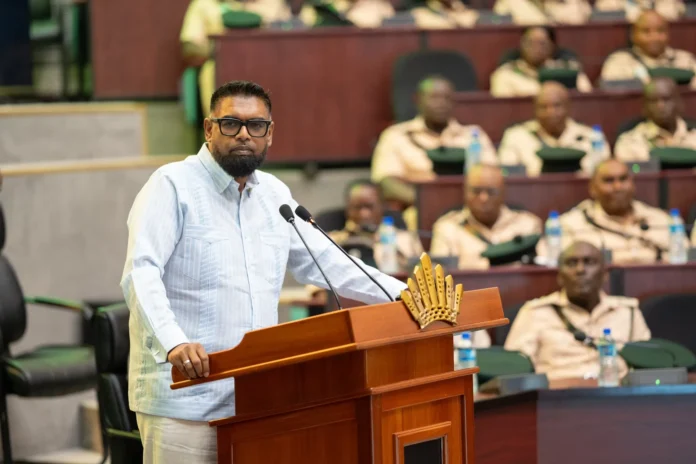
Guyana’s President Dr. Mohamed Irfaan Ali

The Guyana government says discussions are continuing with United States-based bulk fuel supplier Curlew Midstream regarding a proposed fuel storage facility that failed to meet its 2025 year-end deadline.

President Irfaan Ali told reporters that negotiations are currently being handled by legal teams, adding that the government is reviewing a new proposal submitted by the company.

“We are in discussion with the legal team. They’re handling those negotiations. I’m not going to comment on where those negotiations are but they have a proposal in and we’re looking at that,” Ali said.

Court documents filed on February 20, 2026, in a case involving Curlew Midstream and former Mark Green, along with a lobbyist partner, indicated that Curlew’s board of directors met with a high-level Guyanese official earlier this year to finalize outstanding commercial matters. According to the filing, the company provided requested due diligence and financial documents and received assurances that execution of the Fuel Exchange Agreement was imminent.

The documents further stated that on January 10, 2026, President Ali met with Curlew Midstream and confirmed that Vickram Bharrat would execute the Fuel Exchange Agreement, with the deal expected to be signed on January 12, 2026.

However, Curlew alleged that the government later issued a “signable agreement” containing additional terms from a new consultant that had not previously been involved. According to the court filing, the new terms introduced last-minute changes that differed from previously agreed commercial points.

The documents also noted that on October 16, 2025, Curlew representatives met with President Ali and other senior officials, where key aspects of the proposed agreement were reportedly finalized, including crude pricing, refined product pricing, terminal construction in Georgetown and Lethem, as well as prepayment or escrow arrangements.

Without specifically referencing Curlew Midstream, Ali highlighted the potential benefits of establishing a large-scale fuel storage facility, particularly amid rising global oil prices linked to conflict in the Middle East.

“Just imagine if we had a massive storage facility in Guyana under these challenges — the role Guyana could have played so we have to look at these challenges and build out long-term opportunities for our country,” he said.

Ali also confirmed that he had met with Curlew Midstream executives and Nicole Theriot during the recently held Guyana Energy Conference 2026.

When asked whether court cases filed in the United States involving alleged intellectual property disputes had contributed to delays, the president said he was unaware of the litigation, adding that the parties involved would need to resolve those matters independently.

In February 2025, Ali had announced at the Guyana Energy Conference that a deal had been struck with Arkansas-based Curlew Midstream to refine at least 30,000 barrels of crude per day for domestic consumption.

The proposal included the construction of a US$300 million storage facility capable of holding 750,000 barrels of gasoline, diesel, jet fuel and heavy fuel oil. The project was expected to strengthen Guyana’s energy security, reduce fuel costs and enable exports of refined fuels to Caribbean Community member states.

Curlew Midstream had also indicated that the facility would allow Guyana to meet 100 per cent of its domestic refined fuel needs while supporting regional fuel supply with non-sanctioned, high-quality products.

New initiative launched to protect Dominica’s critically endangered Sisserou Parrot

Sisserou Parrot

A new conservation initiative aimed at strengthening protection for Dominica’s national bird, the Imperial Amazon, has been launched to enhance safeguarding efforts across the island.

The project, titled “Sisserou Conservation with Civil Society (SCCS),” is a collaborative effort between EcoBalance Inc. and Caribaea Initiative. The initiative is supported by the Critical Ecosystem Partnership Fund and is being coordinated with Dominica’s Forestry, Wildlife and Parks Division of Dominica, according to a press release.

Endemic to Dominica, the Imperial Amazon—commonly known as the Sisserou—is listed as critically endangered. Despite ongoing conservation efforts over the years, the species continues to face major threats, including climate change, habitat loss and potential conflicts with agricultural practices.

The SCCS project aims to strengthen conservation through a series of integrated approaches, including expanding scientific research on the species, increasing civil society participation in monitoring and protection efforts, and launching public awareness campaigns to boost knowledge and engagement in protecting the bird.

A key focus of the initiative will be building partnerships with farmers, schools, community groups and other local stakeholders to promote collaborative conservation efforts.

The project also seeks to contribute to the development of a comprehensive, long-term conservation strategy for the Imperial Amazon, ensuring that protection efforts remain sustainable and effective.

Planned activities under the initiative include training sessions, community outreach programmes and partnerships with educational institutions, agricultural communities and civic organisations.

Caribaea Initiative said the programme is designed to strengthen collaboration between communities, civil society organisations and conservation experts, with the ultimate goal of ensuring the long-term survival of one of the Caribbean’s most iconic bird species.

Guyana to roll out national digital payment platform within six months

Guyana President Dr. Irfaan Ali

President Irfaan Ali says Guyana will roll out a national payment platform and expand access to digital wallets within the next six months, as part of efforts to modernise the country’s financial sector and reduce reliance on cash.

Ali made the announcement Monday during the ceremonial opening of a new branch of Demerara Bank Limited at Beterverwagting.

“In the next six months, I have advised the governor of the central bank that…a national payment platform must be fully operational and we must have access to the digital wallets at a national level and at a national scale,” Ali said.

He explained that the initiative forms part of a broader strategy to modernise Guyana’s financial ecosystem and expand access to cashless transactions nationwide.

According to the president, the next phase will focus on developing infrastructure to support seamless digital payments across the country. This includes equipping supermarkets, retail outlets and other businesses with technology capable of processing contactless payments, allowing customers to pay by tapping or swiping their mobile devices.

“That is where we are going and that is where the country is heading,” Ali said.

Ali also revealed that Demerara Bank is expected to launch its own digital wallet for customers within the next four to six weeks, marking an early step toward broader adoption of digital financial services.

He noted that expanding access to banking services remains central to the government’s development agenda, describing the new branch as both an expansion of traditional banking and a step toward digital transformation.

“The opening of the new branch represents a continued expansion of traditional banking services but it also reminds us that the future lies in greater inclusion and digital transformation,” Ali added.

Guyana to host 7th Caribbean Regional IUF Conference in Georgetown

The Guyana Agricultural and General Workers Union (GAWU) will host the 7th Caribbean Regional Conference of the International Union of Food, Agricultural, Hotel, Restaurant, Catering, Tobacco and Allied Workers’ Associations from March 26–27, 2026, in Georgetown.

The two-day conference is expected to bring together approximately 50 trade unionists from across the Caribbean and beyond. The gathering will serve as a platform to review the regional committee’s work since the last conference in 2022, which was held in Antigua and Barbuda, and to establish priorities for the years ahead.

A central feature of the conference will be the presentation of the Caribbean Regional Secretary’s report by Clifton Grant, First Vice President of the University and Allied Workers Union. Delegates are also expected to engage in discussions focused on strengthening regional collaboration and advancing workers’ rights across the Caribbean.

The conference will also be attended by Kristjan Bragason, Acting General Secretary of the IUF, who will be visiting Guyana for the first time since assuming office. His participation is expected to underscore the importance of the Caribbean region within the global labour movement.

Another key agenda item will be the election of a new IUF Caribbean Regional Committee, comprising representatives from affiliated unions across the region.

In preparation for the main conference, several meetings have already taken place, including sessions of the IUF Young Workers Committee, Women’s Committee and Caribbean Regional Committee. The Young Workers Committee Conference was held on March 23 at GAWU’s Conference Room in High Street, Kingston, Georgetown, where young trade unionists assessed the current state of the regional labour movement and outlined strategies for future engagement.

GAWU said it is honoured to host the conference, describing the event as a strong demonstration of regional solidarity and international workers’ cooperation, aimed at advancing the rights and welfare of working people across the Caribbean.