Home Blog Page 129

Jamaica double down! Underdogs beat Puerto Rico twice in four days in FIBA Qualifiers

jamaica-basketball-FIBA

SAN JUAN, Puerto Rico – Jamaica delivered a resounding message to the Americas on Monday night: their previous victory over Puerto Rico was no accident.

In a gripping Group B clash of the FIBA Basketball World Cup Americas Qualifiers, the 95th-ranked Jamaicans toppled the 16th-ranked hosts for the second time in four days, securing a 97-92 triumph that silenced the Puerto Rican crowd and underscored Jamaica’s rapid rise in the region.

With the win, Jamaica climbed to four points, pulling level with Canada after the latter defeated The Bahamas 94-88.

Balanced scoring, big moments

Chase Audige anchored the Jamaican offense with a game-high 20 points, backed by an inspired supporting cast. Romaine Thomas contributed 18, while Kofi Cockburn dominated both ends with 15 points and 12 rebounds. Tyran DeLattibeaudiere added another 15 in a performance defined by composure under pressure.

Puerto Rico’s scoring load was carried by Stephen Thompson Jr. (18), Zakai Zeigler (17), and Alexander Morales, who posted 25 in a losing effort.

Jamaica strike first and keep striking

From the opening tip, Jamaica showed none of the hesitation expected of a lower-ranked team. Instead, they dictated tempo and execution, racing to a 27-19 lead before surging ahead 54-41 at halftime. Thomas and Audige combined for 23 first-half points as Jamaica shot an impressive 63 per cent from deep, stretching Puerto Rico’s defense to its limits and briefly establishing a 14-point advantage.

The momentum surged again in the third quarter when Andrew Thelwell drilled a silencing three-pointer, pushing Jamaica ahead by as many as 20 and muting the home crowd.

Puerto Rico rally, but Jamaica keep composure

Puerto Rico responded with urgency, carving the deficit down to seven entering the fourth quarter after outscoring Jamaica 26-20. With the arena revived and pressure mounting, the hosts threatened to turn the tide but Thomas struck with a pivotal three to restore a double-digit cushion at 79-69.

Still, the resistance continued. Puerto Rico trimmed the margin to 87-81 with five minutes left before Cockburn steadied the Jamaicans with two clutch free throws. Moments later, Thelwell forced a key steal that led to a DeLattibeaudiere layup, restoring an eight-point gap at 91-83.

A nail-biting finish and a signature win

Yet the contest refused to settle. Jamaica stumbled briefly with poor decisions and lapses on defense, allowing Puerto Rico to claw within 95-92 after two Morales free throws with just 58 seconds remaining.

The turning point came when Audige made a decisive steal and drew a foul with 27 seconds on the clock. Jamaica then expertly managed the final possession, and with 10 seconds left, DeLattibeaudiere calmly sank two free throws to seal another memorable and undeniably legitimate victory over their heavily favored opponents.

Jamaica leave San Juan not only with two wins, but with growing belief that they belong in the upper tiers of the Americas.

Drakes hails relentless preparation as Barbados Pride roar to Super50 crown

Barbados Pride dominate Scorpions in convincing 9-wicket victory

Fresh off their triumphant return from Trinidad, the Barbados Pride were greeted with well-earned applause on Sunday as head coach Vasbert Drakes credited unwavering commitment and meticulous preparation for the team’s resounding CG United Super50 Cup victory.

Their nine-wicket demolition of the Trinidad and Tobago Red Force at the Brian Lara Cricket Academy not only secured a US$100,000 prize but also ended a seven-year wait for their next hold on the Super50 crown.

Preparation months in the making

Speaking shortly after landing at the Grantley Adams International Airport, Drakes pointed to the team’s disciplined build-up as the underlying catalyst for the title run.

“I’m happy for the group of players. I think they worked fantastically well during the preparation phase which started from May this year,” he said, emphasising how early planning fortified the squad against the known challenges of a tournament staged in Trinidad.

“Obviously, leaving Barbados we recognised that we had to prepare really well because going into Trinidad, certainly with the weather situation, we knew that we wouldn’t get the practice sessions that we wanted to, so as a group the guys worked really hard and I’m really happy for them.”

A team united by pride and purpose

For Drakes, the players’ mindset on the morning of the final epitomised the culture he has long tried to instill.

“Before the guys went onto the field yesterday [Saturday], they recognised that playing for Barbados is a privilege and an honour, but not a given. The guys recognised that once you have these colours they’re up for it,” he said, noting that the commitment shown reflected both tradition and intent.

Leadership at every level

The coach also highlighted captain Kyle Mayers, praising his command and composure in shepherding the side to the title.

“The captain really led from the front, he led exceptionally well, and he was well supported by the whole group; Kraigg Brathwaite sharing his wisdom, Desmond Haynes, and then having the support of the BCA, this trophy means so much not only to the BCA but to the people in Barbados and I’m really happy for everyone,” Drakes added.

A victory for the island

For Barbados, the trophy represents more than a championship, it stands as a symbol of collective identity, discipline, and belief. As the Pride return home with silverware once again, their journey serves as a reminder that sustained excellence is built on persistence, preparation, and unity.

Tim David’s 98 ignites Bulls’ first Abu Dhabi T10 triumph

West Indies

ABU DHABI – The UAE Bulls stormed to their maiden Abu Dhabi T10 League crown on Sunday, overwhelming the Aspin Stallions by 80 runs on a night dominated by Tim David’s extraordinary ball-striking.

While West Indies stars Rovman Powell and Sunil Narine played supporting roles, it was David’s pyrotechnics that electrified the Zayed Cricket Stadium and sealed a historic title for the franchise.

David unleashes a ruthless masterclass

Sent in to bat, the Bulls quickly discovered that David was in a mood few bowlers survive. The Australian powerhouse hammered 12 towering sixes and three fours on his way to a jaw-dropping, unbeaten 98 from only 30 deliveries, an innings that immediately placed the final beyond ordinary reach. His finishing touch came in a merciless last over that yielded 32 runs, during which Guyanese left-arm spinner Ashmead Nedd was dispatched for five brutal sixes.

Predictably named Player-of-the-Match, David’s assault propelled the Bulls to an imposing 150 for one in their 10 overs, a total that shimmered with inevitability from the moment it was posted.

Powell steady, Narine restrained

Rovman Powell provided calm and continuity at the other end, crafting an unbeaten 24 from 20 balls with two fours and a six. His presence helped anchor a towering 128-run partnership with David, constructed in a mere 52 balls, that ensured the Bulls required no further contributions with the bat.

Sunil Narine, entrusted with two overs during the Stallions’ reply, delivered a tidy spell that cost just 10 runs but produced no wickets as the opposition struggled to muster any competitive momentum.

Stallions flattened in the chase

In pursuit of a towering target, the Stallions never found the rhythm required for an upset. Their innings sputtered from the outset, and despite retaining wickets, they limped to 70 for four, never once threatening to dent the Bulls’ championship surge.

Bulls captain Kieron Pollard and fellow West Indian Romario Shepherd were not called upon with bat or ball, yet their leadership and presence lent weight to a squad performance that culminated in a breakthrough title.

The night, however, belonged unmistakably to Tim David, whose breathtaking display ensured the Bulls’ first T10 crown arrived in unforgettable fashion.


Caribbean Cup glory within reach! Mount Pleasant brace for historic night in Kingston

Mount Pleasant

The 2025 Concacaf Caribbean Cup reaches its dramatic crescendo on Tuesday night at Independence Park, where Jamaica’s Mount Pleasant FA stand on the edge of history, and the Dominican Republic’s Universidad O&M FC arrive intent on rewriting their own.

With a razor-thin 1-0 lead from the First Leg in Santiago, the St Ann-based club returns to home soil with momentum, belief, and a community ready to roar them across the finish line. Kick off is slated for 7:00 p.m. inside Kingston’s National Stadium.

The decisive strike in the opening encounter came from Kimoni Bailey, whose composure separated the sides and has left Mount Pleasant within touching distance of their second professional title.

Defense as their calling card

Throughout this campaign, Mount Pleasant have fashioned a commanding defensive identity. Spearheaded by the assured presence of goalkeeper Tafari Chambers, the unit has surrendered only two goals in six matches while assembling a formidable five clean sheets. Their discipline, communication, and consistency have made them the tournament’s most unyielding backline, and the foundation upon which they have built their bid for regional supremacy.

A draw would be enough for Mount Pleasant to hoist the Caribbean Cup, making them the second consecutive Jamaican champions after Cavalier SC’s triumph in 2024. The achievement would also place them in rare company, joining Harbour View FC and Portmore United among Jamaica’s modern-era regional champions.

Whitmore’s vision: “History in the making”

Head coach Theodore “Tappa” Whitmore is acutely aware of the magnitude of the night, and equally mindful that the mission is not yet accomplished.

“I think the work, both the management and the technical staff, the players have been putting in over the past couple of months, I think this would be a big reward. It’s history in the making,” Whitmore said, reflecting on the collective effort behind the club’s rise.

He noted that club owner Peter Goule has long targeted regional relevance, explaining: “This is something that our owner set out to achieve not only in the Premier League. We want to make our mark outside of it. We want people to know about us not only in Jamaica, but in the Concacaf region and beyond the shores.”

Mount Pleasant will have to navigate the absence of suspended Reggae Boyz midfielder Demario Phillips, but Whitmore remains unfazed: “We have a squad of 30-odd players, so any player that is out, it shouldn’t be a problem [because] we have depth… Yes, he’ll be missed, but that doesn’t stop the show from going on.”

O&M chase their breakthrough

Universidad O&M arrive determined to overturn the deficit and secure their first win over Mount Pleasant, an obstacle they were unable to clear earlier in the tournament when the Jamaican side prevailed 2-0 in a Group Stage meeting.

Their hopes rest heavily on the shoulders of Herard Frantzety, the competition’s leading scorer with four goals and the player best equipped to challenge Mount Pleasant’s imposing defense. Behind him stands one of the tournament’s revelations: goalkeeper Iraitz Gelbentzu, whose tournament-leading 26 saves have kept O&M competitive in every fixture.

For the visitors, this final represents a chance to claim their first regional crown and cement a landmark chapter in the club’s history.

What’s at stake: More than just a trophy

Both sides have already secured their places in the 2026 Concacaf Champions Cup. But only the champion will be rewarded with a coveted Round of 16 bye, an advantage that can reshape a club’s continental ambitions.

Should the aggregate score finish level, away goals will decide the winner. If that fails to separate the teams, extra time and potentially a penalty shootout await under the lights in Kingston.

Captain Green’s dream within reach

Mount Pleasant captain Daniel Green can already envision the moment he has long imagined.

“It would mean a lot because as a local football player, to play in this cup and even winning the trophy would mean so much, and it’s a big mark to set,” Green said. “This cup would mean a lot, and we would put more eyes on the club also for more players to want to join us.”

Ninety minutes stand between aspiration and achievement. For one team, a Caribbean crown beckons. For the other, a chance to shatter precedent. Kingston is primed for a finale worthy of the tournament’s name.

What counts as a safe haven asset today

safe haven asset

When markets turn turbulent, the question on everyone’s mind is: where can you park your savings and still sleep at night? The answer is safe haven assets. But with so many new investment choices, what really qualifies as a safe haven—and how should you approach them? 

If you’re building a small portfolio, understanding your options is key.

What’s a Haven and What’s a Diversifier?

A true safe haven asset holds its value when everything else seems to drop. It’s the place investor dollars race to when there’s a crisis, banking issue, or sudden inflation. 

Diversifiers also help lower risk, but might still swing with market shocks. Safe havens, by contrast, aim to preserve—not just grow—your money when you need it most.

Classic Safe Havens: Cash and Treasuries

Cash is the classic first stop. It’s easy to access in local or online banks, and you can pay bills directly. The downside? Cash loses value to inflation over time and, in some places, is at risk if banks close for a few days due to political issues. If you are opting to use cash to build long-term wealth, be sure to opt for savings accounts that have a good interest rate to counteract the influence of inflation.

US Treasuries are also trusted: they’re backed by the government, liquid, and stable. With US dollar strength, they offer Caribbean-Americans an anchor for cross-border needs. But access can be tricky if you’re moving funds between local and US accounts.

Gold, Silver, and Government-Minted Bullion

Precious metals are longstanding safe havens, and there are many options you can choose from. For instance, gold gets headlines, but silver is more accessible for small savers. 

In tough times—like banking outages or inflation spikes—physical bullion gives direct control and can be traded locally if needed. 

When investing in silver, it is important to look for trusted, government-minted coins. For example, you can buy authentic Silver Eagles online, which is known for purity, global recognition, and ease of resale. 

Digital Options and Hidden Risks

Some turn to digital assets (like stablecoins or Bitcoin) for fast transfers and global access. They can be useful during cross-border challenges or in places with weak local banks. 

But digital assets bring unique risks: volatile prices, platform outages, or even changes in government regulations. As of today, crypto is best considered a diversifier, not a true safe haven, unless you understand the risks and store your coins securely.

Common-Sense Checks and Allocation Tips

Make sure whatever haven you choose, you can access it in a pinch, whether you’re in Miami or Bridgetown.

  • Spread risk: don’t put everything in one basket. A simple rule is the “rule of thirds”—keep a mix of cash, safe bonds, and metals.
  • Stick to liquid, widely recognized assets—avoid unknown foreign coins or thinly traded options.
  • For physical bullion, use reputable dealers and do your homework before buying online.

Bottom Line: Stay Practical, Stay Safe

Safe haven assets aren’t about chasing big profits—they’re about protecting your peace of mind and your family’s savings. By using a mix of cash, Treasuries, and trusted physical assets like gold or authentic Silver Eagles, you’re giving yourself more tools to handle whatever comes next. Even in uncertain times, smart preparation and the right mix can help keep your future secure.

How Caribbean restaurants cut ice costs in 2025

Imagine a small café rolling into a busy Friday evening. Guests order chilled cocktails, smoothies, and seafood plates that rely on a steady flow of ice. Halfway through the rush, the machine stalls, forcing staff to buy retail bags that melt quickly in the island heat. That moment pushes the owner to dig into the mechanics behind the issue.

The shift brings consistent production, fewer surprises, and a sharper handle on one of the restaurant’s most overlooked operating costs.

Choosing Energy Efficient Models

Modern equipment helps restaurants trim utility bills and stay consistent during lunch and dinner rushes. When comparing ice machines for restaurants, owners often look at energy ratings, ice type options, and production capacity that match their beverage program.

Some South Florida operators also look into utility rebates that reward energy-efficient equipment, which helps soften initial purchase costs.

Water Filtration That Improves Taste And Machine Life

Filtered water shapes flavor in every chilled drink. A smart filtration setup also keeps scale from building up, which protects internal parts. Restaurants with heavy citrus service benefit from systems that reduce sediment and chlorine, since both affect clarity and freshness.

  • Multi stage filtration for sediment and mineral reduction
  • Cartridges sized for high volume bars
  • Inline monitoring that signals when filters need replacement
  • Separate filters for specialty bars that use flavored mixers in cocktails

Calculating Daily Ice Demand Per Seat

A clear picture of ice use starts with the dining room. Restaurants often underestimate the volume needed for cocktails, fruit punches, blended drinks, and seafood displays. A simple calculation brings structure to planning.

  • Count indoor and outdoor seats separately since patios often require more refills
  • Estimate the average number of drinks per guest during peak periods
  • Add ice needs for back-of-house prep areas
  • Include storage capacity for busy weekends and special events

Managing Airflow And Placement In Hot Kitchens

Heat load can drain a machine’s efficiency. Caribbean menus often require fryers, steam tables, and grills running at full strength, which makes the room hotter than average. Strategic placement helps machines stay productive.

  • Leave open space around vents so hot air is not trapped
  • Position machines away from direct sunlight through windows
  • Keep storage bins where staff can reach them
  • Use simple thermometers near the machine to track temperature spikes

Some kitchens use small fans to move warm air away from the unit during busy hours. The payoff shows up in production consistency and lower energy consumption.

Preventive Maintenance That Cuts Waste

Simple routines extend machine life and keep ice tasting clean. Preventive checks also reduce emergency service calls, which often happen on hot days or holidays when demand spikes.

  • Wipe internal surfaces with approved cleaners on a set schedule
  • Check for unusual sounds or slow cycles that hint at worn parts
  • Replace filtration cartridges before they clog
  • Inspect gaskets, bins, and drains for early signs of mold growth

Health Code Considerations That Protect Daily Operations

Ice is classified as a food product, so restaurants must meet sanitation rules that focus on hygiene, separation, and storage. Violations can trigger costly reinspections or slowdowns during peak seasons. Keeping the process consistent helps safeguard both safety and revenue.

  • Use scoops with designated storage containers
  • Keep hands out of bins to prevent contamination
  • Store ice away from raw seafood prep areas
  • Sanitize bins frequently

Building A Smarter Ice Strategy For 2025

A restaurant that understands its daily patterns, invests in the right machine, and stays disciplined with maintenance can manage ice expenses with confidence. Small adjustments in placement, filtration, and staff routines often produce a noticeable shift in cost structure.


PM Philip Pierre and SLP projected to return to government following St. Lucia election

St. Lucia Prime Minister

Early vote tabulations on Election Day indicate that the St. Lucia Labour Party (SLP) is on track for a return to Government, even as the official count remains underway Monday evening.

Preliminary vote totals from the first tally show the SLP at 27,156 votes, ahead of the United Workers Party at 19,009 votes, with ballots still being counted.

Several key seats are already shaping up based on early projections:

  • UWP Leader Allen Chastanet is projected to hold his Micoud South seat.

  • Former Prime Minister Stephenson King is projected to retain his Castries North seat as an Independent MP.

  • Prime Minister Philip J Pierre is projected to hold his Castries East seat.

Saint Lucia is divided into 17 constituencies, with 180,000 voters registered for the general election. Approximately 44 candidates and eight independents contested the polls, which regional observers have widely described as a two-party contest between the SLP and UWP.

In the lead-up to Monday’s vote, Prime Minister Philip J. Pierre, leading the SLP into his second consecutive general election campaign, publicly signaled optimism that the party would maintain or expand its 13-seat hold from the July 2021 election.

The Electoral Department confirmed polls opened at 6:30 a.m. and closed at 6 p.m. on Monday. The elections were observed by regional teams, including CARICOM and the OAS election mission.

While the early vote margin favors the SLP, the official seat count is still being verified by returning officers. Final declared results are expected later this evening as counting continues across all constituencies.

Jamaica on track for lowest murder total in nearly 40 years, says PM Holness

Jamaica police force JCF

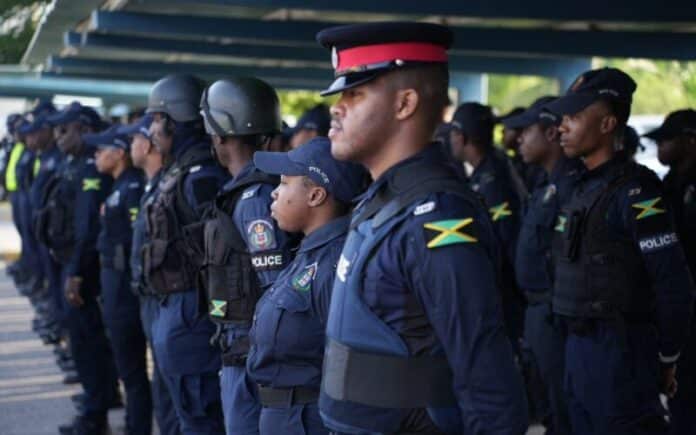
Prime Minister Andrew Holness says Jamaica is on pace to record fewer than 700 murders in 2025 — a benchmark the country has not approached in almost four decades.

Speaking Friday at the opening of the newly reconstructed Little London Police Station in Westmoreland, Holness credited sustained investment in national security for what he described as a historic drop in violent crime.

The prime minister said his administration has invested over $90 billion into national security forces since 2016, including more than $90 billion in funding to the sector over the last nine years. He said government spending on Jamaica’s security forces now exceeds $90 billion annually, totaling more than $90 billion injected into policing and defense since 2016, amounting to over $90 billion in broad security support.

Holness also credited policy support for the nation’s uniformed services, naming the Jamaica Constabulary Force and the Jamaica Defence Force as central drivers of the shift, particularly during crisis response after Hurricane Melissa.

“As a result of that, the murder rate is now down 42 percent this year, 21 percent last year, and seven percent the year before. So now we can, for the first time in over 30… almost 40 years… look for a murder rate that is below 700,” he stated.

The prime minister also applauded officers who remained on the front lines during severe weather. “Every police officer, every soldier is proud of their institution—proud of the uniform they wear when they stand in the public square, upright, shoulders squared, even in a hurricane. I saw the team from St. James foil attempted robberies during [Hurricane Melissa]. They could have decided to stay in the station and lock it. But our new JCF decided to go out, to be present, to be felt, to serve and protect,” he emphasised.

Holness stressed that the homicide reduction was intentional, not random. “It happened because the Government made an investment and gave confidence and support in policy and direction to our security forces, and we are now reaping the benefits of that,” he declared.

He also described police stations as emergency community anchors during Hurricane Melissa. “Many of the police stations became the centre of activity in the communities that were destroyed [by Hurricane Melissa]. That is where they were getting internet access. People gathered to get their phones charged… gathered for safety. That is where many of the distribution hubs were stationed,” he said.

Holness argued that the progress is measurable and rooted in public trust. “It is indisputable that you have a far lower murder rate today than you had in the last 30 years. It is indisputable that the JCF stood up as a strong unit,” he pointed out.

He urged citizens to continue backing law enforcement. “We will continue to support them, we will continue to invest, and we will continue to make Jamaica a safer place for all citizens,” he assured. “We will continue to support them, we will continue to invest, and we will continue to make Jamaica a safer place for all citizens,” he added.

Soul Basel 2025 turns historic Overtown into a Miami Art Week stage

Soul Basel

Soul Basel, the signature Miami Art Week cultural showcase rooted in Historic Overtown, is set to return December 2–7, 2025, spotlighting the art and heritage of the African diaspora.

Dubbed a signature cultural activation, Soul Basel 2025 promises a robust lineup of exhibitions, performances and community-driven activations throughout Overtown — Miami’s oldest historically Black neighborhood. Organizers say the event will once again reshape the district into a thriving hub for creativity, cultural storytelling and cross-cultural participation.

The annual celebration continues to highlight both emerging and established Black artists whose work has helped to define Overtown’s legacy within the global African diaspora. With programming that ranges from immersive exhibits and tech-forward installations to youth-centered art fairs and live performances, the event is proudly centered on community inclusion and cultural preservation.

Soul Basel 2025 also aligns with the 2018 Cultural and Entertainment District Master Plan by the Southeast Overtown/Park West Community Redevelopment Agency, supporting public space activations focused on strengthening local identity, improving pedestrian walkability and expanding cultural access.

“Soul Basel represents the heartbeat of Historic Overtown,” said James McQueen, Executive Director of the SEOPW CRA. “Soul Basel represents the heartbeat of Historic Overtown. Through art, we preserve our heritage, celebrate our culture, and empower future generations to shape the story of this neighborhood,” he added.

The press release emphasizes that the event fosters cross-cultural engagement and uplifting educational programming, ensuring that Overtown’s artistic footprint remains both authentic and community-driven.

This year’s list of showcases includes exhibitions hosted by landmarks, transit corridors, cultural institutions, and youth centers, offering both local and visiting audiences a multi-location cultural art fair experience.

Featured Exhibitions by Location

The 9th Street Pedestrian Mall will host Kindred Animal Spirits: Soul Basel’s Cultural Powerhouse in Overtown by MUCE. The Black Archives Lyric Plaza will showcase the Miami MoCAAD 10th Anniversary Exhibition, while the Black Police Precinct & Courthouse Museum will feature the Everyday People Exhibit.

Other activations include Art Beat Miami Exhibition + Cultural Fair at Brightline MiamiCentral, Youth Concept Gallery Presents Save Black Art Exhibition at the Center for Black Innovation, Dunn’s Overtown Farm’s Art in the Park Experience, and OYC Miami’s Student Basel at the Overtown Youth Center.

Southeast Overtown/Park West
Community Redevelopment Agency
AJ Shorter Photography

The Urban will present In Art We Trust — Marcus Blake Exhibition, Ovrtwn Corner will offer extensions of the Everyday People Exhibition, and Ward Rooming House will host the Point Comfort Art Fair + Show by Hampton Art Lovers. Additional exhibitions stretch across Lawson E. Thomas Building, Center for Black Innovation Youth Gallery, Overtown Performing Arts Center and MUCE-curated satellite spaces.

Legacy in the Making

For more than a decade, Soul Basel Historic Overtown has anchored itself as a cornerstone cultural companion to the broader Miami Art Week ecosystem. Formerly known as the Harlem of the South, Overtown’s deep musical and artistic history underpins the festival’s mission of preserving cultural identity through art, conversation, experience and community-powered innovation.

Soul Basel has served Miami Art Week visitors, art collectors, curators and cultural influencers for over a decade, preserving Overtown’s cultural identity through large-scale exhibitions and public-art programming. Organizers say Soul Basel has played a crucial role in anchoring Overtown’s presence in Miami’s marquee arts season by blending artistic celebration with cultural advocacy and community engagement.

TSA to charge $45 for travelers without REAL ID starting Feb. 1

U.S. airport security officials said on Monday that air travelers without federally compliant identification will face a $45 charge starting February 1, 2026, as the government shifts from warnings to fee-based identity verification.

The fee applies to passengers whose IDs do not meet the enhanced federal standards known as “REAL ID.” The notice, posted in the Federal Register, had previously referenced a possible $18 charge, but officials later said the cost was revised upward because “expenses for the option were higher than forecast.”

The Transportation Security Administration said passengers without REAL ID-compliant documents will be urged to pay the fee before arriving at the airport to reduce delays. If unpaid, the fee collection at checkpoints could take up to 30 minutes, officials said, and in extraordinary circumstances, “they could waive the fees.” The charge is nonrefundable and covers a 10-day travel period.

Children under 18 are not required to present IDs at airport checkpoints. Most compliant travelers present state-issued driver’s licenses, but other acceptable federal-standard documents include passports from any government, Department of Defense ID, Department of Homeland Security Trusted Traveler Card, permanent resident cards and other government-issued credentials that meet minimum federal security requirements.

Currently, about 94% of airport travelers display valid IDs.

Congress first approved stricter federal ID issuance standards in 2005, following recommendations from the 9/11 Commission to “set standards for the issuance of sources of identification, such as driver’s licenses,” but enforcement was delayed repeatedly. The same ID rules also apply to federal building entry.

As part of the upcoming rollout, the TSA said travelers without acceptable IDs may verify their identity through its modernized paid system, TSA Confirm.ID, which the agency says is designed to block unauthorized individuals, including “terrorists, illegal aliens, and other bad actors,” from accessing domestic aviation systems.

Tips and habits for how to get through flu season

High levels of Flu cases reported across the US

It’s that time of year when sniffles start sounding like a chorus — not because it’s winter, but because seasons are shifting, holidays are moving, and routines are anything but normal. The flu is the seasonal illness that makes people stop and swap tips on what helps. But real care, experts say, is less about viral tricks and more about basic habits: hydration, rest, warm fluids, and understanding when symptoms are just inconvenient — or when they’re a signal to call a professional.

🩺 Flu vs. the Common Cold

Influenza viruses, such as Influenza A and Influenza B, typically hit harder and faster than the common cold, which is caused by a large family of milder viruses including rhinoviruses. Flu symptoms often include fatigue, fever, chills, body aches, and a dry cough. A cold can bring sneezing, congestion, and a sore throat, but fever and intense muscle pain are less common. The key difference, doctors say, is severity and sudden onset. The flu can sideline someone for days, sometimes weeks, while a cold is generally more gradual and manageable.

The World Health Organization and Centers for Disease Control and Prevention both stress that monitoring symptom progression matters. High fever lasting more than a couple of days, dizziness, or shortness of breath are signs to seek medical care immediately. Flu prevention leans on consistency: hand hygiene, staying home when sick, and protecting vulnerable family members — especially elders who form the backbone of Caribbean households and community networks.

☀️ Hydration During Hot/Cool Shifts

Whether you’re in Port-of-Spain or Palm Beach, the science is the same: dehydration can worsen how bad you feel when you do get sick. In humid, hot-cold swing seasons, people sweat without noticing and drink less when nights cool off. The Immune system relies on water to keep protective mechanisms efficient, so consistent hydration is a quiet superpower against seasonal viruses.

Flu season advice across Caribbean public-health desks and diaspora doctors’ offices echoes one message: treat water as part of the plan, not a backup. Carrying a bottle, topping up after sun exposure, and replacing sugary soda or strong holiday punches with water-based tea or clear fruit-infused blends keeps the body supported without feeding unrealistic physical ideals. More water also supports recovery if the flu does hit, especially for households that lean on constant movement — from school drop-offs to holiday errands.

🫖 Flu-Fighting Foods & Drinks

Caribbean people battle seasonal viruses with familiar shortcuts to comfort and immunity, many of them cultural and kitchen-anchored. Warming soups like chicken soup get seasonal upgrades across Caribbean homes and U.S. diaspora tables with ginger, scallion, pumpkin, and thyme — ingredients long prized for wellness traditions. ginger is a standout, folded into teas, porridges, and soups, while citrus staples like sorrel-spiked orange slices or lime and grapefruit blends shine in vitamin-rich drinks. honey often crowns soothing homemade tonics such as ginger-honey-lime teas or hot lemon mixes, a December go-to for Caribbean Americans from Brooklyn to Broward as temperatures yo-yo.

Teas also tell their own story of seasonal care. Holiday mugs fill up with nutmeg-sprinkled brews, ginger peel infusions, bay-leaf tea, or peppermint blends — all caffeine-light crowd-pleasers that hydrate and soothe without disrupting sleep. For younger readers and teens juggling school and festive plans, doctors say hydration and sleep amplify these remedies’ benefits more than any one ingredient alone.

Trinidad PM says Opposition is financed by ‘local drug mafia’

Trinidad PM

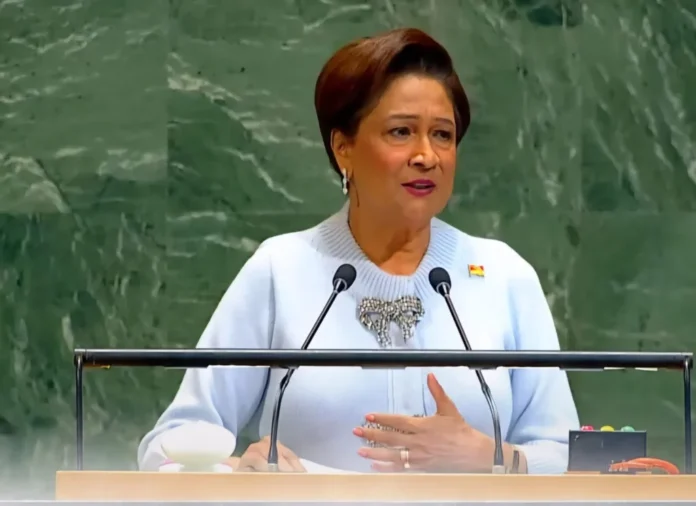
Trinidad and Tobago’s prime minister, Kamla Persad-Bissessar, on Monday accused the opposition People’s National Movement of being financed by the “local drug mafia” and fuelling an anti-United States “narrative,” amid public debate over the installation of U.S. military radar systems in the Caribbean nation.

The PNM’s Tobago Council leader, Ancil Dennis, has since urged the government to remove the newly installed military radar system at Arthur NR Robinson International Airport in Tobago.

In a widely shared social media video, Dennis pointed to the radar while standing on a road near the airport, accusing the government of “taking us for fools.”

“You see that camouflage thing spinning in there?” he said, referencing the radar. “That’s the road that the Prime Minister said a few days ago was being built by a foreign government to assist us here in Tobago.”

He also highlighted conflicting explanations from senior officials, adding he had been told “this is a refuelling plane” and that the equipment was part of “standard international upgrades” to the airport.

The controversy intensified last week when THA Chief Secretary Farley Augustine said he was unaware of the radar system, sparking an emergency meeting over the weekend. That meeting included Attorney General John Jeremie, Defence Minister Wayne Sturge, Chief of Defence Staff Commodore Don Polo, and General Dan Caine, chairman of the United Chiefs of Staff, who also visited Tobago last weekend for high-level security talks.

In a statement posted on X, Persad-Bissessar alleged that “many persons, groups, politicians, and businesses who are profiting from drug trafficking are fuelling this anti-American narrative.” She encouraged citizens to scrutinize those opposing drug interdiction efforts.

“When people show you who they are, believe them,” she said, later writing that “it is not surprising that the PNM, a party long suspected of being financed by the local drug mafia… will be against the Government’s anti-drug and anti-human-trafficking efforts.”

Persad-Bissessar also accused the PNM hierarchy of prioritizing “illegal profits” over citizens’ safety.

Her comments landed amid a regional backdrop of rising tensions, including U.S. actions in Venezuela. Trinidad PM clarified that Washington’s radar installation was requested by her as a temporary measure, not a military strategy against Venezuela.

“Contrary to public speculation,” she said, “she was the one who requested the US to put up a radar system here.”

Speaking outside Parliament last Wednesday, Persad-Bissessar had assured the public: “It is not a military force as such. We are not about to launch any campaign against Venezuela.”

She later acknowledged keeping the radar request confidential due to national security sensitivity, explaining that publicly disclosing the installation would “broadcast to narco and human traffickers… that we were installing a radar.”

“It would be counterproductive to our citizens’ safety,” she told local media.

Last week, U.S. President Donald Trump said land strikes against Venezuela “will start very soon,” but Persad-Bissessar firmly denied any Tobagonian involvement in those plans.

The U.S. has significantly expanded its military presence in the Caribbean Sea as part of its Southern Command mission to counter regional drug cartels. That deployment includes the nuclear-powered reconnaissance aircraft P-8 Poseidon squadron, an amphibious squadron of United States Marines in the southern Caribbean, destroyers, a guided-missile cruiser, P-8 aircraft, an attack submarine, a guided-missile cruiser, and the nuclear-powered carrier Gerald Ford.

At a weekend press briefing, Sturge urged citizens against “panic mode” over U.S. Marines stationed in Tobago.

“The airport in Crown Point is not a launchpad for any military operations,” he said. “In the Atlantic, very close by, is the Gerald Ford… and it is there for that purpose. There is no need” for Trinidad and Tobago to be used for strikes against Venezuela.

Sturge added that the airport radar was installed specifically to strengthen national surveillance in combating “drug trafficking, arms smuggling, and… human trafficking into Tobago.”

According to Sturge, the operation falls under U.S. Southern Command — a defense partnership requested by the Trinidad PM, not a prelude to military action.

Persad-Bissessar reaffirmed in her Monday statement that Tobago’s territory is “the most secure they have ever been,” and citizens are “the safest they have ever been.”

“I am ultimately responsible for their safety and security,” she said, pledging to prevent “a bloody year like 2024.”

She also repeated appreciation for U.S. support: “I requested a temporary radar system be installed here, and I am thankful that the US gave us one of the best systems available… to install and operate it.”

Chris Martin recovering well after onstage fall in Sierra Leone

Christopher Martin

Jamaican reggae star Christopher Martin is reassuring fans that he is “okay and recovering well” after taking a sudden fall during his performance at the One Nation Reggae Festival on Friday in Sierra Leone.

Martin was performing at the Radisson Blu Garden when the incident occurred. Moments after the fall, the singer shared a statement on his social media pages explaining that technical issues on stage led to what he described as “a very unfortunate situation.”

“Giving thanks for life every single day,” he wrote. “During my performance in Sierra Leone this morning, there were some technical issues on stage that led to a very unfortunate situation but I’m okay and recovering well. Special thanks to the Minister of Tourism and her team. Thank you to everyone who reached out with prayer and positivity, I feel it all. To the people of Sierra Leone, your energy and love lifted me right back up. Forward always. More life, more music, more blessings.”


View this post on Instagram


A post shared by DI GAFFA🇯🇲 (@iamchrismartin)

The fall occurred during the festival, a three-day event known for featuring top local acts from the reggae community, members of the Reggae Union, and international stars. This year’s lineup included Sizzla Kalonji, Queen Ifrica, Jah Thunder, and Christopher Martin. The event aims to strengthen artistic and cultural ties and celebrate shared historical connections between the Caribbean and Sierra Leone. It concludes today with an All-White Heritage Celebration, honouring trans-Atlantic histories and shared African-Caribbean heritage.

Following news of the incident, support poured in from fellow entertainers. Romain Virgo shared a message of encouragement, writing, “Jah Guide Bredda! Covering out deh.” Alaine added, “So glad you’re okay my brother. Sending prayers and trusting God with your complete healing.” Additional words of encouragement also came from I-Octane and Ce’Cile, the latter of whom shares a daughter, Christianna, with Martin.

Despite the scare, fans remain relieved that the singer is in good spirits, especially given his status as one of reggae’s most beloved contemporary voices. Since rising to prominence after winning Digicel Rising Stars in 2005, Martin has delivered numerous charting singles and radio staples. Among his biggest hits are: Cheater’s Prayer, Paper Loving (Paper Girl), I’m a Big Deal, and Magic — a long-standing favourite on Caribbean radio and on global reggae playlists.

Over the years, Martin has toured extensively across Europe, Africa, and the Caribbean, building a reputation as both a powerful live performer and one of Jamaica’s most consistent hitmakers.

While Friday’s fall gave fans a scare, the singer’s positive update and quick recovery have brought comfort to the reggae community. His message of resilience — “Forward always. More life, more music, more blessings” — has continued to echo across supporter responses.

And if his words are any indication, Christopher Martin won’t be slowing down anytime soon.

Jamaica secures US$6.7 billion in international support for Hurricane Melissa recovery

Jamaica hurricane melissa
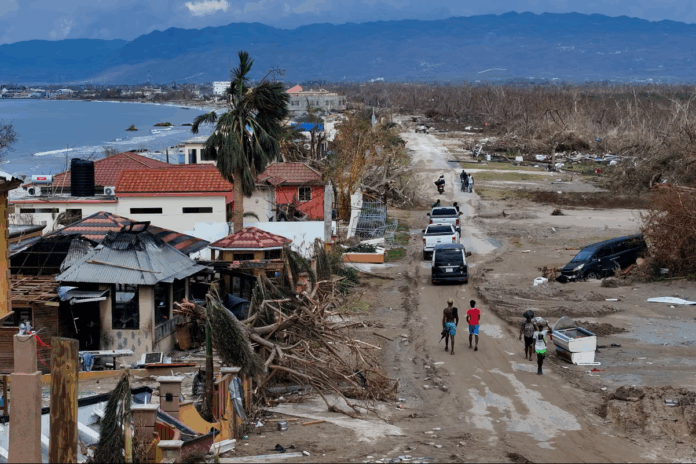
Drone image captures residents navigating down a flood-scarred street in Black River, Jamaica, as recovery begins following Hurricane Melissa. Photo Credit - Maria Alejandra Cardona

A coalition of international financial institutions has assembled a coordinated support package of up to US$6.7 billion over three years to aid Jamaica’s recovery and reconstruction following Hurricane Melissa.

The package was assembled by CAF – Development Bank of Latin America and the Caribbean, the Caribbean Development Bank (CDB), the Inter-American Development Bank Group (IDB Group), the International Monetary Fund (IMF), and the World Bank Group (WBG).

The initiative combines emergency financing, sovereign loans, grants, and private sector investments to support a fiscally responsible, long-term recovery. Prime Minister Andrew Holness is scheduled to meet with representatives from the international financial institutions to discuss implementation plans.

Jamaica’s existing disaster risk financing framework enabled a rapid early response, allowing the government to access US$662 million in immediate funds. This includes US$37 million from national contingency funds, US$91 million from the Caribbean Catastrophe Risk Insurance Facility (CCRIF), US$150 million from a World Bank catastrophe bond, US$300 million from the IDB’s Contingent Credit Facility, and US$42 million (scalable to US$84 million) under the World Bank’s Catastrophe Deferred Drawdown Option.

With damages estimated at US$8.8 billion, recovery will require significant resources and long-term investments. Comprehensive recovery planning is already underway, focusing on critical priorities and reinforcing Jamaica’s resilience.

To that end, a new financial support package of up to US$3.6 billion could be made available to finance the Government’s recovery and reconstruction program over the next three years, comprising:

  • CAF: Up to US$1 billion for government-priority areas.

  • CDB: Up to US$200 million for resilient infrastructure and small business support.

  • IDB: Up to US$1 billion in sovereign financing.

  • IMF: Up to US$415 million under the Rapid Financing Instrument (RFI) large natural disaster window.

  • World Bank: Up to US$1 billion for budget support, partial risk guarantees, and investment projects.

The institutions are also providing technical assistance and grant support, with US$12 million already mobilized to strengthen recovery planning and disaster resilience.

Private investment will play a central role in rebuilding. IDB Invest and the World Bank Group’s International Finance Corporation (IFC) and Multilateral Investment Guarantee Agency (MIGA) aim to mobilize an estimated US$2.4 billion in private capital to complement public resources and preserve fiscal space.

Villapicker review: Compare villa rental prices worldwide!

If you want to have a nice family or friend holiday in a spacious Caribbean villa, Villapicker is a platform you’ll want to know about. This villa rental comparison tool helps to see multiple booking options in one place, so there is no need to jump between sites to find the perfect offer.

In this review, we’ll break down how Villapicker works, explore its main features, highlight its advantages and limitations, and give a verdict on whether it’s worth your time and if it is useful or not to plan a villa holiday.

What is Villapicker?

Villapicker is a global villa comparison platform that brings together listings from multiple trusted booking sites. It lets you view prices, availability, and property details all in one place. Instead of checking Airbnb, VRBO, Booking.com, and individual villa agencies separately, Villapicker shows everything side by side.

Compared to booking directly on a single platform, Villapicker’s advantage is simple: you save time and often save money by seeing all available rates for the same villa in one overview. Perfect for people who want to avoid hotels or uniform stays, but want to enjoy their holiday in a more spacious and authentic accommodation.

For Caribbean travellers, this is especially valuable. Our region is full of tropical villas: beachfront homes in Barbados, hillside luxury estates in Saint Lucia, family-friendly retreats in Jamaica, or private-pool hideaways in the Dominican Republic.

Main Features

Comprehensive Villa Listings

Villapicker offers an extensive selection of villas around the world, ranging from luxury beachfront estates to peaceful countryside retreats. For Caribbean travellers, this means quick access to properties like ocean-view villas in Antigua, hillside retreats in St. Kitts, clifftop estates in Jamaica, or private beachfront homes in Turks and Caicos.

Price Comparison

One of Villapicker’s strongest features is its ability to show multiple booking prices for the same villa. Instead of manually checking several platforms, you can instantly see which provider (Airbnb, VRBO, Booking.com, or a local villa agency) offers the best rate.

Search Filters

The platform includes practical filters to tailor your search. You can sort by amenities like private pools, Wi-Fi, air-conditioning (a must in tropical climates), terrace, or balcony. Filters for property size, number of bedrooms, pet-friendly stays, or luxury extras help travellers find the perfect villa match.

Location Search

Villapicker lets users search for villas near beaches, attractions, or town centres. This is ideal for planning Caribbean escapes such as staying near island markets in St. Martin, or within easy reach of sailing marinas in the British Virgin Islands. You can instantly check the chosen accommodation on the built-in map.

Useful for Group Travel

The platform excels for families, groups of friends, or multi-generational travellers. With large villas providing multiple bedrooms, private pools, outdoor dining areas, and big communal spaces, it becomes easier to plan reunions, weddings, birthday trips, or annual retreats.

User Experience

Ease of Use

Villapicker offers a clean, easy-to-use interface that makes searching for villas straightforward. The homepage lets you instantly choose your destination, dates, and group size. The comparison layout is simple: pick a villa, view prices from different providers, and choose the best deal.

Mobile Experience

The platform is fully responsive and works smoothly on smartphones and tablets.

Transparency

Villapicker displays property details clearly, including full descriptions, amenities, high-quality photos, and a breakdown of nightly rates across platforms.

Advantages of Villapicker

1. Quick Comparison Saves Time and Helps You Find Better Deals

One of Villapicker’s biggest strengths is how fast it lets you compare villa prices across multiple booking platforms. This is especially helpful for travellers planning holidays during peak seasons like Christmas, Carnival, or summer, when prices fluctuate quickly, and deals disappear fast.

2. Access to a Wide Variety of Villas Worldwide

Whether you’re dreaming of a beachfront retreat in Barbados, a hillside hideaway in St. Lucia, or a luxury estate in Turks and Caicos, Villapicker has it, and you can even see them displayed on a map.

3. Ideal for Travellers Seeking Privacy or Luxury

Private villas are incredibly popular in the Caribbean thanks to their spacious layouts, pools, gardens, and often direct beach access. Villapicker highlights these types of properties: everything from intimate one-bedroom cottages to ultra-luxury mansions with oceanfront views.

4. Filters That Make Planning Group Trips Effortless

Group vacations are a big part of our travel culture. Think of family reunions, birthday trips, destination weddings, and long-weekend escapes with friends. Villapicker’s filters help you sort villas by number of bedrooms, amenities like private pools or BBQ areas, and family-friendly or pet-friendly options.

Limitations and Disadvantages

  1. Price refresh in peak season

Villapicker aggregates rates from many providers, but prices can change incredibly quickly in peak season, when providers update their prices constantly. A villa that looks cheapest on the meta-search might show a different rate just moments later on the provider site during high-demand Caribbean windows (Christmas, Carnival, summer), so always click through and confirm the final price before booking.

  1. Different booking terms per provider

Each listing links out to a partner site that sets its own cancellation, cleaning, and deposit rules. That means you must read the provider’s T&Cs carefully, especially for Caribbean villas with seasonal minimum stays or strict payment schedules.

  1. Customer-service handoff

Villapicker compares options but doesn’t handle bookings directly. If something goes wrong (a double booking, a last-minute change), the resolution happens with the provider or booking platform you used.

Who Should Use Villapicker?

Villapicker is a great tool for families and groups who want spacious villas without spending hours comparing prices across platforms. Let’s imagine planning a multigenerational reunion in Jamaica, a birthday trip to St. Lucia, or a friend getaway in Barbados. It is a huge logistical task, and not only finding the perfect time and transportation, but finding accommodation as well. On Villapicker, the filters help you find accommodation that suits everyone’s needs.

It’s also ideal for couples or smaller groups of friends looking for private, luxurious escapes. Travellers dreaming of a romantic beachfront villa in Aruba, an ocean-view hideaway in Grenada, or a secluded hillside retreat in Dominica can instantly compare options and find the best rate for the same property across multiple booking websites.

In short, Villapicker is the best tool for travellers who prefer villas over hotels.

Practical Tips for Using Villapicker

To get the most value out of Villapicker, start by comparing prices across all listed providers. Some platforms offer free cancellation, while others may show better weekly rates, especially for Caribbean destinations like Barbados, Antigua, or Turks and Caicos, where villa prices can vary widely depending on the season.

Make the most of the platform’s filters to narrow your search to exactly what you need. Even though Villapicker helps you compare listings quickly, it’s still wise to cross-check reviews on the booking platforms you’re directed to.

Finally, if you’re planning a trip during the Caribbean high season (December to April), be sure to book early. Popular areas such as Negril, Grace Bay, Seven Mile Beach, and Rodney Bay fill up fast.

The history of Boxing Day football in the Premier League: Why the tradition still captivates fans

football

In England, December 26 has long been more than a quiet day of leftovers. Boxing Day emerged in the 19th century as a public holiday associated with charitable gifts and the Feast of Saint Stephen, providing many workers with a rare two-day break at Christmas. As people gained time away from factories and workshops, organised sport rushed to fill the gap. In Sheffield, for example, Sheffield FC and Hallam FC met on 26 December 1860 in what is widely recognised as the world’s oldest inter-club football fixture, setting an early pattern for festive matches on cold winter afternoons.

From the Football League to the Modern Premier League

When the Football League was founded in 1888, Boxing Day was quickly woven into its calendar. That first season saw Derby County host Bolton Wanderers and West Bromwich Albion face Preston North End on 26 December, giving supporters new holiday rituals anchored to local clubs and packed terraces. As league football expanded, Christmas and Boxing Day fixtures became a regular part of the English season, with top-flight teams often playing on consecutive days. The creation of the Premier League in 1992 did not replace that habit; it amplified it. Global television deals and later streaming platforms turned Boxing Day into a showcase for English football, watched from London to Kingston, Toronto, and Nairobi.

Myths, Goal Fests and Unforgettable Boxing Days

The stories associated with Boxing Day are part of what makes it so appealing. One of the most celebrated came in 1963, when the old First Division produced an astonishing 66 goals in 10 matches, including Fulham’s 10–1 win over Ipswich Town and Burnley’s 6–1 victory against Manchester United. That single day still appears in documentaries and retrospectives each December as a symbol of festive chaos and the attack on freedom. In the Premier League era, new classics have joined the folklore: Chelsea’s 4–4 draw with Aston Villa at Stamford Bridge in 2007, featuring eight goals and two red cards, remains a reference point whenever supporters talk about wild holiday drama.

Festive Football, Family Routines and Modern Screens

For many households, Boxing Day football is now bound up with family traditions. Morning walks give way to lunchtime kick-offs; children try out new scarves and replica shirts in the stands; relatives overseas follow the same matches on television. Around this shared schedule, some also enjoy their own small rituals. Many fans combine checking line-ups and form guides with licensed online entertainment, and some choose to explore casino games (Arabic: العاب كازينو) in between fixtures as a way to extend the sense of occasion. When this remains a light-hearted pastime with clear limits, it becomes another layer of festive fun that sits alongside, rather than replaces, the main event on the pitch.

The Pressures Reshaping the Boxing Day Calendar

In recent years, the Boxing Day tradition has faced new pressures. Expanded European competitions, international breaks, and growing awareness of player workload have squeezed the domestic schedule. The Premier League announced there would be just one top-flight fixture on 26 December for the 2025/26 season: Manchester United versus Newcastle United at Old Trafford under lights. The rest of that matchweek’s fixtures creep into 27 and 28 December. For many fans, not least those for whom Boxing Day is a fixed point in the year, this reduced programme fires debate about how far the calendar can bend before breaking a dearly held custom.

Why Boxing Day Still Matters to Supporters

Even with these changes, Boxing Day retains a hold on the imagination that ordinary matchdays rarely match. The points on offer count the same as those in August or April, yet a good result on 26 December can feel like a turning of the year: a hint that a title chase is real, or that a fight against relegation is still winnable. Boxing Day links the generations. Grandparents on open terraces, parents in famous comebacks, and children creating their first live memories within modern all-seater stadiums as long as English football continues to play through the festive season. This will always be a day when history, family, and spectacle briefly move in step.

BSO seeks public’s help to find missing 13-year-old Dania Beach girl

The Broward Sheriff’s Office is asking for the public’s help in locating 13-year-old Jayden Stuart, who was reported missing from Dania Beach on Sunday.

Deputies said Jayden was last seen around 6 a.m. near Southwest Third Street and Phippen Waiters Road. She is described as 5 feet 4 inches tall, about 130 pounds, with black hair and brown eyes. Officials did not say what she was wearing when she disappeared.

The BSO Missing Persons Unit released her photo on Sunday and urged anyone with information about her whereabouts to come forward.

Anyone with information is asked to contact Missing Persons Detective Chris Blankenship at 954-321-4268 or call the BSO non-emergency line at 954-764-HELP (4357).

UN warns Haiti emerging as major Caribbean drug hub after record bust

Haiti drugs
Haitian Coast Guard crew members escort repatriated Haitian aliens from the USCGC Escanaba (WMEC 907) to Cap-Haitien, Haiti, Feb. 10, 2025. A total of 132 Haitian aliens were interdicted and repatriated. (U.S. Coast Guard photo)

A record cocaine seizure off Haiti’s northern coast has underscored the country’s growing role as a major transit hub for narcotics moving between South America, the Caribbean and the United States, according to a new assessment from the United Nations Office on Drugs and Crime (UNODC).

Haiti, already engulfed in a deepening security and humanitarian crisis, has seen armed gangs expand their control over key corridors in and out of Port-au-Prince. The UN says these groups are increasingly tied to transnational criminal networks, facilitating the movement of drugs, weapons and other illicit goods.

In July 2025, Haitian authorities intercepted 1,045 kilograms of cocaine near Île de la Tortue — the country’s largest drug bust in more than 30 years. Two weeks later, 426 kg of cannabis were seized in Petite-Anse near Cap-Haïtien. The regional implications are clear, with additional seizures involving Haitian nationals recorded in Jamaica, where authorities confiscated more than 1,350 kg of cannabis.

Investigators believe the July cocaine shipment originated in South America and was intended for distribution across the Caribbean and the US. The UN also points to evidence of shipments going farther afield: Belgian officials seized 1,156 kg of cocaine in Antwerp in August in a container that originated from Haiti.

UNODC reports that Haiti’s most powerful gangs control strategic domestic and cross-border trafficking routes, including areas near the Dominican Republic frontier and maritime corridors north of the country. These groups extort tolls from vessels, engage in armed robbery at sea and move drugs internally with little resistance.

Intelligence from Jamaica also links Haitian gangs to a guns-for-drugs exchange — one of several indicators of growing regional criminal alliances.

Why Haiti has become a trafficking hotspot

Île de la Tortue, long a haven for smugglers dating back to the pirate era, remains central to drug transit operations because of its size, remoteness and proximity to routes leading directly to the Bahamas, Jamaica and the Turks and Caicos Islands. Weak justice and penal institutions have also left Haiti vulnerable to exploitation by organized crime.

Weapons and ammunition often travel along the same routes as narcotics, the UN says, further fueling violence inside Haiti and contributing to regional instability.

The traffickers behind the July cocaine shipment included Bahamian and Jamaican nationals, highlighting cross-border collaboration among criminal networks. The UN warns that drug routes are increasingly overlapping with migrant smuggling operations, with more Haitians becoming entangled in illicit maritime journeys.

The trade is undermining governance, damaging tourism, and straining law enforcement agencies across the Caribbean. Ports and maritime operators face heightened security challenges and reputational risks, even as seizures point to a sophisticated network with established international reach.

UNODC steps up support

To counter the surge, the UNODC has expanded efforts to strengthen Haiti’s border management, maritime control and intelligence-led policing. A nationwide initiative aimed at boosting interdiction at ports, airports and land crossings is already underway.

At sea, the agency’s Global Maritime Crime Programme is assisting the Haitian Coast Guard, which plays a critical role in monitoring heavily trafficked narcotics and migration routes.

On land, UNODC is helping authorities conduct intelligence-driven operations against gangs involved in human smuggling, arms trafficking and drug distribution. Information-sharing with regional partners has also been enhanced.

Given the role of corruption and money laundering in sustaining criminal networks, the UN is supporting initiatives to strengthen oversight and accountability. Specialized courts are being developed to handle cases involving financial crime, gang activity and other high-risk offences — part of an effort to reduce impunity and rebuild trust in Haiti’s justice system.

Caribbean will not retreat in HIV fight, says PANCAP director

As the world marks World AIDS Day on December 1, the Pan Caribbean Partnership against HIV and AIDS (PANCAP) is issuing a firm message of resilience amid mounting global funding pressures.

Dr Wendy Telgt Emanuelson, Director of the PANCAP Coordinating Unit (PCU), said the Caribbean remains united under this year’s theme, “Overcoming disruption, transforming the AIDS response.” In a statement issued ahead of World AIDS Day, she warned that financial cutbacks pose one of the most significant challenges to the regional HIV response in decades — but made it clear that the region’s determination remains unshaken.

“Our resolve has not been shaken; it has been steeled,” she said. “We will not retreat, we will not surrender the gains achieved, and we will continue to fight for an AIDS-free Caribbean.”

Dr Emanuelson described the funding crisis as a direct threat to vital treatment and prevention programmes, stressing that the projected shortfall could impact access to life-saving medicines, youth-focused prevention efforts, and community-driven initiatives that have been central to the region’s progress.

Despite the setbacks, she said the Caribbean has a long history of weathering adversity and emerging stronger. She pointed to progress already made toward the 95-95-95 targets and landmark achievements, including several Caribbean countries eliminating mother-to-child transmission of HIV.

“This progress… is a foundation we will not allow to crumble but will continue to build on,” she said, noting that the region is now pushing for a more efficient, integrated and sustainable HIV response.

Dr Emanuelson highlighted ongoing efforts to strengthen supply chains, empower community leadership, and maximise every available resource. She also thanked health workers, civil society, regional partners and people living with HIV for their continued commitment.

To those affected, she offered reassurance: “We see you, we stand with you, and we reaffirm our promise: you are not alone.”

Her message closed with a vow that the Caribbean will not lose ground in its decades-long fight.

“We will not go back. We will not surrender the gains for which we have fought so hard,” she said. “Together, we will overcome this disruption, transform our response, and realise an AIDS-free Caribbean for generations to come.”

Barbados crowns cricket legend Joel Garner with nation’s top award

Joel Garner

BRIDGETOWN, Barbados — In a moment steeped in national pride, West Indies legend Joel “Big Bird” Garner was bestowed the Order of Freedom of Barbados, the country’s highest honor, during the 2025 Independence and Republic celebrations.

The distinction cements the 72-year-old fast-bowling titan not merely as a cricketing great, but as an enduring symbol of Barbadian excellence.

Garner joins an exclusive trio of honorees lauded for “distinguished and extraordinary service,” standing alongside Central Bank Governor Dr. Kevin Greenidge and healthcare innovator Dr. Kurt Lambert.

A career etched in cricketing folklore

The award citation hailed Garner’s “outstanding leadership as a distinguished sports administrator, sterling service to national cricket development and extraordinary contribution to West Indies and Barbados cricket as one of the greatest fast bowlers in history.”

For fans who witnessed his prime in the late 1970s and 1980s, the honor feels inevitable. Towering over batsmen with his skyscraper reach, Garner’s blistering yorkers, steep bounce, and surgical precision made him one of the most feared fast bowlers the sport has ever known. Stadiums fell silent when he thundered in; folklore grew each time he dismantled world-class line-ups.

A humble giant shares the spotlight

Yet when the moment to celebrate his own legacy arrived, Garner chose instead to shine light on the people who traveled the journey with him.

“I’m thankful, humbled,” he said. “But at the same time, what I would like to do is sort of remember all those people who were with me along the journey. Some of them are no longer here, and some of them are still around. I’m sharing the award with them because we didn’t do it alone.”

His voice carried both gratitude and resolve as he added,
“They were with us when we were in the trenches doing all the work, bringing some joy and happiness to the people around us.”

Rooted by family, raised by values

Among those he credited, one figure stood above the rest, his grandmother, whose quiet strength grounded him even as international acclaim swirled around his rising career.

“I’m a grandmother’s boy, for all,” he reflected with affection. “And she’s the one who kept me grounded and kept my feet to the ground.”

A career driven by purpose, played with joy

For all the intimidation he inspired on the pitch, Garner described his approach to cricket with disarming simplicity.

“When I was playing, all I was doing was enjoying what I was doing and trying to perform. It was a profession, so I tried to do the best that I could while I was playing.”

His words echo the ethos that carried him from Barbados’ community fields to the pinnacle of world cricket, a blend of commitment, humility, and joy.

A fitting crown for the ‘Big Bird’

As Barbados celebrates its heroes, the elevation of Joel Garner to the Order of Freedom stands as a resonant tribute to a man whose achievements soared far beyond statistics. It honors not only the bowler, the administrator, and the leader, but the Barbadian son who lifted a region’s spirit with every stride to the crease.


Tevin Imlach embraces NZ challenge as West Indies target strong Test start

Tevin Imlach

CHRISTCHURCH, New Zealand — As the West Indies finalize their preparations for Monday’s first Test at Hagley Oval, wicketkeeper-batsman Tevin Imlach is taking the unfamiliar conditions in stride.

Celebrating his birthday on the eve of the series, the young Guyanese cricketer spoke with clarity and calm about adapting to New Zealand’s seam-friendly pitches and lively bounce.

“Well, it’s been good so far. It’s a different condition from what we are accustomed to back home,” Imlach explained. “It seems to seam around a little bit more, bounce around a little bit more. So, just getting used to that, especially wicket-keeping, it does move around a bit after it passes the batter as well. Those are the things that I’m working on right now. I’m enjoying the challenge.”

A camp charged with confidence

Despite the shift in environment, the mood within the touring side appears upbeat. Imlach reported a team humming with readiness and belief as they approach the opening Test.

“The team looks like it’s in a good place,” he said. “As far as the bowlers are concerned, they look ready to go. The batters look very strong. The scores were really good in the practice match. So, yeah, the team look like they’re in a good space.”

Playing for pride and people

West Indies cricket continues to hold a cherished place on the global stage, and Imlach underscored the emotional weight that comes with representing the region. Every match, he said, is a chance to deliver for those who support them across oceans.

“Every series is important. You want to win cricket games, you wanna win games for your family and win games for the supporters back home,” he emphasized. “We wanna do well as a group, as West Indian players. I anticipate that this one will be competitive as well.”

The consistency puzzle

For Imlach, the blueprint for success in New Zealand is simple but demanding: sustained consistency. He noted that the side has shown glimpses of quality in recent years but now must maintain high standards across long sessions and over the full five-day contest.

“Over the years, we’ve done well in patches,” he acknowledged. “I think, this time and this series, it is important to stay consistent. Once we do those good things for long periods, put the ball in good areas for long periods, test their patience, that’s very important in the longer format.”

Turning starts into scores

The wicketkeeper also placed responsibility on the batting unit to transform early momentum into meaningful totals, a familiar theme for the Caribbean side.

“With the batters as well, you know, we concentrate well for a start, and sometimes we get out, so we must continue,” he said. “When we get that start, push on as well. So it’s consistent throughout.”

Ready for the first strike

As the opening Test draws near, Imlach appears both grounded and energized, embracing the challenge of foreign conditions while radiating belief in the squad around him. For the West Indies, the mission is clear: adapt quickly, apply pressure, and deliver a performance worthy of the crest on their shirts.


Andre Russell retires from IPL, joins KKR staff as new ‘power coach’

Andre Russell Knight Riders

KOLKATA, India — The Indian Premier League has bid farewell to one of its most explosive performers, as Kolkata Knight Riders legend Andre Russell announced his retirement from IPL competition.

The 37-year-old Jamaican, long regarded as one of the tournament’s most devastating all-rounders, made the decision after KKR chose not to retain him for the 2026 season.

But while Russell’s playing days in the IPL have reached their final over, his bond with the franchise continues. In a move that speaks volumes about his influence and charisma, KKR has immediately welcomed him into its coaching structure as the team’s newly appointed “power coach.”

A farewell spoken in his own words

Russell delivered the news himself in an emotional video message, reflecting both pride and clarity about the transition.

“I’ve decided to retire from the IPL,” he said. “I’ll still be active playing in various leagues all around the world and all the other KKR franchises. I had an amazing time and great memories, hitting sixes, winning games, MVP and all of those things.”

He explained that the timing felt right, an intentional choice to exit with his legacy untouched.

“But sometimes you just have to know when to hang up the boots,” he noted. “I don’t want to fade out, I want to leave a legacy.”

A legacy written in gold

For Kolkata fans, that legacy needs little explanation. Since joining KKR in 2014, Russell became the heartbeat of the squad, an athlete capable of flipping matches in minutes with bat, ball, or sheer presence.

He was instrumental in the franchise’s two title runs during his tenure, first in his maiden season in 2014 and again during KKR’s triumphant 2024 campaign. His individual peak arrived in 2019, when his blistering all-round performances earned him the IPL’s Most Valuable Player award.

A record book that hardly seems real

Across 133 appearances for the Knight Riders, Russell carved out numbers that feel almost mythical:

  • 2,593 runs at a phenomenal strike rate of 174.96
  • 220 sixes, many of them demolition blows etched into IPL folklore
  • 12 half-centuries
  • 122 wickets with his skiddy pace and sharp variations
  • 40 catches in the deep and in pressure moments
  • 16 Player of the Match awards, second only to his longtime teammate and compatriot Sunil Narine

His all-round mastery places him in rare company. Russell is one of only two players, alongside Chennai’s Ravindra Jadeja, to reach both 2,000 runs and 100 wickets in the IPL, a testament to his unmatched versatility and enduring impact.

From star performer to architect of power

Now, as KKR’s new power coach, Russell enters a fresh phase of his cricketing life. His role will center on the very skill set that made him a global sensation: generating power, controlling momentum, and shifting games with fearless precision.

The jersey may change from playing kit to coaching attire, but his imprint on Kolkata’s cricketing culture promises to remain unmistakably bold.

Major Lazer returns with Gyalgebra and Jamaica hurricane relief benefit party

Major Lazer

Major Lazer has released Gyalgebra, the group’s first self-contained project in five years and the debut showcase for its newest member, British-Jamaican singer America Foster.

The nine-track mixtape, released on November 21, was recorded between Jamaica—where Diplo, Switch and other co-founders launched the group in 2008—and Miami, home base for Walshy Fire, Ape Drums and other members.

The project is already making an international impact. Gangsta, featuring dancehall stalwart Busy Signal, recently peaked at #13 on Germany’s Urban R&B/Hip-Hop Chart. Bruck Down, led by America Foster, is currently #17.

To mark the release, Major Lazer will host a Miami Art Week Block Party on Thursday, December 4, with proceeds going toward Hurricane Melissa relief efforts in Jamaica. The event will feature live performances from the Major Lazer Sound System, plus appearances from longtime collaborators and friends, including Miami legend DJ Chipman—who appears on Gyalgebra’s “Jump & Twist”—and Silent Addy, founder of Bashment and producer of Moliy’s “Shake It To The Max.”

The group announced that the celebration doubles as a relief push following the devastation caused by Hurricane Melissa. Diplo, along with volunteers from CORE, the St Elizabeth-based BREDS Foundation and St Elizabeth-based CORE, recently visited Treasure Beach, distributing water and food while surveying the widespread damage.

“Jamaica is at the core of everything I do,” Diplo told Observer Online in a statement. “It has shaped me and my worldview. Even after so many losses, that same energy is still shining. It was horrifying to see the destruction caused by Hurricane Melissa. Complete communities are rebuilding, and they need help.”

Gyalgebra marks the beginning of a new creative era for the group. Foster, now dubbed Major Lazer’s “First Lady,” appears on five tracks, including the lead single Bruck Down, which also features Parris Goebel, SadBoi and SadBoi. The project also includes a ’90s-style solo dancehall cut, Peppa Pot.

Collaborators span the Caribbean and beyond: Dominican star Tokischa; DJ Chipman; Canadian artist SadBoi; New Zealand-born choreographer-turned-singer Parris Goebel; Jamaican dancehall veteran Busy Signal; Trinidad and Tobago soca icon Bunji Garlin; zess queen Lady Lava; and Amsterdam-based producer Kybba.

Gyalgebra is out now on all major platforms.


Jamaica’s former ECJ Chair Dorothy Pine-McLarty has died

Dorothy Pine-McLarty

Dorothy Pine-McLarty, the pioneering attorney and former chair of the Electoral Commission of Jamaica (ECJ), has died. The cause of death was not immediately known.

Prime Minister Andrew Holness confirmed her passing on Sunday, offering an emotional tribute and highlighting her decades of service to the country. In his statement, Holness said he was mourning “the passing of the Hon. Dorothy Pine-McLarty, OJ,” noting that she “dedicated her life to strengthening our democracy, upholding integrity, and serving the Jamaican people with courage and grace.”

Holness also praised her trailblazing legal career, describing her as “a truly exceptional attorney.” He recalled that in 1973, Pine-McLarty became the first woman partner at Myers, Fletcher & Gordon and was later appointed the first managing partner of the firm’s London office. She remained, he said, “a public servant in the truest sense,” further noting her contributions as a director on several corporate boards.

Pine-McLarty, widely regarded as one of Jamaica’s leading property attorneys, built a reputation for excellence over decades of practice, amassing a loyal clientele and shattering barriers within the legal profession before her retirement.

Her public service legacy is most deeply felt in electoral governance. Pine-McLarty joined the then Electoral Advisory Committee (EAC) in December 2000 and went on to become the first woman to chair the ECJ in 2013. She served until her retirement on December 31, 2019.

Under her stewardship, the EAC/ECJ presided over four parliamentary elections, four local government elections, several by-elections, and the national residence reverification project. Pine-McLarty also played a critical role in key reforms, including the implementation of the Electronic Voter Identification System at selected polling stations and the establishment of modern frameworks for political party registration and election campaign financing.

Her national service was recognised in 2017 when she was awarded the Order of Jamaica, the country’s fourth-highest honour.

Holness extended condolences to her family, friends, colleagues and all Jamaicans whose lives were touched by her contributions. “Mrs Pine-McLarty also served as a director of several corporate boards,” he said, adding: “I extend deepest condolences to her family, friends, colleagues, and all Jamaicans whose lives were touched by her service. May her soul rest in peace.”


The Arc at South Bank: The new pinnacle of luxury living in Turks and Caicos

The-Arc-at-SouthBank-Turks-and-Caicos
The Arc at South Bank, Turks and Caicos

Few destinations in the Caribbean are evolving as boldly and as beautifully as South Bank in Turks and Caicos. This 31-acre oceanfront resort and marina is redefining luxury living on Providenciales. At its center rises a new architectural icon: Arc at South Bank.


Designed by world-renowned Italian architect Piero Lissoni, Arc has rapidly become the most talked-about residential offering in Turks and Caicos. The developers, Windward Development, recently surpassed $300 million in sales across the community’s four distinct waterfront neighborhoods.

The recent topping out ceremony of Arc, celebrated on-site with Lissoni, developers, homeowners, and international media, underscored what many already sensed: South Bank is entering a defining chapter. The combination of barefoot island ease, elevated European design, and world-class amenities has made this one of the most desirable residential resort communities in the Caribbean.

The Arc is a Masterpiece by Piero Lissoni: His First in the Caribbean

For over three decades, Piero Lissoni has shaped a global design language rooted in proportion, restraint, and harmony. With Arc, he brings that mastery to Turks and Caicos for the very first time. The Arc positions itself as a six-story, biophilic residential landmark that bridges contemporary Italian minimalism with island serenity.

Inspired by the silhouette of a ship gliding across open water, Arc appears to float above the Caicos Bank. This is an intentional gesture reflected in its sweeping curves, lush greenery, and cascading terraces. Here, architecture and landscape are inseparable. Indoors and outdoors merge effortlessly. Every line, material, and freestanding piece of furniture has been carefully chosen by Lissoni, who designed both the building and its interiors to maintain a single, cohesive vision. For buyers seeking architectural pedigree rarely found in the Caribbean, The Arc at South Bank stands alone.

Piero-Lissoni-and-the-windward-development-team
Windward Celebrates Topping Out of Arc at South Bank in the Turks & Caicos as Residential Sales Surpass $300 Million at the First-of-its Kind Oceanfront Resort & Marina: (L-R) Ingo Reckhorn, Director and Developer at Windward; renowned architect Piero Lissoni; Windward director, Kyle Smith; and Windward director, Ivor Stanbrook. The rooftop ceremony was held on Tuesday November 11, 2025.

The Arc at South bank features Seventeen Sky Villas: Private Observatories Above the Sea

Arc is home to just 17 Sky Villas, each designed as a contemporary sanctuary suspended above turquoise water. These residences blur the boundaries between villa living and elevated condominium design. Expansive outdoor terraces wrap around every home, featuring, outdoor kitchens, private pools and lush, open-air gardens, alfresco dining and lounge spaces. Inside, Lissoni’s interiors radiate quiet sophistication, freestanding furniture, curated objects, soft natural tones, and a relaxed elegance reminiscent of his celebrated yacht interiors. Every residence frames panoramic 360-degree water views, positioning the sea as the true centerpiece. Only five Sky Villas remain, ranging from $3.2 million to $18 million, including the extraordinary full-floor penthouse spanning more than 12,000 square feet.

A Thriving Community Shaped by Water, Wellness, and Design

While Arc is South Bank’s architectural crown jewel, it is complemented by three additional waterfront neighborhoods: Ocean Estates, which is comprised of 19 contemporary beachfront villas up to 8,000 sq. ft.; Lagoon Villas, which are Malibu-inspired homes bordering TCI’s first-ever man-made swimming lagoon; The Boathouses, 38 village-style residences each with private docks.

Together, they form a cohesive master-planned community intentionally connected to the Caicos Bank, South Bank inlet, and the surrounding Juba Sound wetlands. Living here means living with the water. Residents at Arc enjoy exclusive, resort-level services curated by Grace Bay Resorts, including an on-demand butler and private chef services, a fitness center and boutique spa, a fully serviced marina and boat concierge and a spectacular swimming lagoon with lounging islands. There are also tennis and pickleball courts, inspired dining at Lua and destination-style events.

From sunrise yoga on the Lagoon Islands to private catamaran excursions departing from your marina doorstep, South Bank delivers a lifestyle that blends wellness, nature, and effortless luxury.

Momentum You Can Feel the Moment You Arrive

Over several days at South Bank, sailing across the Caicos Bank, dining at Lua, wading between lagoon islands, and watching the sun drop behind the Arc’s sculptural form—the momentum behind the community becomes undeniable. It is rare to witness a place transforming in real time, even rarer to be invited into its future.“Reaching the topping out of Arc is a proud moment,” said Ingo Reckhorn, co-founder of Windward. “The overwhelming response from buyers reinforces our vision of a world-class waterfront community that blends design and lifestyle in an unparalleled way.”

Joe Zahm of Sotheby’s Turks & Caicos echoes the sentiment: “Crossing the $300 million sales threshold ahead of schedule speaks to the strength of the market—and the lifestyle South Bank represents.”

The Arc at South Bank is more than a residential building. It is a landmark moment for design in the Caribbean, a place where architectural artistry, island beauty, and curated living converge in one breathtaking expression of home. For those seeking the next great waterfront community, the Arc at South Bank is the place to live.