Most people are likely welcoming 2026 more enthusiastically than any other new year in recent memory, given the challenges and devastating events that marked 2025. Traditionally, a new year is greeted with hope, as people look ahead to a fresh, clean calendar they hope to fill with success in every aspect of their lives.
Ironically, similar optimism existed at the start of 2025. However, challenges such as economic pressures in the United States, social and political instability in Haiti, and the devastation caused by Hurricane Melissa in Jamaica, Cuba and Haiti erased much of that hope.
While there is understandable relief in seeing the end of 2025, it would be foolish to believe that 2026 arrives with a magical wand capable of making last year’s problems disappear. Many of the issues and challenges that emerged in 2025 have carried over into 2026. People in the United States and the Caribbean will need strength, resilience, good judgment and cooperation to make the new year the success they are hoping for.

In the United States, consumers—especially those in middle- and lower-income brackets—may continue to feel squeezed or uncertain. High prices driven by inflation remain a challenge, and core goods and services are expected to stay elevated through at least mid-2026. Essential expenses such as food, rent, utilities and medical care are becoming increasingly costly. Healthcare costs have recently reached double-digit year-over-year growth, while rents continue to climb.
For many households, particularly those with lower or moderate incomes, this means a larger share of earnings will go toward necessities, leaving less room for discretionary spending or savings. During 2025, there was growing evidence that more Americans relied on credit—through credit cards, auto loans and “buy-now-pay-later” plans—to cover everyday expenses. This trend is expected to continue in 2026, even as delinquency rates on credit cards and auto loans rise, signaling mounting financial stress.
At the same time, wage growth and job hiring have cooled compared with previous years. Combined with inflation and rising debt, disposable income for many people may stagnate or shrink in 2026, making it harder for families to maintain living standards or save for the future. Many households may also delay major purchases or investments such as buying a car, renovating a home or taking vacations, potentially slowing broader economic growth.
Overall, projections for 2026 suggest that consumer spending—which accounts for a significant share of U.S. economic growth—is likely to slow. Several forecasts anticipate modest real consumption growth, with spending on durable goods expected to decline. Rising debt burdens and increasing delinquency rates may further threaten household financial stability, leaving families vulnerable to economic shocks such as job losses or medical emergencies.
Given the real possibility of ongoing economic strain as 2026 begins, consumers would be wise to budget carefully for necessities. Reducing discretionary spending, limiting reliance on credit and building or maintaining an emergency fund may be critical, particularly as savings buffers remain low and debt levels high.
The Caribbean region, particularly Jamaica, also faces significant challenges in 2026. Economically, the region is projected to experience modest growth of about 1.7 percent, while remaining vulnerable to external shocks such as geopolitical tensions and a weakening global trade environment.
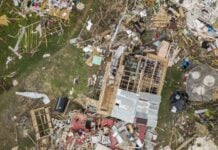
In Jamaica, the aftermath of Hurricane Melissa in October 2025 remains especially devastating, with damages estimated at roughly $10 billion—about 32 percent of the country’s GDP. The storm severely affected key sectors such as tourism and agriculture. Despite these difficulties, Jamaica is aiming for economic recovery in the latter part of 2026, supported by approximately $6.7 billion in international financial assistance.
For those directly impacted by the hurricane, 2026 may be a long and difficult year as families work to restore normalcy, rebuild homes and regain financial stability. Much will depend on how effectively authorities coordinate ongoing support to help individuals and communities return to some semblance of normal life.
Broader challenges in 2026 may also include slow global economic growth and continued struggles within the agricultural sector. While there is cautious optimism, overcoming these obstacles will be essential for long-term stability.
Undoubtedly, serious challenges have carried over from 2025 into 2026. Yet their persistence also highlights clear pathways toward resolution. The hope for 2026 is that people across the United States and the Caribbean, having learned difficult lessons from 2025, will apply common sense and cooperation—working together and with national leaders—to navigate these challenges and move forward.