Trinidad Senate blocks ZOSO bill as state of emergency nears end
The Trinidad and Tobago government suffered a major legislative setback Tuesday night after the Senate voted down a controversial bill that would have granted sweeping authority to the Prime Minister and National Security Council to declare high-crime communities as special security zones with expanded police and military powers.
The Law Reform (Zones of Special Operations) Special Security and Community Development 2026 Bill failed to secure the required three-fifths majority in the Upper House, after it did not receive the support of a single Independent Senator. With the State of Emergency set to expire on January 31, the defeat means the government will be unable to implement its proposed Zones of Special Operations (ZOSO) framework, which it said was critical to sustaining gains made against criminal networks during the emergency period.
When the vote was finally taken after four sittings of the Senate, all 15 government senators voted in favour of the bill. Fourteen senators voted against it, including six opposition senators and eight of the nine independent senators, while Independent Senator Courtney Mc Nish abstained.
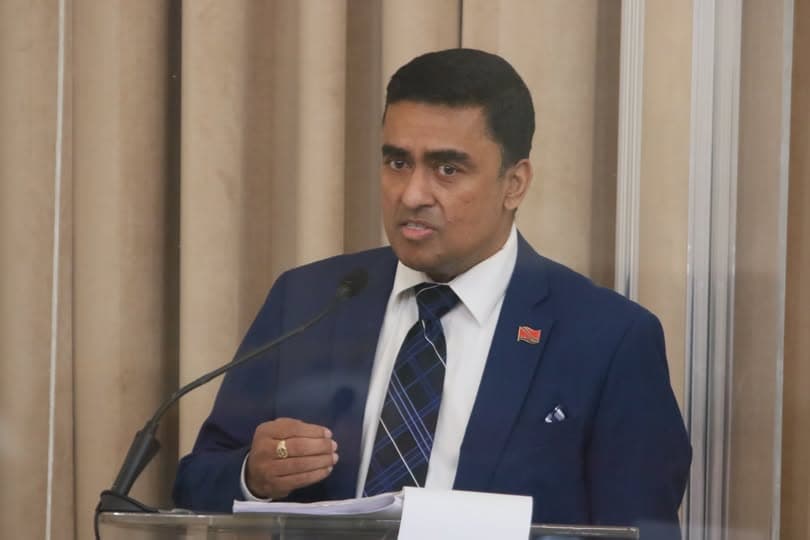
Ahead of the vote, Attorney General John Jeremie told the Senate that the government would not be accepting any amendments to the bill’s 28 clauses, citing time constraints with the State of Emergency due to expire within days.
“We are maybe 72 hours away from the end of the State of Emergency, and we wish to have something in place by then,” Jeremie said, adding that there was insufficient time to properly debate nearly 50 amendments proposed by independent and opposition senators.
Independent Senator Anthony Vieira criticised the government’s stance, saying he was initially under the impression that amendments would be considered.
“When I listened to you and Minister (Wayne) Sturge initially, I was under the impression that government might have been open to taking amendments,” Vieira said.
Jeremie acknowledged that the proposed amendments were “substantial” but said prolonged debate was not possible given the time pressure. He apologised for the approach, saying it was not how the government normally conducted legislative business.
One of the key amendments proposed by independent senators was the inclusion of a sunset clause, which would have set an expiration date for the law and allowed Parliament to review its effectiveness. Jeremie rejected the proposal, arguing that the bill already provided for parliamentary oversight through a review committee and was intended as a long-term crime-fighting measure.
He also defended the bill’s proposed Social Transformation Committee, citing Jamaica’s experience with similar initiatives.
“Once that starts, I’m told by my colleagues in Jamaica that that is actually a very powerful tool in terms of getting the communities to buy in to the fact that life can be better without the gangs,” Jeremie said.
Despite rejecting amendments, the Attorney General said the government remained open to continued engagement with independent senators.
Independent Senator Dr Desiree Murray nevertheless moved an amendment calling for the mandatory use of body cameras in ZOSOs. While the bill required body cameras to be used only when available, Jeremie said standing orders already mandated their use, though he conceded uncertainty about the police service’s current body camera capacity.
The defeat of the bill now shifts attention to Prime Minister Kamla Persad-Bissessar, who earlier this month sparked national controversy with sharp attacks on independent senators during the bill’s debate.
The Prime Minister accused critics of the legislation of being “weak men and women” and “pseudo-independent groups,” alleging they were effectively defending violent criminals and advancing the interests of the opposition People’s National Movement (PNM).
Independent senators, including Anthony Vieira and Michael de la Bastide, rejected the accusations, saying their role was to provide independent oversight, scrutinise legislation and hold the Executive accountable.
About the bill
The proposed legislation would have allowed the Prime Minister, in consultation with the Police Commissioner and Chief of Defence Staff, to designate high-crime areas as Zones of Special Operations.
Within a ZOSO, joint police and military forces would have been authorised to establish security cordons, impose curfews of up to 72 hours, conduct warrantless searches under specific conditions, and detain individuals suspected of criminal activity. A declared zone could have remained in effect for up to 180 days.
The bill also included provisions for social intervention through a committee tasked with identifying community needs such as housing, health, education and infrastructure, aimed at supporting long-term development alongside enforcement.