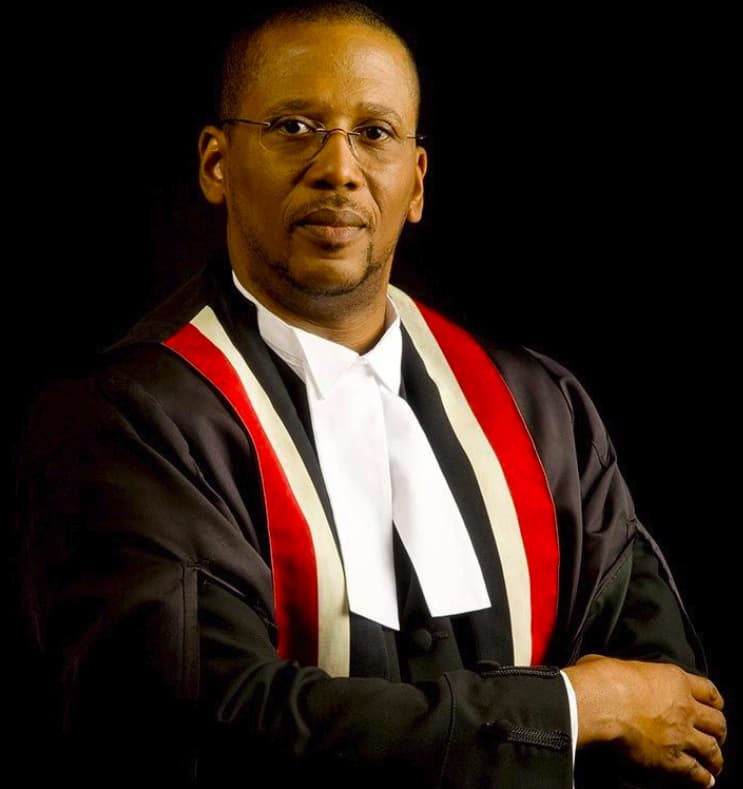
Trinidad Chief Justice Ivor Archie announces retirement after nearly 18 years
Key Points(5)
- Chief Justice Ivor Archie has announced his intention to retire, ending an almost 18-year tenure as Trinidad and Tobago’s top judicial officer.
- The announcement was made during the Commemoration of the Opening of the 2025-2026 Law Term at the Convocation Hall, Hall of Justice, Port of Spain.
- Archie, who turned 65 on August 18, said in his address: “Chief Justice is what I do; it is not who I am.
- The Office of CJ is not private property or something you own or cling to.
- It is held in trust for the nation.
Chief Justice Ivor Archie has announced his intention to retire, ending an almost 18-year tenure as Trinidad and Tobago’s top judicial officer. The announcement was made during the Commemoration of the Opening of the 2025-2026 Law Term at the Convocation Hall, Hall of Justice, Port of Spain.
Archie, who turned 65 on August 18, said in his address: “Chief Justice is what I do; it is not who I am. The Office of CJ is not private property or something you own or cling to. It is held in trust for the nation. I am just a single runner in a never-ending relay and the baton must be passed at some time.” He emphasized that his decision was made to ensure transparency and seamless succession.
Although the retirement age for judges was raised from 65 to 70 in 2020, Archie chose to retire on his own terms. “No matter how innovative a leader may be, an infusion of fresh ideas from a new leader is desirable from time to time. I also want to find new challenges and opportunities as I continue to grow,” he said.
Archie’s judicial career spans more than two decades. Appointed a puisne judge in 1998, he was elevated to the Court of Appeal in 2004 and became Trinidad and Tobago’s eighth and youngest Chief Justice on January 24, 2008. He also serves as Chairman of the Judicial and Legal Services Commission (JLSC) and President of the Trinidad and Tobago Judicial Education Institute.
Among the judges considered potential successors are Justices of Appeal Ronnie Boodoosingh, Geoffrey Henderson, and Peter Rajkumar.
Archie’s tenure has seen landmark judicial developments. Most recently, in March 2025, the Privy Council upheld a judgment in favor of Justice Marcia Ayers-Caesar, ruling she had been unlawfully pressured by the JLSC under Archie’s leadership to resign from the High Court in 2017. The Law Association of Trinidad and Tobago (LATT) described the matter as a “serious concern” regarding judicial independence and security of tenure.
Senior Counsel Ramesh Lawrence Maharaj, part of the legal team in the Ayers-Caesar case, commented on the ruling, stating: “I cannot see how anyone in that position can just continue in office as if nothing happened.”
Born in Tobago on August 18, 1960, Archie earned a BSc in Mechanical Engineering from the University of the West Indies before studying law at Solent University in the United Kingdom. He later held senior legal positions in Trinidad and Tobago, the Cayman Islands, and the Turks and Caicos Islands, including as Solicitor General in the Cayman Islands.
Archie has been recognized for his service with the Order of the Republic of Trinidad and Tobago (ORTT) in 2013 and has made significant contributions to judicial education and reform in the country.