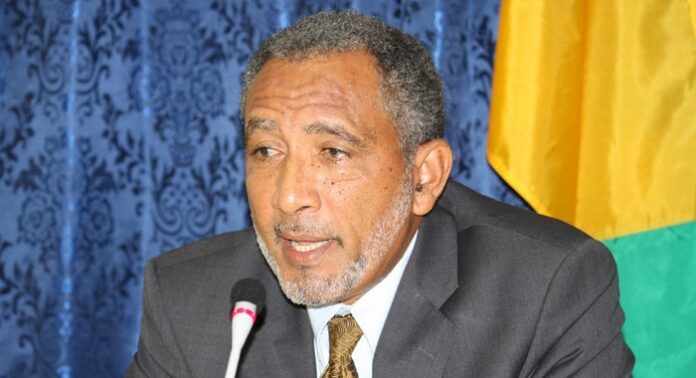
St Vincent and the Grenadines Prime Minister and Minister of Finance Dr Godwin Friday has unveiled a EC$1.9 billion national budget for 2026, assuring citizens that no new taxes will be introduced despite increased government spending.
Presenting the fiscal plan in Parliament, Friday said the expanded budget will be financed through improved revenue collection, concessional loans and grants, alongside the re-establishment of a Fiscal Responsibility Framework aimed at reducing deficits and gradually lowering public debt to the Eastern Caribbean benchmark of 60 percent of GDP by 2035.
The 2026 Estimates project current revenue at EC$906.9 million, while the capital programme is set to rise to EC$577.3 million. The increased allocations are expected to support infrastructure development, housing recovery and climate-resilient projects. By comparison, current revenue in 2025 stood at EC$855.6 million and the capital programme was EC$510 million.

Friday said the budget is designed to stabilise public finances while protecting households from additional financial strain. Among the relief measures announced is a doubling of Public Assistance to EC$500 per month, along with tax-free cost-of-living support for public sector employees. Additional funding will also be directed to healthcare, education and vocational training to strengthen human capital and reduce poverty.
“We will not mortgage our children’s future for our present benefit,” Friday told lawmakers. “Fiscal discipline is not an end in itself; it is the means by which we create the space to invest, the confidence to grow, and the conditions to employ.”
The nearly EC$200 million increase over last year’s budget will be managed without new taxes through strengthened compliance measures, modernised property tax administration, rationalised import concessions and targeted expenditure controls. These controls are intended to prioritise capital investment while avoiding significant growth in recurrent spending.
Government officials say the absence of new taxes is expected to shield Vincentians from additional financial pressures, while expanded social support will help ease cost-of-living concerns. Increased capital investment is also projected to stimulate construction, tourism and job creation, with upgrades to airports, ports and housing aimed at strengthening competitiveness and resilience to natural disasters.