



Jamaica Labour Party (JLP) Leader Dr Andrew Holness has pledged to double the national minimum wage to $32,000 per 40-hour work week “over the next few years,” should his party retain state power in Wednesday’s general election.

Speaking at a mass rally in Spanish Town on Sunday, Holness announced that if re-elected, his government’s first budget will move the minimum wage from the current $16,000 to $18,500 per week, followed by gradual increases until it reaches $32,000.
“The minimum wage will move from $16,000 to $18,500 in our first budget and then gradually after that for the next few years,” Holness said, emphasizing that a phased approach would keep the economy stable while expanding the labour force.

The national budget, which takes effect annually on April 1 after parliamentary approval, would reflect the first adjustment.
Holness noted that his administration has already overseen sharp increases in wages during its nine years in office. At the start of 2016, the weekly minimum wage was $6,200, which means the rate has climbed by about 158 percent to today’s $16,000. “By increasing the minimum wage gradually, you shift the incentive to work in favour of work, so you are going to get more Jamaicans voluntarily move out of the unemployment pool into the labour pool,” he argued.
The JLP leader said this approach would create more opportunities for economic growth. “You can’t mek any big swing. Everything you do you have to plan it out over a period of time, and that is how we have managed to keep everything stable without asking you to pay any more taxes,” he told supporters.
Regional comparisons
Jamaica’s current rate of JMD $16,000 per week is roughly equivalent to USD $100.26. Across the Caribbean, minimum wages vary widely:
-
Barbados: BBD $420 per week (≈ USD $210)
-
Trinidad & Tobago: TTD $820 per week (≈ USD $121)
- Advertisement -
-
Haiti (Segment C): HTG $360 per week (≈ USD $2.75)
-
Guyana: GYD $13,884 per week (≈ USD $66.50)
If Holness’s proposal is implemented, Jamaica’s weekly minimum wage would rise above current levels in Trinidad & Tobago and Guyana, though still below Barbados.

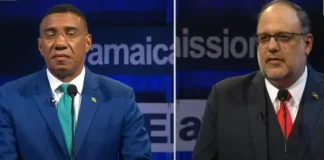

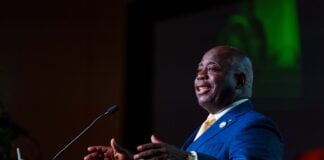




 Leader Dr Andrew Holness has pledged to double the national minimum wage to $32,000 per 40-hour work week.)