Opinion: Jamaica’s 9–5 culture is driving its traffic crisis
Key Points(5)
- <p data-start="607" data-end="1003">As Jamaica emerged from the shadow of COVID-19 and the world cautiously embraced what was dubbed “the new normal,” we collectively let a critical opportunity slip through our fingers.
- The results were telling.
- Offices remained operational.
- Productivity held firm and, in many cases, improved.
- The irony is hard to ignore.
As Jamaica emerged from the shadow of COVID-19 and the world cautiously embraced what was dubbed “the new normal,” we collectively let a critical opportunity slip through our fingers. Instead of cementing smarter, more humane ways of working, we rushed—almost instinctively—back into the familiar chaos of daily commutes, gridlocked roads, and office routines that had already proven unnecessary.
During the pandemic, Jamaican businesses, like many across the globe, were forced to adopt work-from-home (WFH) arrangements. The results were telling. Offices remained operational. Teams delivered. Productivity held firm and, in many cases, improved. Poll after poll and research paper after research paper confirmed what employees had long suspected: flexibility works.
Yet as soon as restrictions eased, many corporate entities swiftly repealed remote-work policies, retreating to what can only be described as archaic operational models. The irony is hard to ignore. We had proof that alternative systems functioned—and functioned well—but chose congestion over convenience, stress over sustainability.
Nowhere is this decision more painfully felt than on our roads.
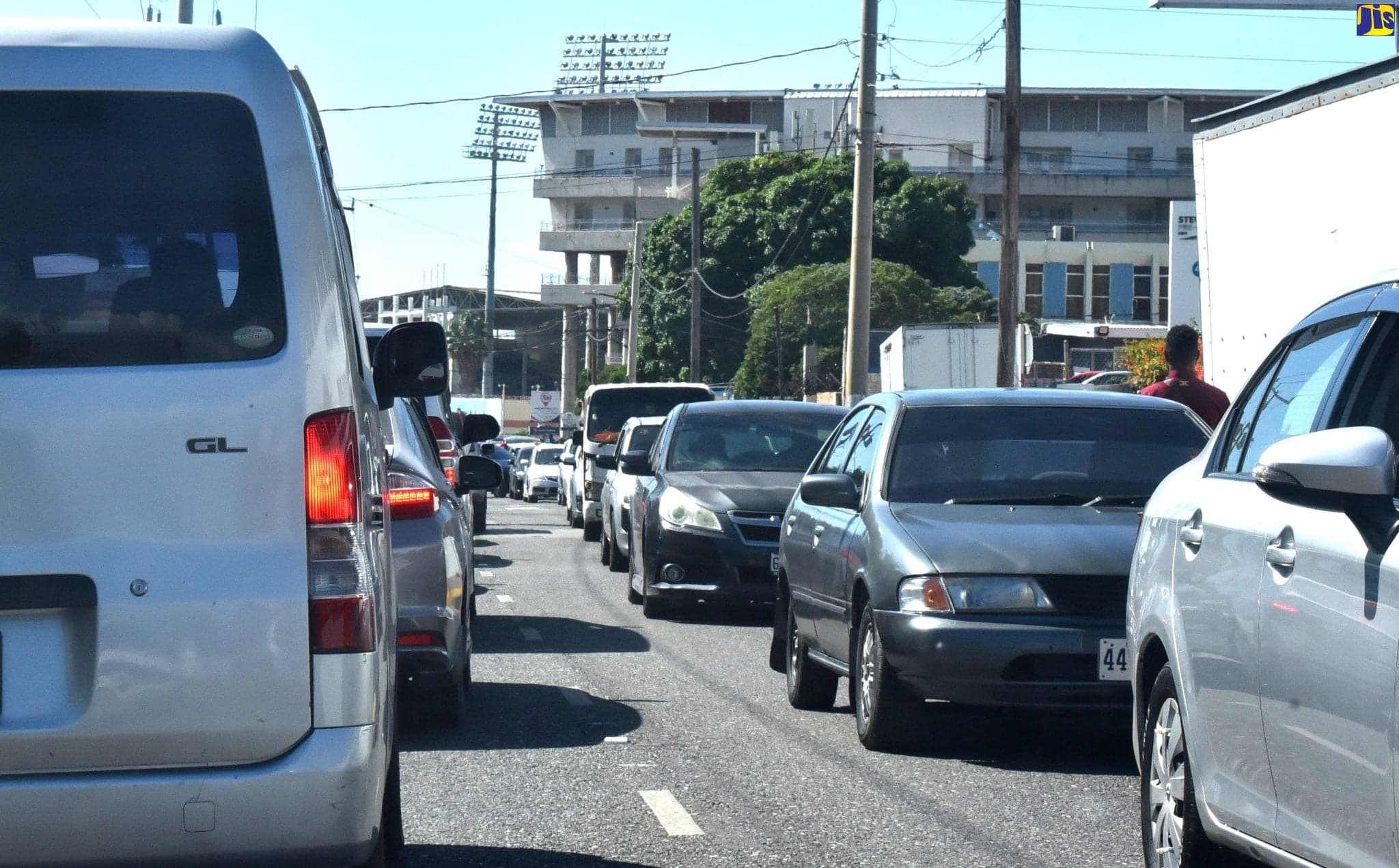
Kingston’s traffic situation has long passed the point of inconvenience and entered the realm of national crisis. The daily crawl into and out of the capital costs workers hours of unpaid labour, drains productivity, and exacts a heavy toll on mental and physical health. Kingston is not alone. Stakeholders in Montego Bay and Mandeville have also sounded alarms about worsening congestion and the urgent need for improved traffic-management systems.
In a November 2025 article published by The Jamaica Observer, National Works Agency CEO E.G. Hunter attributed much of Kingston’s traffic woes to the prevalence of single-occupant vehicles. He noted, “There has to be some kind of mass transport—and that is as simple as that. We have a lot of cars in Jamaica carrying single persons.”
While he is correct, that explanation only scratches the surface. It must be paired with haphazard road repairs, deplorable road conditions, weak enforcement, and a troubling disregard for traffic laws. The consequences are deadly. In 2025, Jamaica recorded 374 fatalities from road crashes—a two-per-cent increase over the previous year.
This is not merely a transportation issue; it is a work-culture issue.
If thousands of workers did not need to report to physical offices at the same hour each morning, traffic volumes would immediately decrease. If others were permitted to work staggered shifts—early mornings, late evenings, or overnight—congestion would ease further. Which brings us to a concept Jamaica has yet to seriously embrace: the night-time economy.
Globally, night-time economies are no longer experimental ideas; they are proven economic engines. Cities such as London and Amsterdam support millions of workers through extended-hour operations that go far beyond nightlife. Construction, manufacturing, healthcare, logistics, customer service, call centres, and digital services all thrive outside the traditional 9–5 framework.
Why shouldn’t Kingston, the Caribbean’s largest English-speaking city, be next?
The World Economic Forum has highlighted the potential of 24-hour economies to boost productivity, reduce urban congestion, and create more inclusive labour markets. Jamaica, with its strategic location, educated workforce, and growing service sector, is uniquely positioned to benefit.
Critically, a night-time economy is not about clubs, parties, and events—though those already contribute significantly to employment. It is about reimagining how and when work gets done. It is about spreading economic activity across more hours of the day, reducing strain on infrastructure, and giving workers autonomy over schedules that suit their biological rhythms and personal responsibilities.
Imagine a Jamaica where some offices operate from 6 a.m. to 2 p.m., others from 2 p.m. to 10 p.m., and still others overnight. Imagine fewer hours lost to grinding commutes, fewer accidents caused by rush-hour fatigue, and a healthier work-life balance for parents, caregivers, and students. Imagine the productivity gains when people are allowed to work when they function best—because, as we must finally admit, we cannot all be morning people.
If remote work is not an option for every role, then flexibility must be. The insistence on uniform hours is not a productivity strategy; it is an outdated habit.
Jamaica stands at a crossroads. We can continue forcing modern workers into yesterday’s systems, or we can break the final hold of rigid thinking and move boldly toward a future of remote work, extended hours, and night-time economies. The pandemic showed us what was possible. The traffic is showing us what is necessary.
The only question left is whether we are willing to act—or whether we will once again watch opportunity pass us by.