New Trinidad Parliament opens with President Kangaloo urging public service reform
Key Points(5)
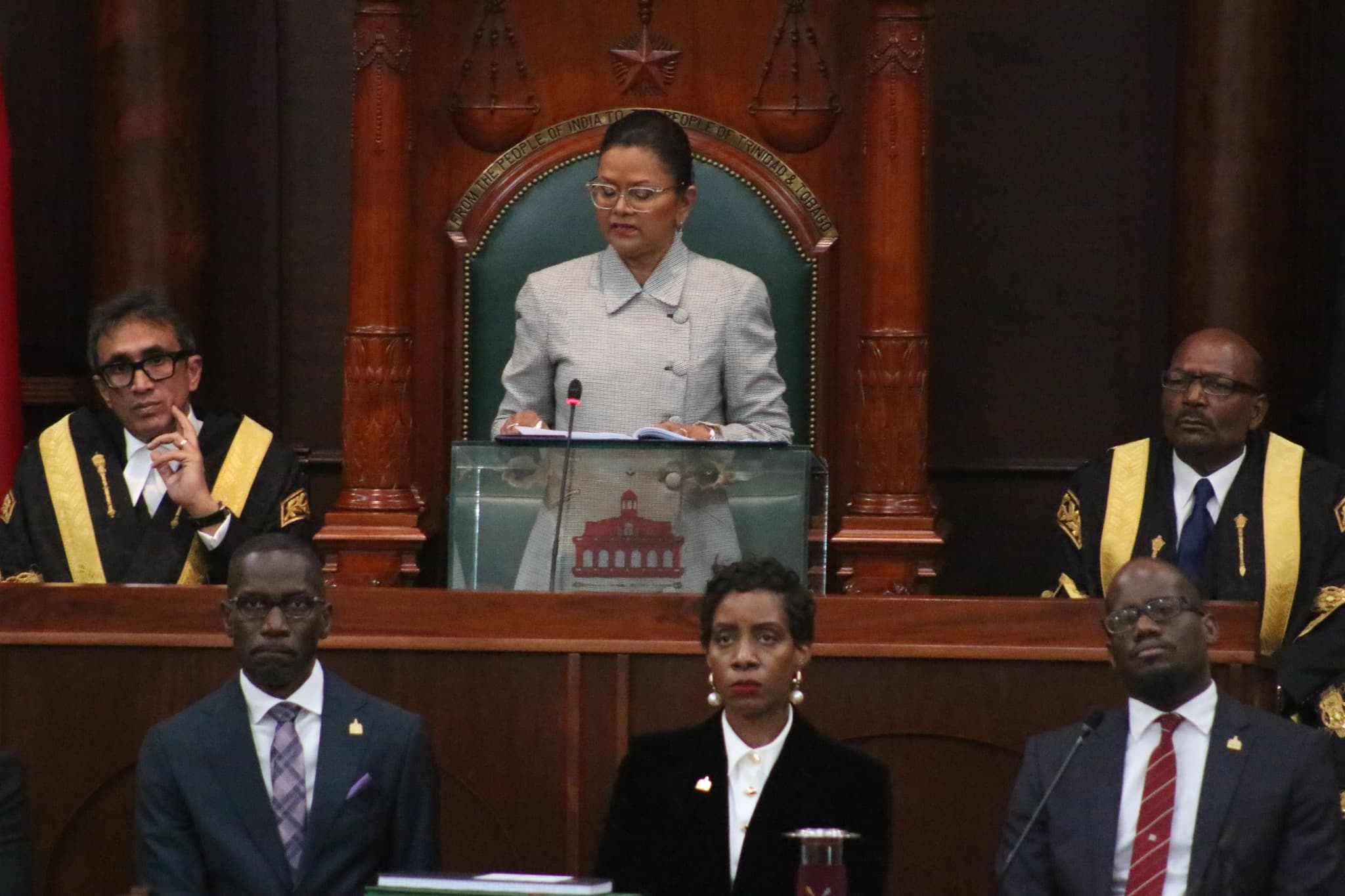
- Trinidad and Tobago’s new Parliament opened on Friday with President Christine Kangaloo urging lawmakers to move swiftly on a slate of critical issues, from artificial intelligence (AI) regulation to disability rights and public service reform.
- The ceremonial joint sitting was attended by Barbados Prime Minister Mia Mottley, current chair of CARICOM, and followed the country’s April 28 general election.
- In a historic first, the new parliamentary session features women in all top political positions.
- It also marked a milestone in inclusion, with Alicia Lalite-Ettienne becoming the first visually impaired person to serve in the Senate.
- Lalite-Ettienne is a human resources specialist pursuing a doctorate in Business Administration at the University of the West Indies, St.
Trinidad and Tobago’s new Parliament opened on Friday with President Christine Kangaloo urging lawmakers to move swiftly on a slate of critical issues, from artificial intelligence (AI) regulation to disability rights and public service reform.
The ceremonial joint sitting was attended by Barbados Prime Minister Mia Mottley, current chair of CARICOM, and followed the country’s April 28 general election.
In a historic first, the new parliamentary session features women in all top political positions. It also marked a milestone in inclusion, with Alicia Lalite-Ettienne becoming the first visually impaired person to serve in the Senate. Lalite-Ettienne is a human resources specialist pursuing a doctorate in Business Administration at the University of the West Indies, St. Augustine.
President Kangaloo used her address to press for urgent parliamentary intervention on a range of social and economic challenges. Chief among them was the need to proactively regulate AI, which she warned could “exacerbate inequality” and displace workers if left unchecked.
“For all of its potential to do good, research shows that, without proactive regulatory intervention, AI can pose various social and economic risks,” she said. “These include displacing large segments of the workforce, concentrating economic power in the hands of a few dominant players, and exacerbating inequality.”
President Kangaloo welcomed the creation of the new Ministry of Public Administration and Artificial Intelligence, describing it as a signal of the government’s intent to address both the opportunities and risks of AI.
“What would be even more commendable would be for Parliament to consider legislation that puts our country in the forefront of regional legislation in this area,” she added. “Parliament has an opportunity, and it might well only be a short one, to get out in front of Artificial Intelligence... and arrange for the regulation of AI technology in such a way as will maximize its benefits, and minimize its risk to citizens’ wellbeing.”
She also advocated for the passage of legislation establishing “enduring powers of attorney” to help families of people with Alzheimer’s or cognitive decline. Current laws render powers of attorney invalid once a person is no longer mentally competent, forcing families to undergo costly and time-consuming legal processes under the Mental Health Act.
“Legislation establishing the efficacy of an enduring power of attorney will bring enormous relief to thousands of citizens,” she said.
The President returned to the issue of rights for persons with disabilities, reiterating her longstanding call for comprehensive legislation.
“If we are to build a truly inclusive society, we need to enact laws that protect the rights of persons with disabilities to enter and remain in the mainstream of social and economic activity,” she said, expressing hope that the 13th Republican Parliament would succeed where past parliaments have not.
She also addressed the government’s plan to abolish the Demerits Points System for road users, urging that any reform should prioritize public safety. Recalling the personal tragedy of losing both her sister and brother to vehicular accidents, Kangaloo made an emotional appeal to lawmakers.
“Even as I speak these words to you today, the pain of these losses still weighs me down,” she said. “Clerk or chief justice, it can happen to any of us... I therefore plead with Parliament... to ensure enhanced safety on our nation’s roads and reducing road fatalities and related injuries.”
In her closing remarks, the President called for reform of the regulations governing Service Commissions to modernize the public sector.
“Please think of how our nation’s children would benefit from being able, through legislative intervention, to fill vacancies in our school system more rapidly than possible,” she said.
The new government, led by Prime Minister Kamla Persad Bissessar, faces a heavy legislative agenda. But President Kangaloo expressed hope that, amid the many priorities, Parliament would act decisively on the urgent needs she outlined.