New Haitian prime minister sworn in
Key Points(5)
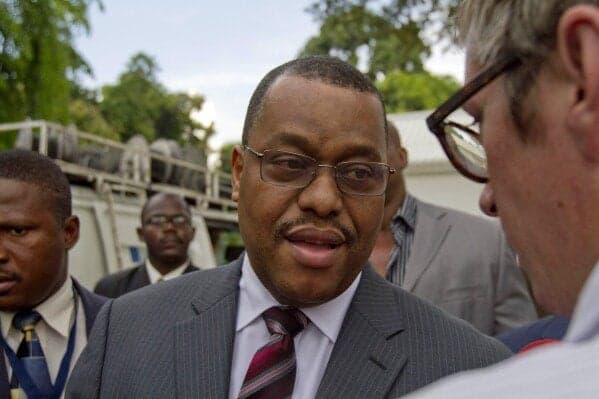
- Garry Conille was sworn in as Haiti’s prime minister on Monday, vowing to “deliver” for the struggling Caribbean nation amid ongoing security, humanitarian, and political crises.
- Conille was appointed by the transitional presidential council following the resignation of Prime Minister Ariel Henry in April, as gang violence intensified.
- “Let’s get to work and I assure you that we will deliver what we promised,” the 58-year-old said at the ceremony at the Villa d’Accueil, an official government building in the capital Port-au-Prince.
- His swearing-in empowers him to form a government in consultation with the council, its head, Edgard Leblanc Fils, said.
- A medical doctor by training, Conille has served as UNICEF’s regional director for Latin America and the Caribbean since January 2023 and was Haiti’s prime minister from October 2011 to May 2012 under President Michel Martelly.
Garry Conille was sworn in as Haiti’s prime minister on Monday, vowing to “deliver” for the struggling Caribbean nation amid ongoing security, humanitarian, and political crises.
Conille was appointed by the transitional presidential council following the resignation of Prime Minister Ariel Henry in April, as gang violence intensified.
“Let’s get to work and I assure you that we will deliver what we promised,” the 58-year-old said at the ceremony at the Villa d’Accueil, an official government building in the capital Port-au-Prince.
His swearing-in empowers him to form a government in consultation with the council, its head, Edgard Leblanc Fils, said.
“We are counting on Dr Conille to implement the policies agreed with the presidential council, in order to address the problem of insecurity in particular, as well as to improve the country’s economy, reform its institutions and hold credible, democratic and free elections by the end of 2025,” he added.
A medical doctor by training, Conille has served as UNICEF’s regional director for Latin America and the Caribbean since January 2023 and was Haiti’s prime minister from October 2011 to May 2012 under President Michel Martelly.
He faces the monumental task of alleviating the crises devastating the poorest country in the Western Hemisphere and preparing for the first elections since 2016.
Haiti has long been plagued by gang violence, and in late February, armed groups launched coordinated attacks on key sites in Port-au-Prince, claiming they aimed to overthrow the unelected and unpopular Henry.
Henry had been governing as prime minister following the assassination of President Jovenel Moise in 2021. The country has not had a president since.
The violence has disrupted food security and humanitarian access, with much of the capital controlled by gangs accused of murder, rape, looting, and kidnappings.
Last year, a UN-backed security force led by Kenya was promised to bolster the Haitian police, but it has yet to be deployed.
On Monday, the UN food agency reported “important progress,” with aid now reaching the capital through the reopened international airport and food distribution in its largest slum.
The mandate of the transitional presidential council is set to end by February 2026 at the latest.
Read: Essential aid reaches Port-au-Prince amid ongoing challenges