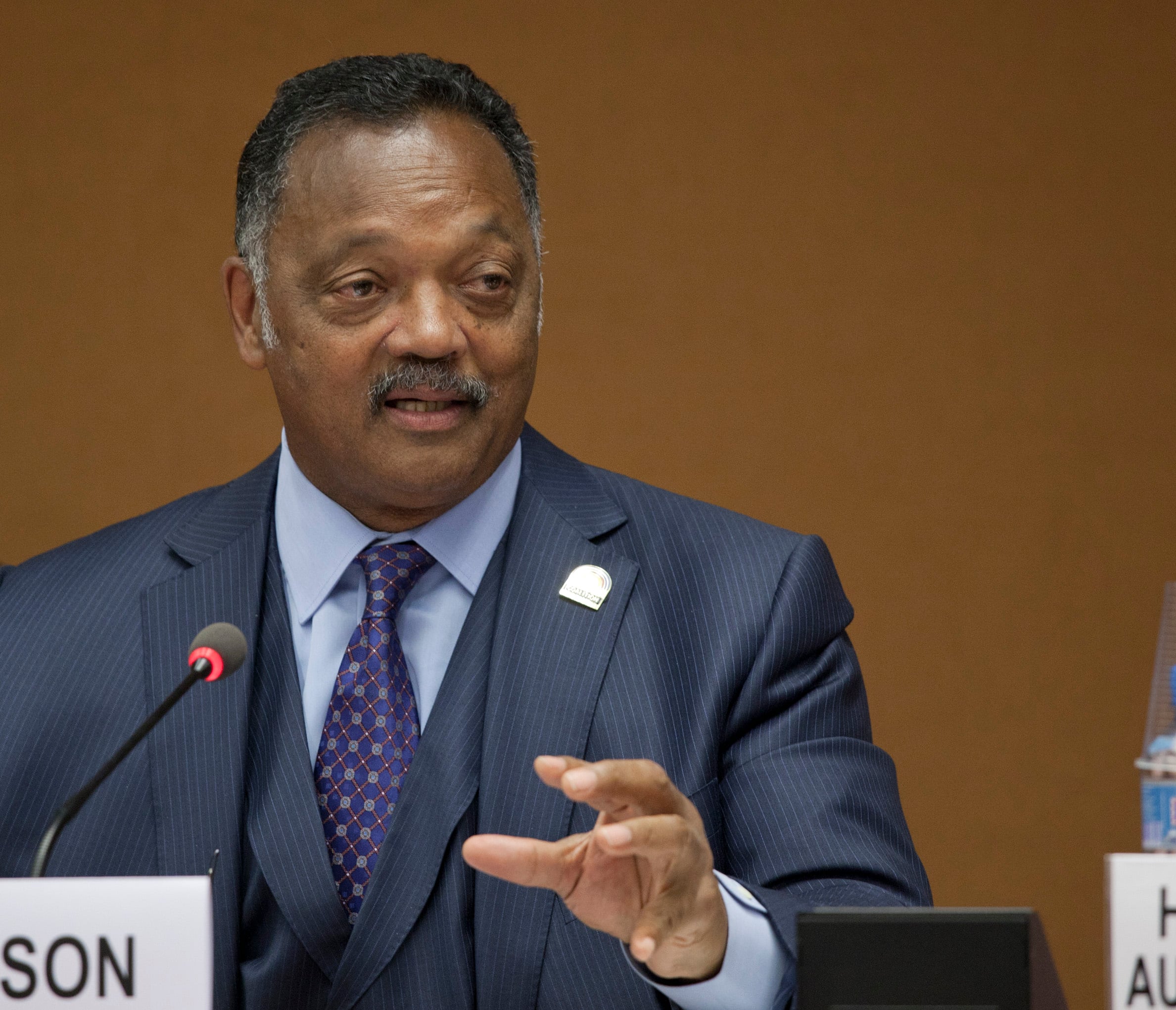
Rev. Jesse Jackson, the iconic American civil rights activist, politician, and Baptist minister, has died at the age of 84. Jackson, who had been battling progressive supranuclear palsy, a condition similar to Parkinson’s disease, passed away peacefully on Tuesday morning, surrounded by his family, according to a statement from the Rainbow/PUSH Coalition.
Born Jesse Louis Burns on October 8, 1941, in Greenville, South Carolina, Jackson rose to prominence as a protégé of Martin Luther King Jr. during the civil rights movement. Over his decades-long career, he became one of the most influential African-American activists of the late 20th and early 21st centuries, founding organizations that later merged to form the Rainbow/PUSH Coalition.
Jackson’s activism expanded into national and international politics in the 1980s. He launched his first presidential campaign in 1984, initially seen as a fringe candidate, finishing third in the Democratic nomination race behind former Vice President Walter Mondale and Senator Gary Hart. He mounted a second presidential bid in 1988, finishing runner-up to Massachusetts Governor Michael Dukakis.

Beyond politics, Jackson served as the District of Columbia’s shadow senator from 1991 to 1997 during the Bush and Clinton administrations and became a vocal critic of police brutality, conservative policies, and corporate inaction on diversity. He also hosted Both Sides with Jesse Jackson on CNN from 1992 to 2000, using the platform to advance civil rights, social justice, and political engagement.
Caribbean connections
While his work was centered in the United States, Jackson had meaningful connections with the Caribbean. In 2015, he visited Martinique and addressed the Martinique Regional Council, engaging with local leaders on social justice and diaspora issues. During that trip, he toured the Memorial ACTe museum in Guadeloupe, which documents the history of slavery and the African diaspora, publicly praising it as a major global cultural institution.
Jackson also travelled to Cuba on multiple occasions, meeting with leaders including former President Fidel Castro and advocating for improved U.S.–Cuba relations. On one notable visit, he sought the release of a U.S. prisoner on humanitarian grounds. His diplomacy extended further back: in 1984, Jackson negotiated the release of 22 Americans from Cuba, a high-profile intervention that highlighted his commitment to international justice and Caribbean-focused diplomacy.
Jamaica’s Prime Minister Andrew Holness expressed profound sadness over Jackson’s passing, calling him “one of the most positively consequential civil rights figures of the 20th and 21st centuries.”
Holness praised Jackson’s activism, which “centred on championing economic, racial and social justice and empowering Black, minority, and working-class people, including voters, had global impact and will resonate for centuries to come.”
“Humanity owes Reverend Jackson a debt of gratitude. He was an inspirational orator who commanded the ears and consciousness of the captains of the corridors of power, both in the United States and around the world,” Holness added.
Holness said Jackson is among a unique cadre of civil rights leaders, including the late Dr Martin Luther King Jnr, who were admirable for their ability to put aside self-interest and, at significant personal risk, elect to prioritise what was right and good for humanity, not only in the United States of America, but across the globe.
“The passing of Reverend Jackson is a significant moment in history. His indelible efforts assisted greatly in ensuring that kindness, justice, equality and humanity prevailed in instances where they were forgotten virtues,” Holness said.
Jackson was the father of U.S. Representative Jonathan Jackson and former U.S. Representative Jesse Jackson Jr. His death marks the loss of a civil rights titan whose efforts shaped generations of social justice advocacy, both in the United States and abroad.