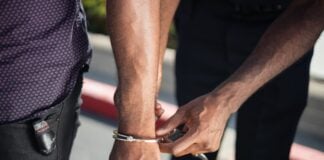
Federal authorities in South Florida have recently detained at least 18 Cuban immigrants during scheduled immigration appointments, according to the Miami Herald, signaling a significant escalation in deportation efforts under the Trump administration.
The detentions primarily involve Cubans who were released under I-220A forms—an Immigration and Customs Enforcement (ICE) document given to those who entered the U.S. illegally. Instead of being detained long-term, they are released under supervision with an I-220A.
In recent years, hundreds of thousands of Cuban immigrants have entered the U.S. through the southern border and received I-220As instead of parole, which previous Cuban arrivals often received. Unlike parole, which allowed Cubans to apply for residency under the 1966 Cuban Adjustment Act, the I-220A does not grant that benefit. Instead, those with the form must apply for asylum or find another way to stay legally, such as a family-sponsored green card. Federal courts have ruled that having an I-220A alone does not make someone eligible for residency.

According to immigration attorneys, it is these Cuban immigrants—primarily women—who have been detained at routine ICE check-ins in Miramar. Under the Biden administration, Cubans with I-220As were not considered a priority for detention unless they had criminal records. However, with Trump’s focus on mass deportations, ICE has begun taking them into custody.
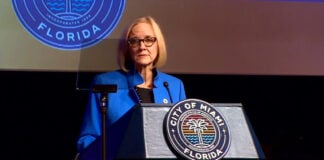
Miami Congresswoman María Elvira Salazar, a vocal advocate for Cubans with I-220As, confirmed on X (formerly Twitter) that she is aware of the recent detentions and has reached out to ICE and Homeland Security officials.
“I recently spoke with ICE and Homeland Security officials and asked them to not detain Cubans with I-220A and allow for their asylum cases to be heard,” Salazar stated in Spanish. “As you all know well, during the Biden administration, I sought a solution for Cubans with I-220A, and I will not stop until it’s no longer necessary.”

The situation is further complicated by Cuba’s inconsistent acceptance of deportation flights. The Miami Herald notes that an estimated 42,000 Cubans remain in the U.S. despite having deportation orders. With Cuba refusing to take back many deportees, U.S. officials are reportedly exploring third-country deportation options, including Guatemala, Honduras, Costa Rica, and Panama. Mexico has already begun accepting Cuban deportees under a deal brokered with the Biden administration.
DHS revokes legal status for over 500,000 migrants
These detentions come amid a broader crackdown on migrants under the Trump administration. On Friday, the Department of Homeland Security (DHS) announced it is revoking humanitarian parole for approximately 532,000 Cubans, Haitians, Nicaraguans, and Venezuelans who arrived in the U.S. since October 2022.
The Biden-era program allowed these migrants to live and work legally for two years with financial sponsorship. However, Homeland Security Secretary Kristi Noem stated that their legal status will end on April 24, 2025, or 30 days after the notice is published in the Federal Register. DHS has made it clear that parolees “must depart” before their termination date unless they obtain another legal status.

The Trump administration has defended the move as necessary for border security, arguing that the program encouraged mass migration and strained U.S. resources. Officials also contend that temporary protections should not be extended to migrants from adversarial nations like Cuba, Venezuela, and Nicaragua, which have been uncooperative in accepting deportations.
With the rollback of legal protections and an increased focus on deportations, immigration attorneys warn that more Cubans and other migrants could soon find themselves in detention or facing removal orders.