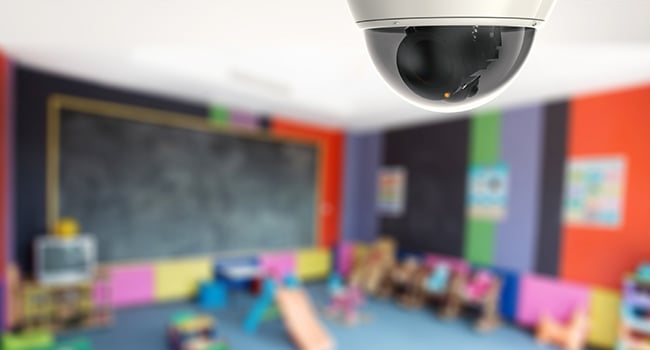
Broward County Public Schools is poised to reactivate its video surveillance program in special-needs classrooms, enabling parents to monitor their children if abuse or neglect is suspected.

Originally operating as a three-year pilot program from 2021 to 2024, the initiative allowed any parent to request a camera be installed in their child’s Exceptional Student Education (ESE) self-contained classroom. Schools received 320 requests for installations and 32 requests to review footage—two of which uncovered concerning incidents, including a child spending roughly 57% of school hours in a bathroom over eight days, prompting a state inquiry.
However, the program was paused during the 2024–25 school year. Although the cameras remain installed, they have not been activated. The halt occurred after the pilot’s expiration and due to legal uncertainties involving recording students without explicit parental consent, as well as a lack of a state mandate to continue operations.

But pressure from parents and special needs advocates has pushed the issue back onto the School Board agenda. In a Tuesday workshop, most School Board members voiced support for reviving the initiative—with an opt-out clause for any parent who does not consent to recordings.
Board member Adam Cervera said, “It’s important for people to understand that this district is opting to continue with these cameras … Broward County is stepping up and implementing this program. We are somewhat trailblazers there.”
The policy framework under consideration would require that any classroom with a parent request and no objections from other parents be equipped with a working camera. Currently, while 300 cameras remain in place, covering about one-quarter of eligible classrooms, the district would need to procure 1,000 additional units, at a projected cost of $2 million to $2.4 million depending on storage capacity options.
With Governor-signed House Bill 257 (effective July 1, 2025), districts are mandated to hold a board vote before implementing such camera programs—making Broward’s deliberations a critical test case for statewide compliance.
A formal vote is scheduled for the July 22 School Board meeting, with district officials noting uncertainty about whether the system could be in place by the Aug. 11 start of the new school year.
Advocates emphasize the program’s importance for non-verbal students or those unable to communicate abuse, noting the unsettling incidents recorded during the pilot. With statewide adoption still pending, Broward’s decision could chart the course for future expansion across Florida’s school districts.