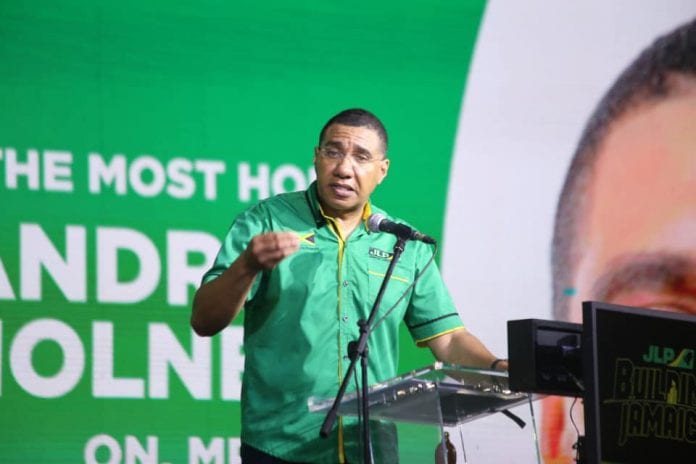
Amid mounting political pressure following a narrow win in February’s local elections, Jamaica’s Prime Minister Dr. Andrew Holness announced sweeping measures at the Jamaica Labour Party’s (JLP) 81st annual conference on Sunday.

Aimed at easing the financial burden on middle-income earners and vulnerable groups, the proposed policies include reductions in electricity taxes, water bill amnesties, targeted relief for craft vendors and tourism workers, and more.
Holness announced that in the next budget, the government would slash the general consumption tax (GCT) on electricity from 15% to 7% for users consuming up to 200 kilowatts monthly. The policy, estimated to cost the government $1.5 billion annually, will predominantly benefit middle- and upper-middle-income households, according to UN Jamaica Economy Panel economist Keenan Falconer.

The plan also mandates a national rollout of prepaid electricity meters by the Jamaica Public Service Company (JPS), particularly in vulnerable communities.
Among the other measures announced included an expansion of the eligibility criteria for the recently introduced $20,000 reverse income tax credit.
The Prime Minister explained that this week’s payments will raise the total number of Jamaicans receiving the rebate to just over 290,000. However, he acknowledged that some individuals remain excluded from the program because they are not registered in the government’s system.
To address this, Holness announced that starting next February, the government will begin accepting applications from unregistered individuals. These applicants will undergo a needs assessment, and those who qualify will also receive the $20,000 payment.
Holness also revealed plans for the National Water Commission to write off debts owed by pensioners for more than two years and extend discounts of at least 50% to disconnected customers who make payment arrangements. Craft vendors will also benefit from waived fees and outstanding debt forgiveness in government-owned markets, providing relief ahead of the winter tourism season.
He further introduced a partnership-driven Tourism Worker/New Social Housing Programme set to begin in 2025. Through collaboration between the Tourism Enhancement Fund and hotel operators, the initiative will provide housing solutions for sector workers deemed in need.

Acknowledging voter dissatisfaction in February’s local elections, where the JLP narrowly secured a majority and voter turnout was just 29.6%, Holness, at the time, admitted that the results reflected pressing concerns such as infrastructure, water supply, and garbage collection. “People’s expectations have risen,” he said, framing the incentives as part of the government’s response.
In February’s election, JLP candidates won the majority of seats in seven parishes, while the PNP won five. Kingston and St. Andrew ended in a tie, and ultimately ended up with a PNP Mayor, replacing JLP’s Delroy Williams.
The opposition People’s National Party (PNP) has repeatedly pressed Holness to announce the date for the general election due by September 2025. Holness, however, dismissed the pressure, declaring, “We are not in a fight with them. They are not in our league.”
The prime minister touted the JLP’s record and vision as Jamaica’s best hope for future progress, urging citizens to judge the government by its achievements. While Holness insists his party retains the trust of the people, the narrow margin of the February elections and low voter turnout highlight lingering public discontent.
With the general election on the horizon, these policy announcements seem aimed at consolidating support and addressing the issues communicated, as Holness noted, “through the ballot.”