Jamaica launches Flexible Work Arrangements across public sector
Key Points(5)
- That conversation intensified during the COVID-19 pandemic.</p> <p data-start="1874" data-end="2008">“What emerged from that experience was a powerful lesson,” she said.
- “That is just not productive.”</p> <h2 data-start="2266" data-end="2302">Phased rollout begins February 2</h2> <p data-start="2304" data-end="2541">The first phase of implementation will begin with staggered working hours across ministries, departments, and agencies.
- Participation will not be mandatory, and traditional public-sector hours—8:30 a.m.
- to 5:00 p.m.—will remain in place.</p> <p data-start="2543" data-end="2808">Marks emphasized that not all roles will be eligible, but where flexibility exists, entities are strongly encouraged to adopt the new arrangements.
- to 3:00 p.m.</strong></p> </li> <li data-start="2984" data-end="3014"> <p data-start="2986" data-end="3014"><strong data-start="2986" data-end="3012">7:30 a.m.
The Jamaican government on Thursday officially launched the phased implementation of Flexible Work Arrangements across the public sector, a move aimed at boosting productivity, improving efficiency, and promoting better work-life balance for government employees.
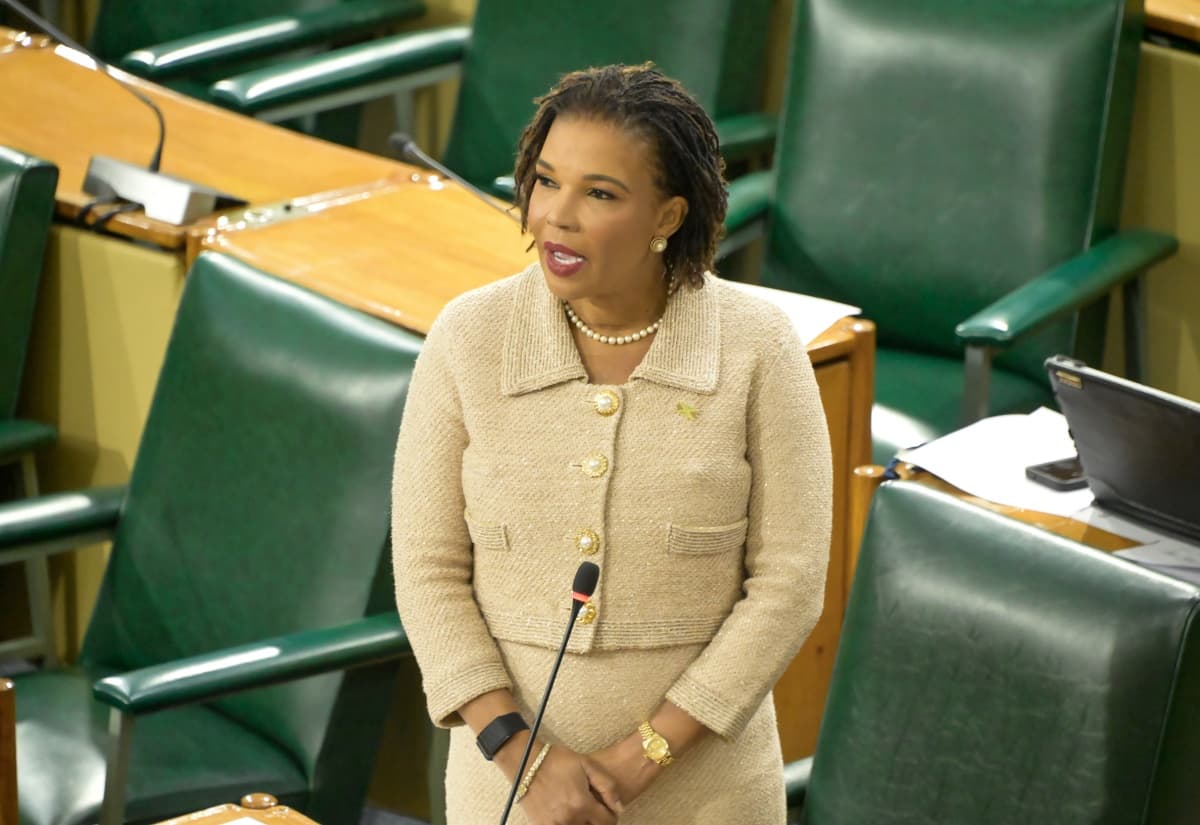
The initiative, which takes effect beginning February 2, 2026, is a key component of the government’s broader Public Sector Transformation Programme (PSTP), according to Minister of Efficiency, Innovation and Digital Transformation, Ambassador Audrey Marks.
Speaking at the launch, Marks said the rollout marks a long-awaited shift from legislation to full implementation.
“While flexible work legislation has existed since 2014, it has not been fully implemented,” she said. “Today’s launch signals the government’s commitment to moving from policy to action.”
Jamaica’s Employment (Flexible Work Arrangements) (Miscellaneous Provisions) Act of 2014 established the legal framework for flexible work, including staggered hours, hybrid work, telecommuting, compressed work weeks, and banking of hours. However, Marks said she was surprised to learn the legislation had remained underutilized for years.
“I was amazed to know that this was already in place, but somehow not fully being utilized,” she said.
COVID-19 and a shift in thinking
Marks noted that the idea of flexible work had been gaining traction long before it became law, driven by changing technologies, evolving workforce expectations, and global best practices. That conversation intensified during the COVID-19 pandemic.
“What emerged from that experience was a powerful lesson,” she said. “Productivity is driven by outcomes, not just physical presence.”
She also shared a personal anecdote to illustrate the inefficiencies of rigid work schedules, recalling a 95-minute commute from New Kingston to Jacks Hill during peak hours.
“It was like a shock to my system,” Marks said. “That is just not productive.”
Phased rollout begins February 2
The first phase of implementation will begin with staggered working hours across ministries, departments, and agencies. Participation will not be mandatory, and traditional public-sector hours—8:30 a.m. to 5:00 p.m.—will remain in place.
Marks emphasized that not all roles will be eligible, but where flexibility exists, entities are strongly encouraged to adopt the new arrangements. Approximately 32 government entities have already implemented aspects of flexible work and reported positive results.
The Ministry of Finance and the Public Service has prepared detailed guidelines, including defined core working hours and staggered schedules ranging from early-morning to later-evening shifts.
Examples of the staggered options include:
-
6:30 a.m. to 3:00 p.m.
-
7:30 a.m. to 4:00 p.m.
-
8:30 a.m. to 5:00 p.m.
-
9:30 a.m. to 6:00 p.m.
-
10:30 a.m. to 7:00 p.m.
According to Marks, flexible work arrangements directly support the goals of the Public Sector Transformation Programme, which seeks to modernize human resource systems, improve service delivery, and strengthen performance management.
“We are shifting from a process-driven public service to a results-oriented one,” she said. “Managers are encouraged to focus on outputs, service quality, and accountability, rather than hours spent in the office.”
She added that flexible work benefits employees through reduced commuting time and costs, improved mental and physical well-being, and better work-life balance—factors that ultimately lead to higher-quality public services.
Oversight and Expansion Ahead
Implementation oversight will be led by Marks’ ministry in collaboration with the Ministry of Finance and the Public Service and the Ministry of Labour and Social Security.
While the initial phase focuses on staggered hours, Marks said the government plans to gradually introduce other options, including hybrid work, telecommuting, compressed work weeks, and banking of hours.
“We are doing this carefully to ensure there is no disruption,” she said, “but in everything that we do, there must be increased productivity.”
Private sector engagement next
Marks also signaled plans to engage the private sector in the coming weeks through the Private Sector Organisation of Jamaica (PSOJ), encouraging wider adoption of flexible work arrangements nationwide.
“Flexible work arrangements as a national initiative are a catalyst for modern systems, empowered people, and better outcomes for Jamaica,” she said.
By embracing flexibility, Marks added, the government is investing in productivity, efficiency, and the future readiness of Jamaica’s public service.