Jamaica's Foreign Affairs minister clarifies position on Israel-Gaza war
Key Points(5)
- Jamaica's Minister of Foreign Affairs, Kamina Johnson Smith has sought to clarify Jamaica's position on the ongoing Israel-Gaza war after the country faced backlash for its absence from the United Nations General Assembly (UNGA) vote which called for a resolution.
- A total of 120 countries voted in favor of the non-binding resolution which called "humanitarian truce" in Gaza.
- Some 12 CARICOM states, including Trinidad, Barbados, Antigua, Bahamas, and St.
- Lucia voted in favor.
- Haiti abstained, while Jamaica did not cast a vote.
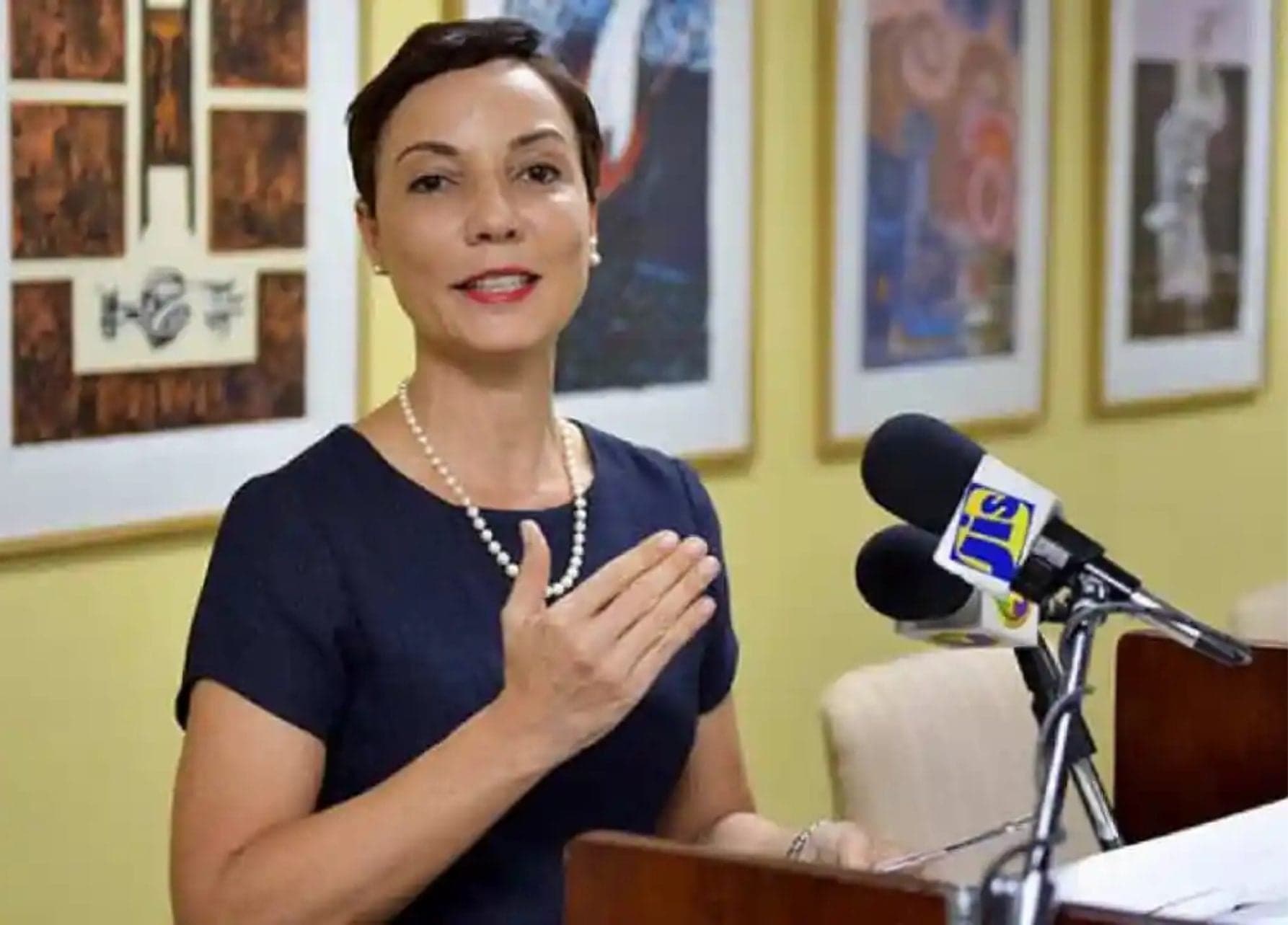
Jamaica's Minister of Foreign Affairs, Kamina Johnson Smith has sought to clarify Jamaica's position on the ongoing Israel-Gaza war after the country faced backlash for its absence from the United Nations General Assembly (UNGA) vote which called for a resolution.
A total of 120 countries voted in favor of the non-binding resolution which called "humanitarian truce" in Gaza. Some 12 CARICOM states, including Trinidad, Barbados, Antigua, Bahamas, and St. Lucia voted in favor. Haiti abstained, while Jamaica did not cast a vote.
The move resulted in backlash from some Jamaicans and Caribbean nationals, and even global citizens. The opposition, People's National Party, described the situation as a "new low" in the Jamaica's foreign policy history.
Read: Jamaica: PNP criticizes government for absence in UN resolution vote
On Sunday, Minister Johnson Smith released a statement explaining that deliberations were still taking place when the vote was finalized.
"The situation in the Middle East demands a unified global voice against human rights violations, while respecting states' rights to self-defense within the parameters of international law. Jamaica, as the Chair of the CARICOM Caucus of Ambassadors at the UN, was actively engaged in discussions concerning the Jordanian resolution and not only collaborated on the CARICOM Statement but led its drafting," the statement read.
"This statement was delivered by our Permanent Representative, Ambassador Wallace, from the podium in the General Assembly during the debate on the issue, prior to the vote.
"I shared this statement on social media, hoping it would provide clarity on Jamaica's position, given its clear alignment, and support of the Jordanian resolution," Minister Johnson Smith said.
She said Jamaica wants a 'peaceful resolution' to the war, despite not casting a vote.
"While a technical cross in communication led to Jamaica's representative not voting, our statement on the UN General Assembly floor on behalf of all CARICOM Member States, unequivocally supports a peaceful resolution of the conflict, humanitarian aid for victims of war, and the release of hostages. Jamaica's foreign policy unquestionably rests on robust principles and democratic values, which guide our stance in an increasingly dynamic and complex global landscape," the Minister said.
Background: What's happening in Gaza?
An armed conflict between Hamas-led Palestinian militant groups and Israeli military forces began on October 7 with a Hamas attack on southern Israel that killed 1,400 Israelis and took 200 others hostage in a single day.
Israeli military forces retaliated with extensive strikes against targets in the Gaza Strip. By the end of October, more than 1,500 Israelis and more than 8,000 Gazans had been killed, including more than 3,000 children, and Israel launched an invasion of Gaza.
UNICEF described the war as a “graveyard” for children. Human rights groups have said Israel is collectively punishing Palestinians for "the actions of a few."
There has been widespread killing of civilians, and human rights groups and a panel of United Nations special rapporteurs have accused both Israel and Hamas of war crimes.
In mid-October, Israel announced it would cut off food, water, electricity, and fuel supplies to Gaza, on top of the existing blockade by both Egypt and Israel. They also urged 1.1 million Gazans to evacuate northern Gaza. The UN reported that around a million Palestinians, nearly half of Gaza's population, have been internally displaced.
A vote at the UN General Assembly on October 27 saw an overwhelming majority of nations calling for an immediate humanitarian ceasefire.