


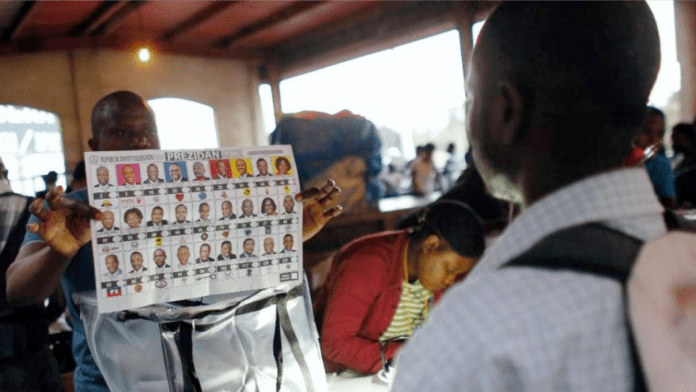
Haiti has taken a significant step toward holding long-awaited presidential and legislative elections with the appointment of a Provisional Electoral Council (CEP).
This marks a critical development for the country, which has been without an elected head of state since the assassination of President Jovenel Moïse on July 7, 2021. Moïse had served as president since February 2017, following his election in November 2016.
The Council of Ministers recently validated the new CEP, a body that the international community has been urging Haiti to establish. The Council is now tasked with overseeing the country’s first general elections since 2016 and ensuring the transparency of the electoral process. Elections are expected by 2026.

Smith Augustin, a member of Haiti’s transitional presidential council (TCP), confirmed that the new electoral council is in place, although it currently consists of only seven members, short of the nine required by law. “The remaining two members are likely to be announced in the coming days,” Augustin said. The council includes representatives from various sectors of society, including farmers, journalists, human rights advocates, and the voodoo community.
The previous CEP was dissolved by former Prime Minister Ariel Henry in September 2021, after he accused the council of being “partisan.” This move delayed elections originally scheduled for November 2021, leading to criticism that Henry was trying to hold onto power. He resigned earlier this year following the establishment of the TCP.
Edgard Leblanc Fils, leader of the transitional body, addressed Caribbean Community (CARICOM) leaders at their summit in Grenada in July, outlining plans for elections by the end of 2025. “Since our new efforts and the establishment of the new transitional organ, we are now going to implement our transitional electoral process or system, which will allow us to hold our general elections by the end of next year,” Fils said.
He added that Haiti has also launched a national conference to review the Constitution, with a focus on redefining the relationship between the state and its citizens. This effort aims to create a new legal framework and operational structure for the government.
“It is within this challenging context, particularly marked by the gun violence currently occurring in the capital and other areas of the country, that we aim to remove Haiti from this situation,” Fils said, addressing the severe security concerns plaguing the country.
As Haiti moves toward elections, the Provisional Electoral Council will play a pivotal role in shaping the country’s future political landscape, while the TCP works to stabilize the nation and set the stage for a peaceful transfer of power.












.)