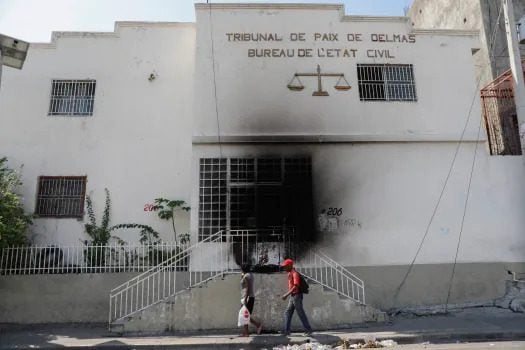
A newly released report from the United Nations highlights a severe humanitarian crisis in Haiti, exacerbated by years of underfunding and escalating needs.
According to the UN Office for the Coordination of Humanitarian Affairs (OCHA), the situation has deteriorated dramatically due to ongoing violence and the near-collapse of essential services.
The report emphasizes that reversing the current crisis will require increased funding from the international community and donors to support both UN and non-governmental organization (NGO) relief operations. OCHA’s latest findings indicate that Haiti’s humanitarian crisis has worsened to levels not seen since the 2010 earthquake, driven by intensified gang violence and a significant rise in displacement.

In the past year, displacement in Haiti has surged, with nearly 600,000 people forced from their homes. The report reveals that violence in the capital, Port-au-Prince, and the Artibonite region has led to a 60 percent increase in displaced persons, according to data from the International Organization for Migration (IOM). As a result, only 24 percent of hospitals are currently operational, and 1.5 million children are unable to attend school.
The report also highlights the severe strain on basic social services, with many displaced individuals seeking refuge in economically vulnerable host families. These communities, already struggling with inadequate access to education, healthcare, and sanitation, face further pressure from the influx of displaced people.
Additionally, the report notes a rise in deportations, with nearly 100,000 Haitians sent back to the country in the first seven months of the year amid heightened violence. Despite the arrival of a Kenya-led multinational security support mission in late June, violence persists, affecting both urban and rural areas.

The humanitarian situation is further compounded by food insecurity, with nearly 300,000 cases of malnutrition reported and approximately 50 percent of Haiti’s population facing elevated food insecurity. The current hurricane season is also expected to exacerbate the crisis, with predictions of four to seven major storms in the coming months.
OCHA has stressed the urgent need for additional financial resources to address the multifaceted crisis and prevent further deterioration. The 2024 Humanitarian Response Plan for Haiti is currently only 33 percent funded, receiving $162.5 million of the required $674 million.
“Humanitarian assistance is a vital lifeline, but it is not enough on its own,” OCHA stated. The agency called for coordinated efforts among government, political, and development actors to address Haiti’s structural challenges and find sustainable solutions.

As the situation continues to evolve, the international community’s support remains crucial in mitigating the impacts of this deepening crisis.