Rising chaos in Haiti sparks border control surge across Caribbean
Key Points(5)
- Caribbean nations are ramping up efforts to prevent Haitians from entering their borders amidst a tumultuous surge of meticulously coordinated gang assaults targeting law enforcement and government institutions.
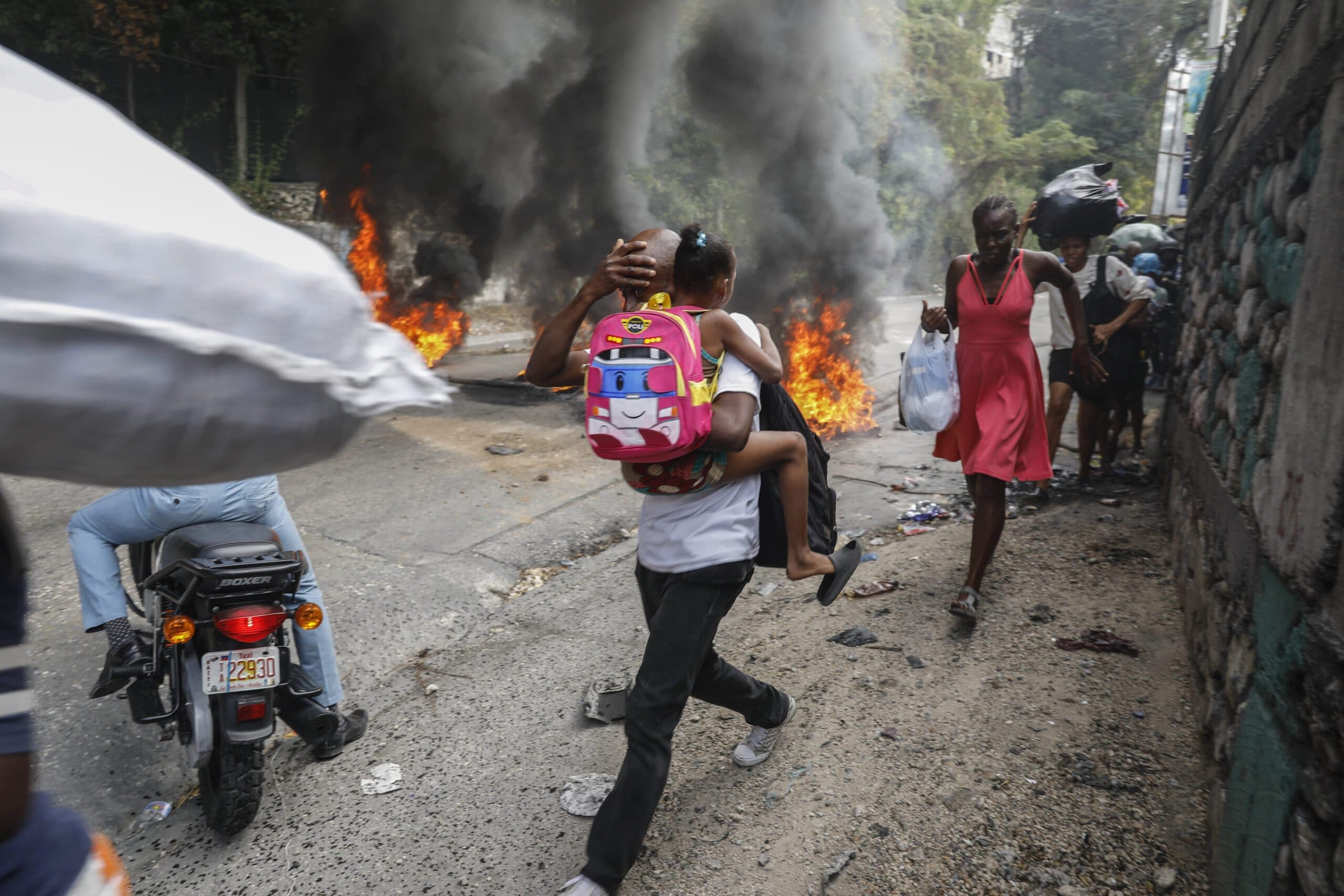
- Over the past week, Port-au-Prince has been engulfed in escalating violence.
- Armed gangs have raided police precincts and freed thousands of prisoners from two penitentiaries, allegedly in a bid to topple Prime Minister Ariel Henry’s administration.
- Nearly all but 98 of the 3,798 prisoners from Haiti’s National Penitentiary and an additional 1,033 from the Croix-des-Bouquets prison have been set free.
- In response to the escalating turmoil in Port-au-Prince, Haiti’s government declared a state of emergency on Sunday.
Caribbean nations are ramping up efforts to prevent Haitians from entering their borders amidst a tumultuous surge of meticulously coordinated gang assaults targeting law enforcement and government institutions.
Over the past week, Port-au-Prince has been engulfed in escalating violence. Armed gangs have raided police precincts and freed thousands of prisoners from two penitentiaries, allegedly in a bid to topple Prime Minister Ariel Henry’s administration.
Nearly all but 98 of the 3,798 prisoners from Haiti’s National Penitentiary and an additional 1,033 from the Croix-des-Bouquets prison have been set free.
In response to the escalating turmoil in Port-au-Prince, Haiti’s government declared a state of emergency on Sunday. The United Nations reported that 15,000 individuals have been compelled to flee their residences in the capital, adding to the already 300,000 displaced by gang-related violence.
The government cited the “deterioration of security,” particularly the surge in violent criminal activities perpetrated by armed gangs, which encompass kidnappings, homicides, assaults on women and children, and looting, according to a statement from Finance Minister Patrick Boivert.
Furthermore, criminals attempted to seize control of Toussaint Louverture International Airport on Monday, prompting Miami International Airport and Fort Lauderdale-Hollywood International Airport to suspend flights to and from Port-au-Prince on Tuesday.
Caribbean nations keeping close watch
The escalation of violence has sparked concerns among several Caribbean nations, particularly those in close proximity.
The Jamaican Government has announced heightened security measures and surveillance to prevent any of the over 4,000 Haitian prison escapees from entering Jamaica. Minister of National Security Horace Chang emphasized the need for vigilance due to the presence of Haitian gangs with connections in Jamaica.
“As you are aware, they have gangs in Haiti with connections here, so that’s an issue; that’s where we have to keep our intelligence ears wide open, those who are locally connected and what’s happening in Haiti and watch our borders closely,” Chang told the Jamaica Observer.
Jamaica has intensified its patrol on the east coast, particularly in St. Thomas and Portland.
The Royal Bahamas Defence Force (RBDF) has also initiated plans to establish a blockade in the southern Bahamas to address the influx of escapees. RBDF Commodore Dr. Raymond King highlighted the collaboration with regional partners such as OPBAT, the United States Coast Guard, and the Cuban Border Patrol to share intelligence and coordinate efforts.
In response to the escalating violence, the Dominican Republic has halted all flights to Haiti and suspended cargo and passenger flights between the two countries.
The United Nations to step in
For months, gangs have held sway over significant portions of Haiti, unleashing chaos through coordinated assaults on key locations, a trend that has intensified in recent days.
Their stated aim is to overthrow Prime Minister Henry, who was absent from the country over the weekend. He was in Kenya advocating for the swift deployment of a UN-backed multinational police force, which would send 1,000 Kenyan police officers to Haiti.
Reports from local media outlet Radio Tele Metronome indicate that Henry's return to Haiti has been hindered by security issues at the Port-au-Prince airport as of Tuesday.
Having assumed power following the 2021 assassination of President Jovenel Moise, Henry was expected to step down in February. However, he opted for a power-sharing agreement with the opposition until new elections could be organized.
On Monday, United Nations Secretary-General Antonio Guterres expressed profound concern over the rapidly deteriorating security situation in Haiti.
The UN Security Council has convened a closed-door session on Wednesday to address the crisis. Maria Isabel Salvador, the UN representative in Haiti, will brief the council remotely on the situation.