The Irfaan Ali Administration of Guyana presented its largest-ever National Budget on Monday, unveiling a $1.558 trillion spending plan for 2026 designed to provide direct financial support to citizens, enhance social services, and stimulate economic growth.

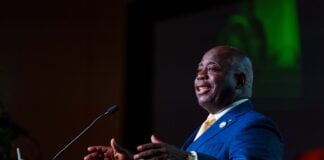
Speaking to the 65-member National Assembly, Minister of Finance, Dr. Ashni Singh, said the budget was crafted to advance President Irfaan Ali’s vision of a “modern” and “prosperous” Guyana. The 2026 budget is 12.7 percent larger than the previous year’s allocation and includes no new taxes.
Direct Cash Support
As part of the government’s citizen-focused measures, every Guyanese aged 18 and older will receive a National Cash Grant of $100,000, expected to total approximately $60 billion.

School-aged children will benefit from a combined $85,000 in grants, including an increase of the “Because We Care” (BWC) Cash Grant to $60,000 per child, a $5,000 uniform voucher allowance, and a newly introduced annual transportation support grant of $20,000 per student. The measures will impact roughly 206,000 children in public and private schools, providing a total transfer of $17.5 billion for 2026.
The government will also continue funding up to eight CSEC and CAPE subjects per child, benefiting nearly 14,000 students.
Support for Pensioners and Vulnerable Groups
Old Age Pensions will increase from $41,000 to $46,000 per month, benefiting around 95,000 pensioners, while an annual $20,000 transportation support grant will add another $1.9 billion in annual transfers.

Public Assistance will rise from $22,000 to $25,000 per month. The government is also providing $1.5 billion for co-investment in child care and elderly care facilities and removing corporate taxes on companies that provide these services.
Stipends for Pathway Workers, Community Enhancement Workers, Community Service Officers, and Community Policing Groups will increase from $40,000 to $50,000 monthly, totaling an additional $14 billion annually.
Tax Relief Measures
To reduce the burden on citizens, the government is raising the income tax threshold from $130,000 to $140,000 per month, removing 5,000 people from the tax net and adding $2 billion in disposable income. Net property taxes on individuals will also be removed, and a total of $9 billion is set aside to offset the rising cost of living.

Sectoral Support and Incentives
In the agriculture sector, corporate taxes on agriculture and agro-processing businesses will be removed, and additional products will qualify for export allowances, including timber value-added products.
The government will also remove VAT on locally manufactured furniture, jewellery, and hybrid vehicles below 2,000 cc, as well as duty and VAT on security equipment such as cameras and alarm systems. Import duties on double-cab pick-ups will be standardized to $2 million for vehicles under 2,000 cc and $3 million for those between 2,000 cc and 2,500 cc, irrespective of age. ATVs and outboard engines up to 150 horsepower will also be exempt from import taxes.
Minister Singh described the 2026 budget as a blueprint for inclusive economic growth, saying it aligns with the government’s manifesto commitments to empower citizens, improve social welfare, and ensure equitable access to opportunities.