Escalating violence in Haiti displaces over 60,000 in one month
Key Points(5)
- Armed groups have intensified their attacks on civilians, encroaching on previously gang-free areas and triggering mass evacuations.
- The capital remains under siege, with the Port-au-Prince airport still closed.
- Several neighborhoods, including Delmas, Carrefour-Feuilles, Martissant, Fort National, Pétion-Ville, and Tabarre, have been heavily impacted by the escalating violence, forcing thousands to flee.
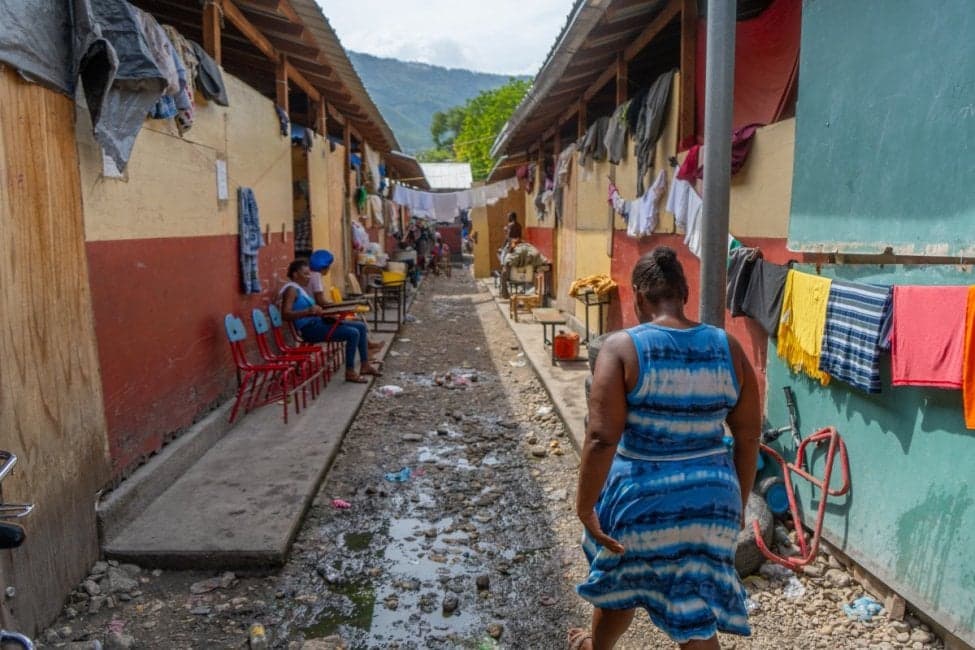
- Many of the displaced have sought refuge in one of 48 temporary shelters, including 12 newly established sites, while others have been taken in by already overburdened host families.
- “This alarming surge in displacements underscores the relentless cycle of violence devastating Haiti’s capital.
Haiti’s humanitarian crisis has reached new extremes as surging gang violence in the capital, Port-au-Prince, has forced more than 60,000 people to flee their homes in just one month, according to the International Organization for Migration (IOM).
The latest wave of displacement marks yet another grim milestone in the country’s deepening instability.
For years, gang violence, displacement, and political turmoil have gripped Port-au-Prince and other regions, but in the past two months, the security situation has deteriorated at an alarming rate. Armed groups have intensified their attacks on civilians, encroaching on previously gang-free areas and triggering mass evacuations. The capital remains under siege, with the Port-au-Prince airport still closed. Several neighborhoods, including Delmas, Carrefour-Feuilles, Martissant, Fort National, Pétion-Ville, and Tabarre, have been heavily impacted by the escalating violence, forcing thousands to flee. Many of the displaced have sought refuge in one of 48 temporary shelters, including 12 newly established sites, while others have been taken in by already overburdened host families. “This alarming surge in displacements underscores the relentless cycle of violence devastating Haiti’s capital. We have never observed such large numbers of people moving in this short time,” said Grégoire Goodstein, IOM’s Chief in Haiti. “Families are being uprooted time and again, forced to leave everything behind as they flee for safety. Many of those displaced were already living in precarious conditions after previous displacements.” The number of displaced people across Haiti has now surpassed 1 million—three times higher than a year ago. Yet, despite the worsening crisis, international attention and humanitarian aid remain insufficient. Limited resources and growing insecurity have strained response efforts, leaving thousands without adequate protection, food, water, and medical care. Humanitarian groups, including IOM, continue to provide aid. Last month alone, IOM reached over 16,000 people with clean water and hygiene support, while 3,700 received emergency shelter, medical assistance, and psychosocial support. However, resources remain stretched thin, and humanitarian access is increasingly restricted due to security concerns. Goodstein warned that without additional support, Haiti faces an even greater humanitarian catastrophe. “People fleeing violence need immediate protection, food, water, and shelter. The situation is worsening by the day, and without additional support, we risk seeing an even greater humanitarian catastrophe unfold,” he emphasized. IOM has reaffirmed its commitment to supporting displaced communities in Haiti, from emergency relief to long-term recovery. However, as conditions deteriorate, international assistance remains critical to addressing the escalating crisis and preventing further suffering.Tags:featured