Amid escalating violence, kidnappings, sexual assaults, and food crisis, Tirana Hassan, the Executive Director at Human Rights Watch, said that Haitians are in dire need of a rights-based international response.
The call to action was delivered at a United Nations Security Council meeting on Haiti.
A country in crisis
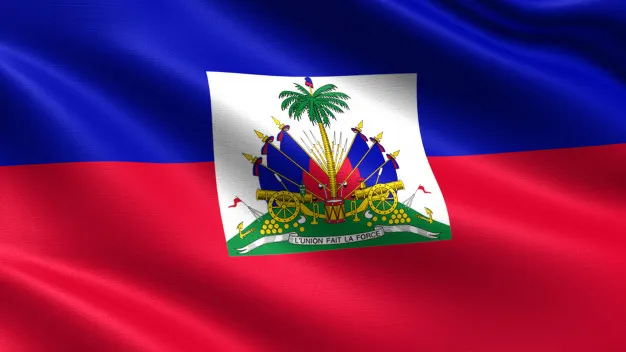
Haiti, for years, has grappled with an unrelenting political, humanitarian, and security crisis.

The situation has deteriorated further since the assassination of President Jovenel Moïse in 2021, with criminal groups obstructing the delivery of essential humanitarian aid, leaving the population vulnerable and starving.
Unfulfilled promises
Despite the Security Council’s authorization in October 2023 for a Multinational Security Support mission, led by Kenya, the deployment and vital elements of the response have been stalled.
The mission’s fate now hinges on a ruling from Kenya’s High Court, expected on January 26, 2024, regarding the legality of the Kenyan police service’s involvement.

Grim statistics
Violent criminal groups have intensified their activities, leading to over 4,700 deaths and nearly 2,500 kidnappings in 2023, doubling the previous year’s figures.
The UN reports over 300,000 internally displaced individuals, with scant humanitarian support.
In 2024, nearly half of the population, approximately 4.35 million people, are facing acute food insecurity.

Fueling tensions
The return of Guy Philippe, a former police commander-turned-coup instigator, in late November 2023, has exacerbated tensions.
Supported by armed factions, he has called for revolution, sparking protests and forced shutdowns that have further exacerbated food shortages and insecurity, particularly in the southern region.
Epicenter of violence
Cité Soleil, on the outskirts of Port-au-Prince, has witnessed some of the most brutal violence. A November clash resulted in 87 fatalities, and 46 injuries, and displaced over 1,000 residents.
Fontaine Hospital, a critical lifeline for the community, was caught in the crossfire, jeopardizing the lives of patients and access to healthcare.
A dark reality for women and girls
Throughout Haiti, women and girls as young as 12 face disturbing levels of sexual violence. Criminal groups, including the G9 alliance, employ rape as a tool of intimidation and control, exacerbating the suffering of those living in contested areas.
A cry for support
Survivors are demanding concrete actions that guarantee a life free from violence, access to basic necessities, education, and the ability to choose their leaders.
Their plea resonates with a nurse in Cité Soleil, who stressed the urgency of international support: “We are suffocating. Haitians are suffocating.”
Haitians are painfully aware of past international interventions marred by allegations of sexual abuse by peacekeepers and a cholera epidemic traced to their presence. Despite this, many still see international support as the only viable solution.
A call to action
As Kenyan and other forces prepare for potential deployment, the UN Security Council must insist on a rigorous human rights due diligence policy for troop-contributing countries and donors.
This should include vetting members before deployment and measures to prevent enabling abusive Haitian National Police units.
Zero tolerance
The Security Council must uphold a zero-tolerance policy for misconduct or abusive behavior, including sexual exploitation. Independent oversight, investigation, and accountability mechanisms must involve Haitian civil society groups and affected communities.
A broader perspective
The Security Council resolution that authorized the mission acknowledged the need for comprehensive efforts to address Haiti’s political, institutional, and socio-economic instability.
Breaking the deadlock
Resolving Haiti’s political impasse is essential. Despite agreements signed by Prime Minister Ariel Henry in 2021 and 2022, Haiti still lacks a transitional government to organize free and fair elections and address the issues allowing criminal groups to thrive.
Promoting accountability
The UN should actively support measures to hold leaders of criminal groups and their supporters accountable and curb the flow of weapons to these factions. Coordinated efforts from various UN entities are necessary to rebuild shattered communities and address urgent humanitarian needs.
Ending forced returns
Haiti’s neighbors must cease forcibly returning individuals fleeing insecurity, as it poses a grave risk of harm.
Such returns, primarily from the Dominican Republic and the United States, violate international human rights laws and constitute refoulement.
A chance for redemption
As Tirana Hassan aptly stated, “The UN has made many mistakes in Haiti.”
Hassan added that this is an opportunity to rectify those errors, support democratic governance, uphold human rights, and put an end to the deadly cycle of violence and abuse that has plagued Haiti for far too long.